The 1968 invasion of Czechoslovakia: four armies, not five
On this day · 20 August 1968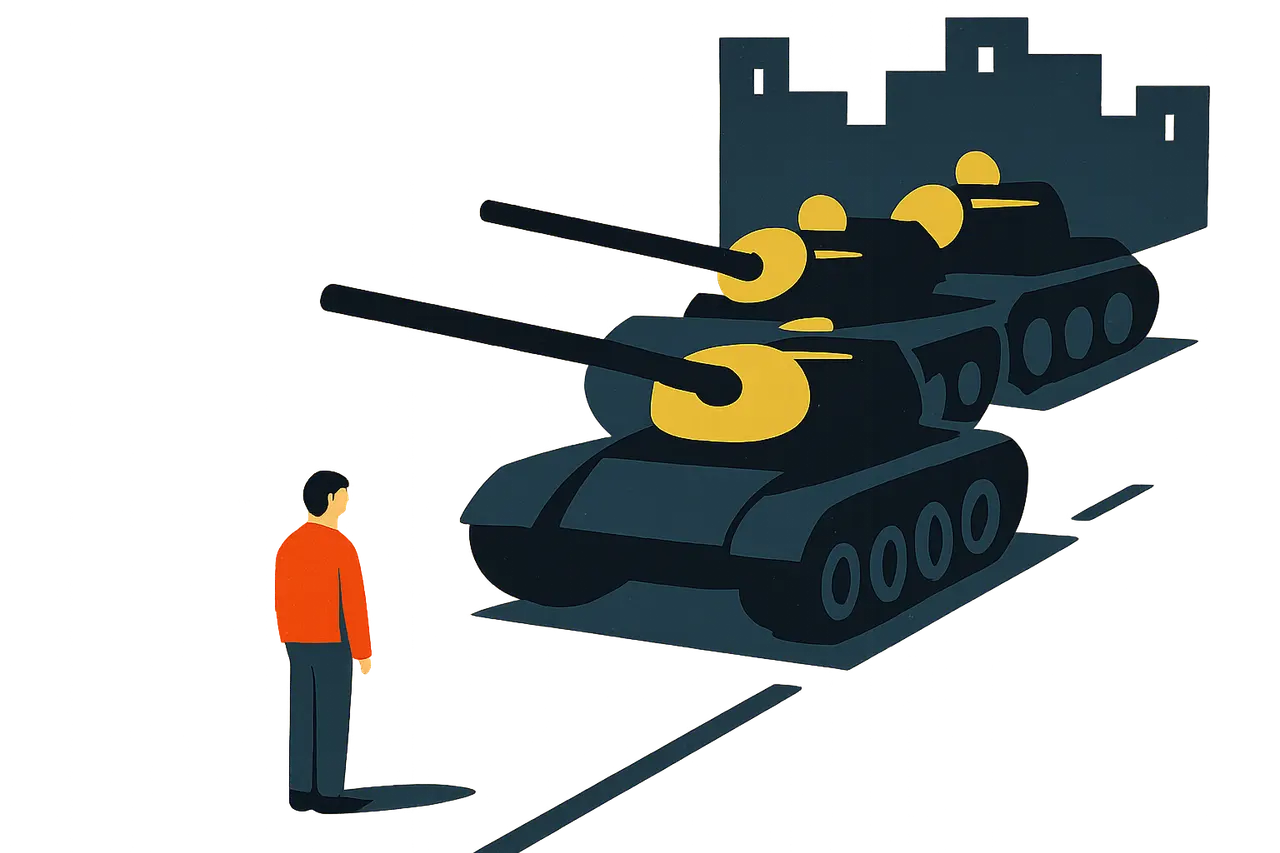
Warsaw Pact troops crushed the Prague Spring on 20–21 August 1968 — but East Germany's army, though ready, never crossed the border.
The Soviet Union led the Warsaw Pact invasion of Czechoslovakia on the night of 20–21 August 1968, sending troops across the border to end the Prague Spring, the reform programme of Communist Party leader Alexander Dubček. Moscow had moved the forces into position under cover of announced Warsaw Pact exercises, and the invaders quickly took Prague, the other main cities, and the country’s transport and communication links.
The cost in lives is better known now than it was at the time. The Czech state’s Institute for the Study of Totalitarian Regimes counts 108 people killed by the end of 1968, with some 500 seriously injured. The worst losses came near the Czechoslovak Radio building in Prague, where Soviet soldiers met an unarmed crowd. A later count by historians Prokop Tomek and Ivo Pejčoch, drawing on newly discovered archive material, puts the 1968 toll at 137, and finds that more than 400 people were killed by occupying troops in all, up to the Soviet withdrawal in 1991.
The East German army that stayed home
The invasion is often described as an attack by five Warsaw Pact armies, and even some official accounts say so. In fact Moscow made a last-minute decision not to send East German ground troops onto Czechoslovak territory: memories of Wehrmacht crimes in the country during the Second World War were still too fresh. Soviet, Polish, Hungarian and Bulgarian troops crossed the border. East Germany’s army stayed home, though a snubbed Walter Ulbricht did nothing to quash rumours at home that his soldiers had taken part. Romania, a Pact member, refused to join at all.
The political fallout ran for years. Lyndon Johnson cancelled a planned summit with Leonid Brezhnev, and Moscow justified the invasion with what became the Brezhnev Doctrine, the claimed right to intervene wherever communist rule was threatened. The same reasoning later served as the main justification for the Soviet invasion of Afghanistan in 1979.
Sources & references
7 referencesWell-established. Corroborated by 7 independent sources.