Three Ships Set Sail to Found Jamestown
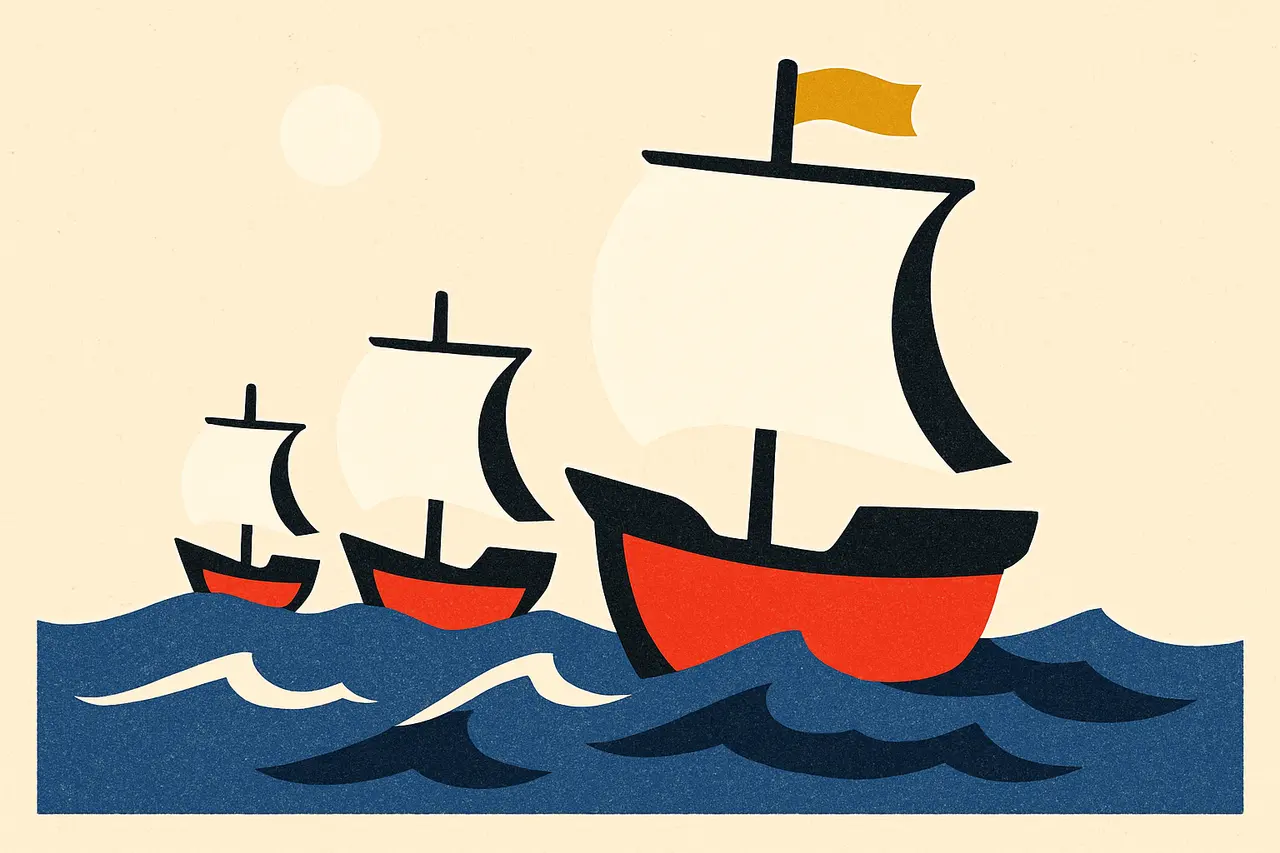
In the depths of an English winter, three small ships carried roughly a hundred men toward what would become England's first lasting American colony.
In December 1606, three vessels chartered by the Virginia Company of London slipped out of the Thames and pointed their bows toward the New World. The ships were the flagship Susan Constant, the Godspeed, and the tiny pinnace Discovery, all under the command of the experienced privateer Christopher Newport.
The passenger lists are recorded slightly differently across the historical record, but the expedition carried roughly 104 settlers plus crew, all of them men and boys. Rather than crossing directly, the fleet took the long southern route, pausing in the Canary Islands and the Caribbean before turning for the mainland.
A four-month voyage in three cramped ships seeded the colony that would anchor English America.
The ships reached the Virginia coast in late April 1607, and on May 14 the colonists settled a marshy peninsula in the James River they named Jamestown — the first permanent English settlement in North America, predating the Pilgrims at Plymouth by thirteen years.
Sources & references
2 referencesWell-established. Corroborated by 2 independent sources.