Why amputees feel phantom limbs: the brain keeps the map
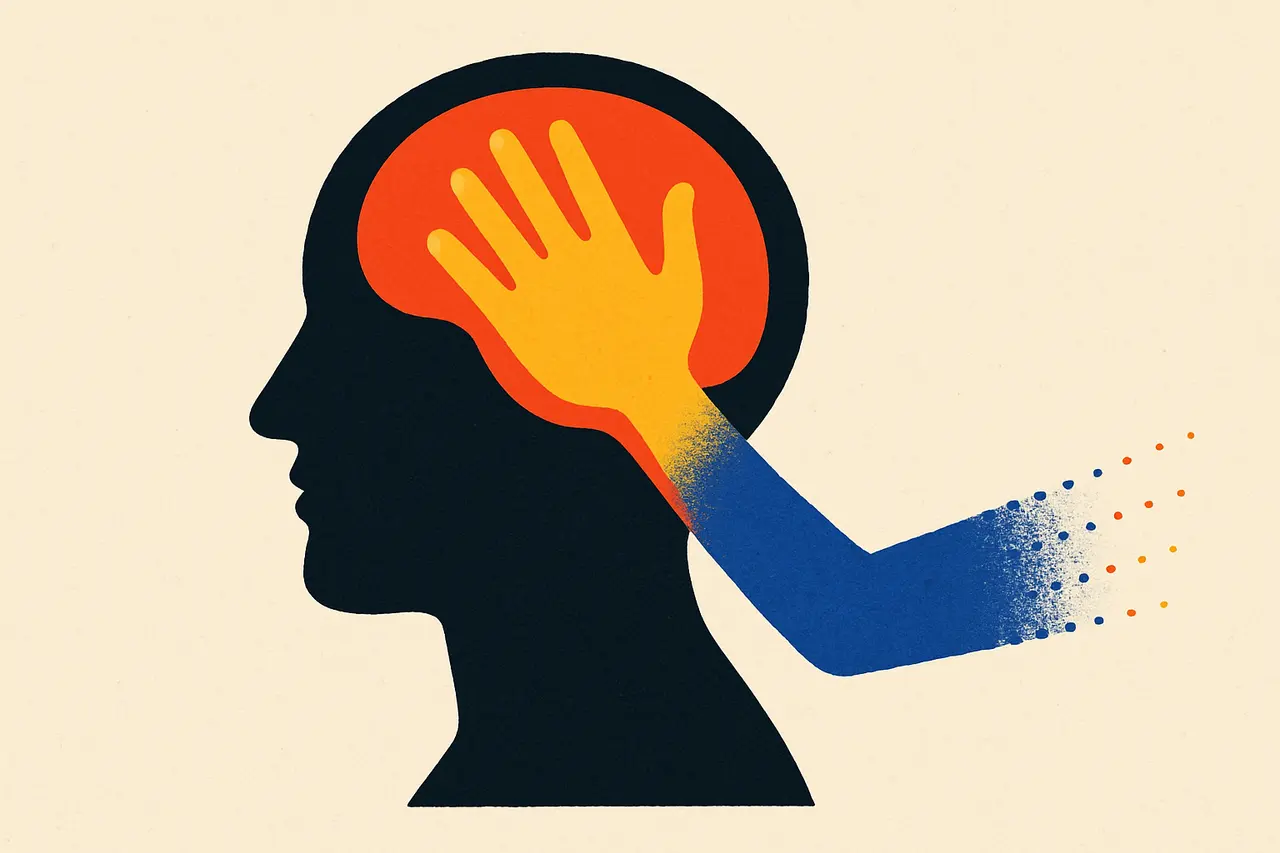
About 87% of amputees still feel the missing limb. Brain scans suggest the map of a lost hand can survive for decades.
Most amputees go on feeling the missing limb, largely because the brain’s map of the body outlasts it: a systematic review found a lifetime prevalence of about 87% for phantom limb sensations, and phantom pain in roughly 76% to 87% of amputees. People describe clenching a hand that is gone, an itch on a missing finger, or a phantom whose length seems to change, known as telescoping.
The sensations come from the somatosensory cortex, which holds a detailed map of the body. Why that map keeps producing a limb has been argued over for three decades.
Remapped, or preserved?
The older explanation is remapping. In the 1990s, researchers including V. S. Ramachandran showed that touching an amputee’s face could be felt on precise points of the phantom hand, in one patient less than 24 hours after surgery. The idea was that the brain rewires itself: the face’s neighbouring patch of cortex invades the hand’s territory.
Later imaging told a different story. In 2016, a 7-tesla brain-scanning study found that the individual fingers of a lost hand were still mapped in the cortex 25 and 31 years after amputation, still consistently organised, though weaker than in people with two hands. The caveat: it scanned only two amputees, and the authors note that a preserved map can coexist with some remapping. Both processes may be at work.
Phantoms don’t even require a limb that ever existed. In a 1997 study, at least 20% of people born without a limb, and 50% of those who lost one before age six, reported a phantom, which the authors argued shows the body map is partly genetically determined.
Mirror therapy, which uses a reflection of the intact limb to make the missing one look restored, is widely offered for phantom pain. A 2016 systematic review found 17 of 18 studies reported benefit, but the evidence was weak, and it could not recommend mirror therapy as a first-line treatment.
Sources & references
5 referencesWell-established. Corroborated by 2 independent sources.