The Mercury Seven were chosen from 508 military test pilots
On this day · 9 April 1959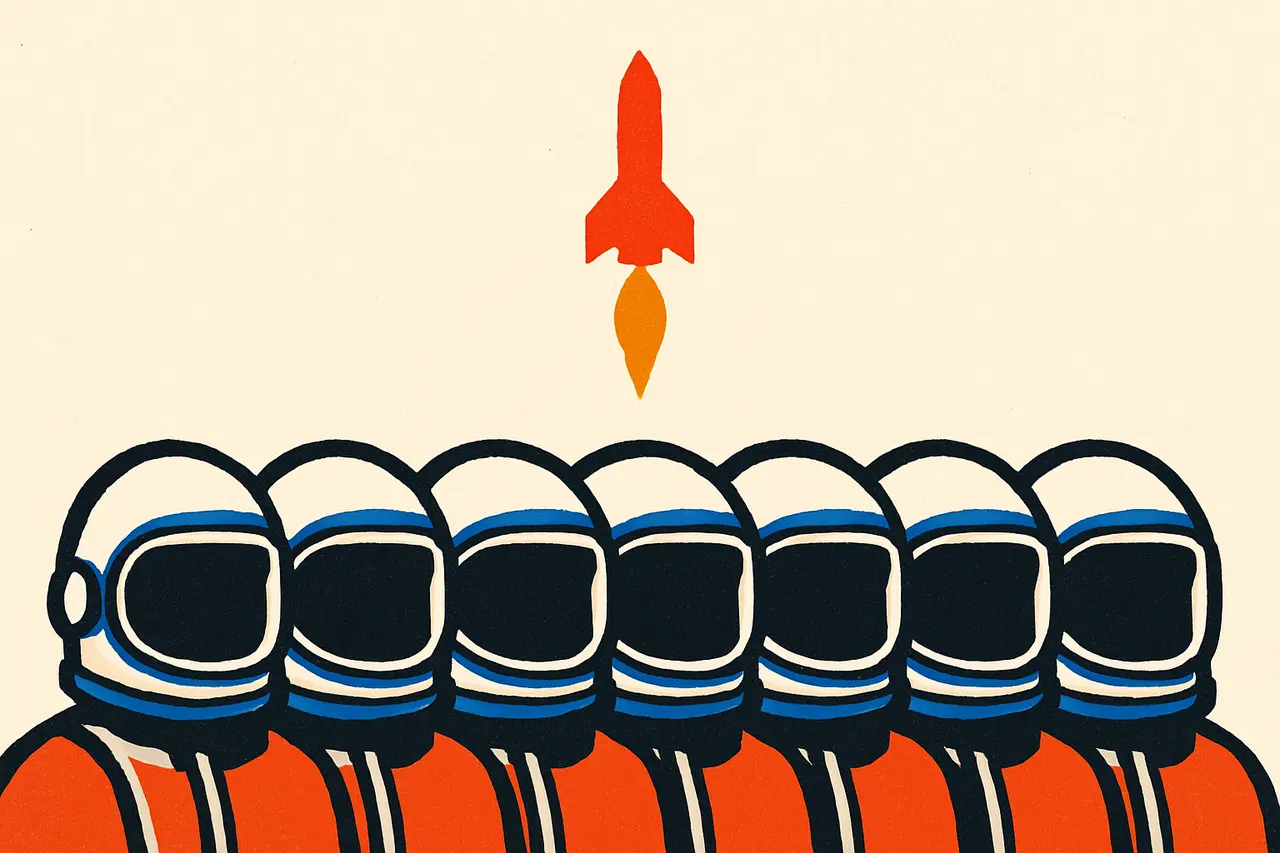
NASA screened 508 test pilots' records, tested 32 men to exhaustion and unveiled seven astronauts on 9 April 1959.
NASA introduced its first astronauts, the Mercury Seven, on April 9, 1959, at a press conference in the ballroom of the Dolley Madison House in Washington, D.C., the six-month-old agency’s first headquarters.
Administrator T. Keith Glennan read them out alphabetically: Scott Carpenter, Gordon Cooper, John Glenn, Gus Grissom, Wally Schirra, Alan Shepard and Deke Slayton. Then came 90 minutes of questions, a shock for test pilots used to anonymity. Asked whether they were confident of coming back from space, all seven raised a hand; Glenn raised both.
How 508 became seven
With President Eisenhower’s agreement, NASA recruited only military test pilots. Candidates had to be men no older than 40 and no taller than 5 ft 11 in, graduates of test-pilot school with at least 1,500 hours of flying and a bachelor’s degree or equivalent experience.
From 508 service records, NASA picked 110 men for a top-secret briefing, interviews and tests. 32 went on to a week of medical exams at the Lovelace Clinic in New Mexico and a week of physical and psychological testing at the Wright Aeromedical Laboratory in Ohio. ESA’s account says 110 people “applied”, but NASA’s history describes the 110 as chosen from service records on their flying performance and medical history.
What followed for the seven:
- April 1, 1959: the final 7 are chosen.
- April 9, 1959: they face the press for the first time.
- 1961–1963: all but Slayton, grounded by a heart murmur, fly Mercury missions; Shepard becomes the first American in space and Glenn the first American to orbit Earth.
- 1975: Slayton finally reaches space on Apollo-Soyuz, the last of the group to fly.
- 1998: Glenn, at 77, becomes the oldest person to have flown in space at that time.
Along the way Schirra alone flew Mercury, Gemini and Apollo, and Shepard, after his own grounding, became the only one of the seven to walk on the Moon, on Apollo 14. Grissom died in a launch-pad fire while preparing to command the first Apollo mission. NASA also arranged an exclusive deal with LIFE magazine to cover the men and their wives.
Sources & references
3 referencesWell-established. Corroborated by 3 independent sources.