Mongol Empire: largest contiguous empire, but not the largest
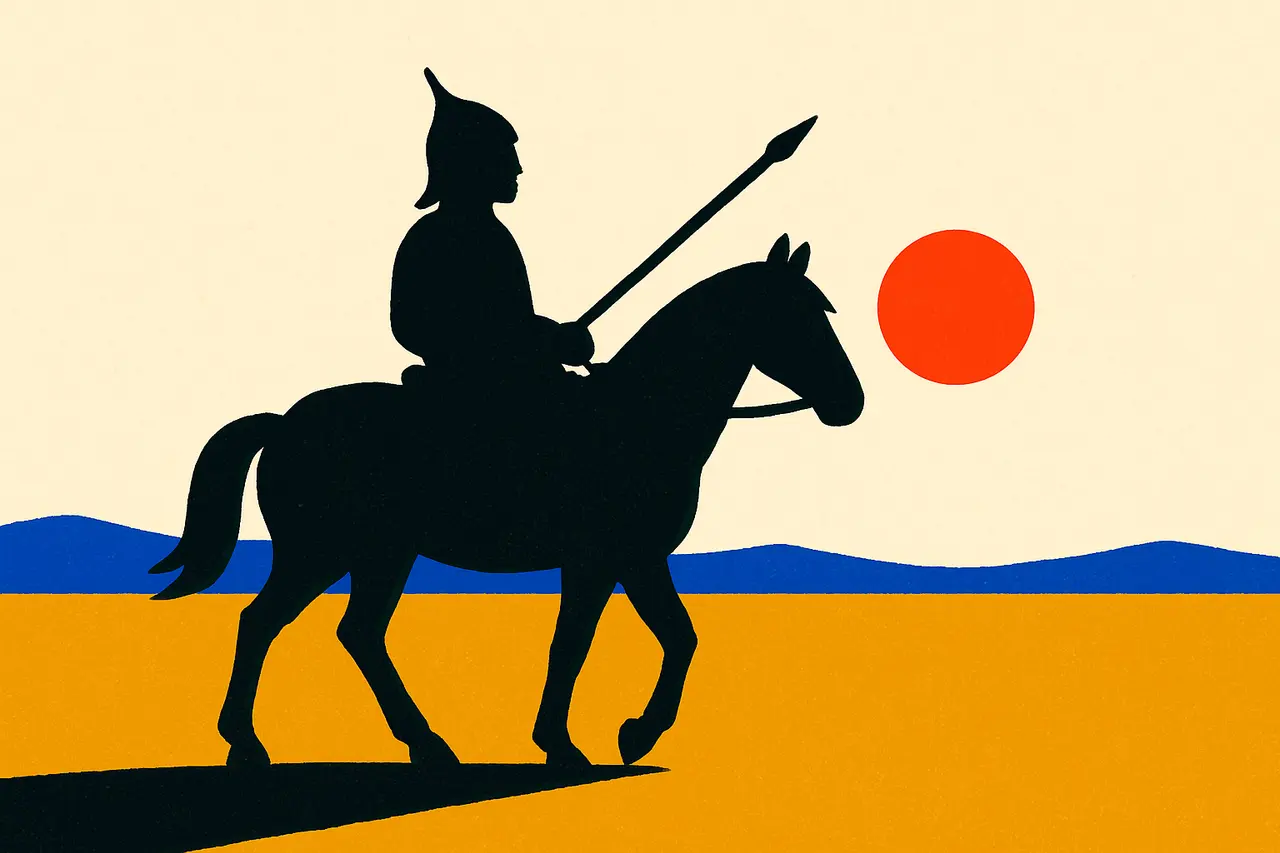
At about 24 million km² it beat Russia narrowly for unbroken land — but Britain's scattered empire was bigger, and the Mongol peak came after a split.
The Mongol Empire was the largest contiguous empire in history, covering about 24 million km² (9.3 million sq mi) at its peak around 1279 under Khubilai Khan — but it was not the largest empire ever. That title belongs to the British Empire, which Guinness World Records puts at roughly 35.5 million km² in 1920, spread across oceans rather than joined by land.
| Empire | Peak year | Area | One landmass? |
|---|---|---|---|
| British | 1920 | 35.5 million km² | No |
| Mongol | c. 1279 | 24 million km² | Yes |
| Russian | c. 1895 | 22.8 million km² | Yes |
The Mongol margin over imperial Russia is narrow — about 5% — and both are estimates, since medieval frontiers were zones of tribute rather than surveyed lines. Be wary of bigger numbers: some popular sites claim up to 12 million square miles, nearly a third more than the estimate Guinness uses. At its height the Mongol realm held around 110 million people, about a quarter of the world’s population.
The catch in “at its peak”
By the time of that peak, the empire was no longer one state. Temüjin was recognised as Chinggis (Genghis) Khan in 1206, and under his son Ögödei, who reigned until 1241, Mongol armies destroyed the Jin state in north China and overran the Russian principalities. But Chinggis left no orderly rule of succession, and when the Great Khan Möngke died in 1259 his brothers went to war over the throne.
By 1260, as Columbia University’s Asia for Educators puts it, the Mongol domains had split into four discrete sectors: Khubilai’s realm of China, Mongolia, Korea and Tibet; the Chaghatayid khanate in Central Asia; the Ilkhanate in Persia; and the Golden Horde on the Russian steppe. The Ilkhanate and the Golden Horde even fought each other over grazing lands in today’s Azerbaijan.
So the record-setting map of 1279 is really four rival khanates ruled by one extended family — counted together because they shared a dynasty and a trading zone. For the empire that out-measured them all, see how Britain came to rule about a quarter of the world; for the family’s other legacy, there is Genghis Khan’s disputed genetic footprint.
Sources & references
3 referencesWell-established. Corroborated by 3 independent sources.