Asking 'smashed', not 'hit', changes what witnesses remember
One verb in a question raised witnesses' speed estimates by 7 mph and made twice as many recall broken glass that was never there.
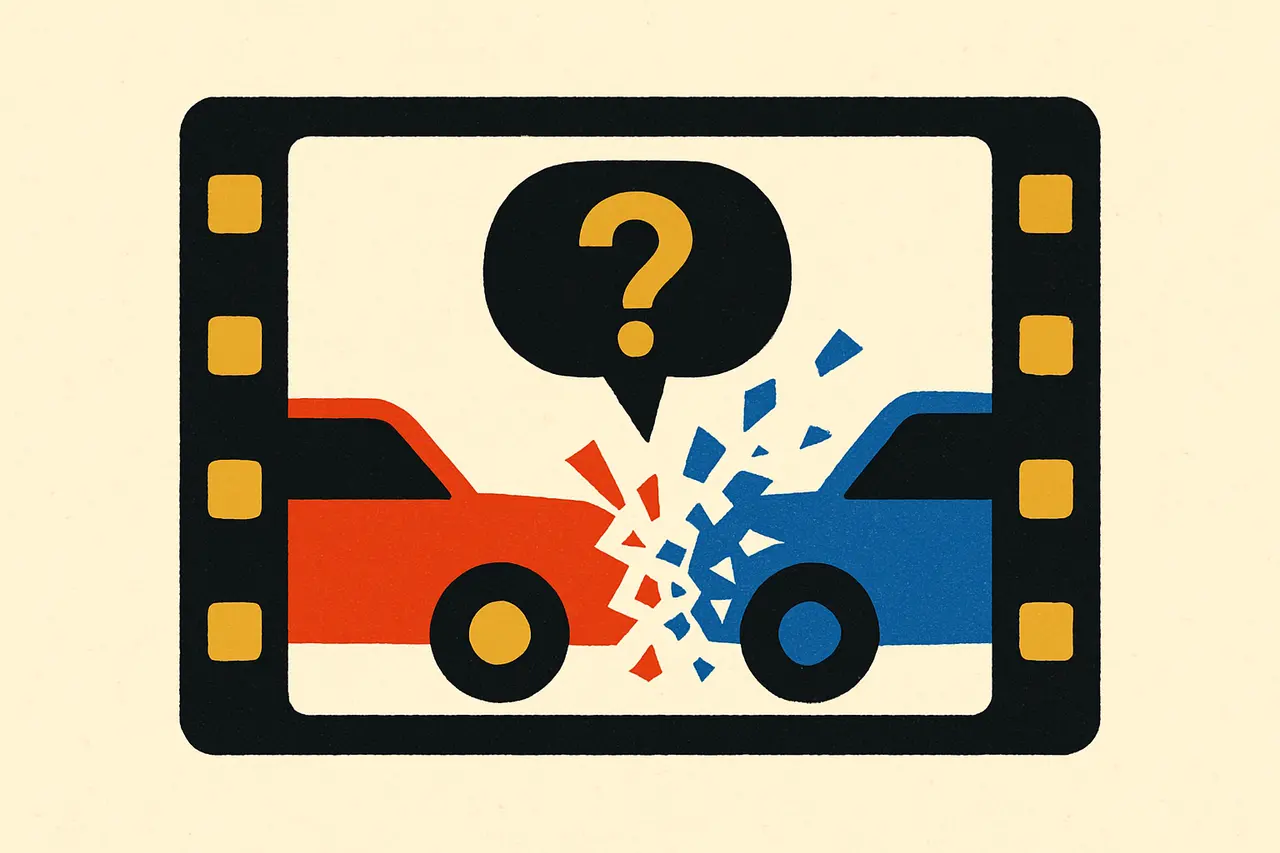
The wording of a question asked after an event can change what a witness remembers, a finding known as the misinformation effect. In a classic 1974 study by Elizabeth Loftus and John Palmer, people who watched films of car crashes estimated an average 40.8 mph when asked how fast the cars were going when they “smashed” into each other, but only 34 mph when the verb was “hit”.
The verbs formed a neat ladder: “contacted” produced 31.8 mph, “bumped” 38.1 and “collided” 39.3. The crashes had been staged at real speeds of 20 to 40 mph, so the verb alone moved estimates by about 9 mph, close to the 10 mph step between the staged speeds themselves.
Can a leading question create a false memory?
Yes. The distortion went beyond numbers: a week later, people who had been asked the “smashed” question were more than twice as likely to “remember” broken glass (32% versus 14%), though there was none in the film.
Over the following decades, Loftus and others showed that suggestion can lead people to believe in rich, detailed events that never happened at all, and that warning people about misleading information helps only under limited circumstances.
Does memory work like a video camera?
No, though many people still picture it as a recording. In a representative telephone survey of U.S. adults published in 2011, 63% agreed that memory works like a video camera, and 37% said the testimony of a single confident eyewitness should be enough to convict a defendant. Both views conflict with expert consensus.
The real-world cost is measurable. Eyewitness misidentification played a part in about 69% of the 375 U.S. wrongful convictions overturned by DNA evidence between 1989 and 2020, according to the Innocence Project. That is why courts restrict leading questions and why the way police word an interview matters.
Sources & references
5 referencesWell-established. Corroborated by 3 independent sources.