Greenland looks as big as Africa, but it's 14x smaller
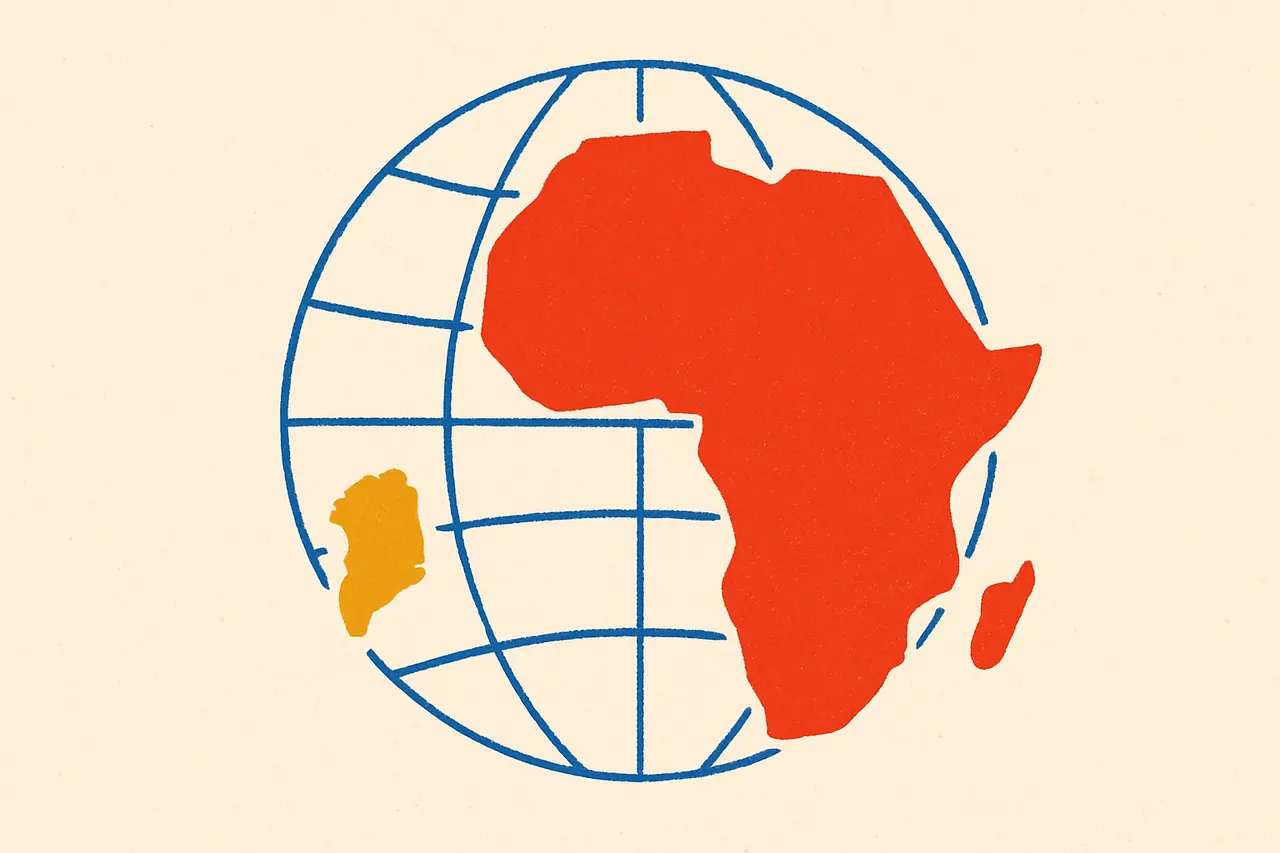
The world's most familiar map quietly inflates the far north into a continent-sized illusion.
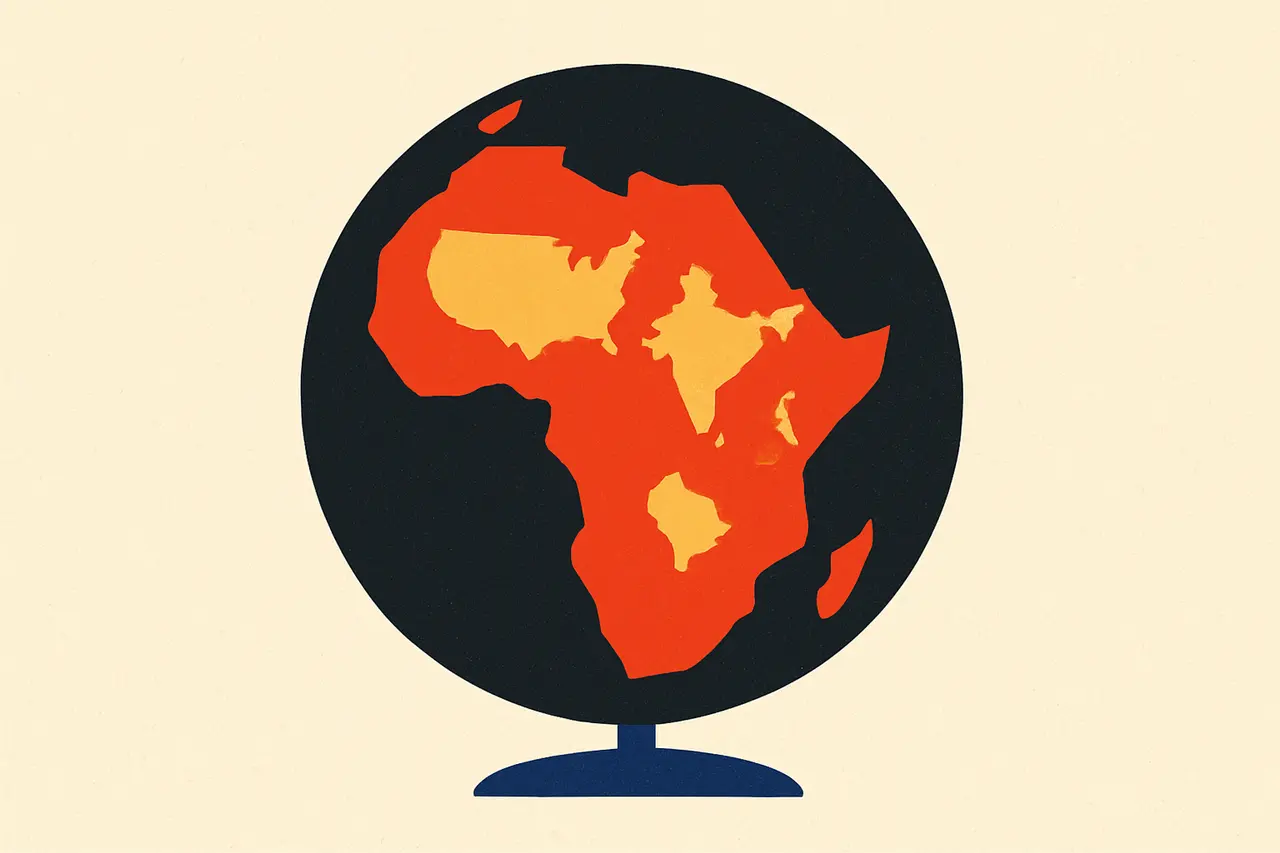
On the classic Mercator map, Greenland looks roughly the same size as Africa. In reality, Africa is about 14 times larger. Greenland covers around 2.17 million km2 — roughly the size of Saudi Arabia — while Africa spans more than 30 million km2.
Greenland is just the most famous offender. Alaska looks about as big as Brazil, though Brazil is genuinely some five times larger. Scandinavia and Russia balloon enormously, and Antarctica, smeared across the bottom edge, appears to dwarf every continent at once. The pattern is consistent: the farther a place sits from the equator, the more the map inflates it.
The distortion is mathematical, not careless. Gerardus Mercator designed his projection in 1569 so that a straight line holds a constant compass bearing — a conformal map that preserves angles for navigation. The price is area, and it cannot be dodged: the horizontal stretch grows as the secant of the latitude, climbing toward infinity at the poles. That is literally why the map gets cut off before it reaches them.
Every flat map of a round planet has to lie about something — Mercator chose to lie about size.
The argument never really ended. The Gall–Peters projection, popularized in 1973, traded shape for honest area and became a political cause, championed as a fairer view of the developing world. Yet the old distortion is everywhere still: Google Maps and most web maps use Web Mercator, keeping Mercator’s inflated north alive on a billion screens.
Sources & references
2 referencesWell-established. Corroborated by 2 independent sources.