Not every Gothic cathedral took centuries to build
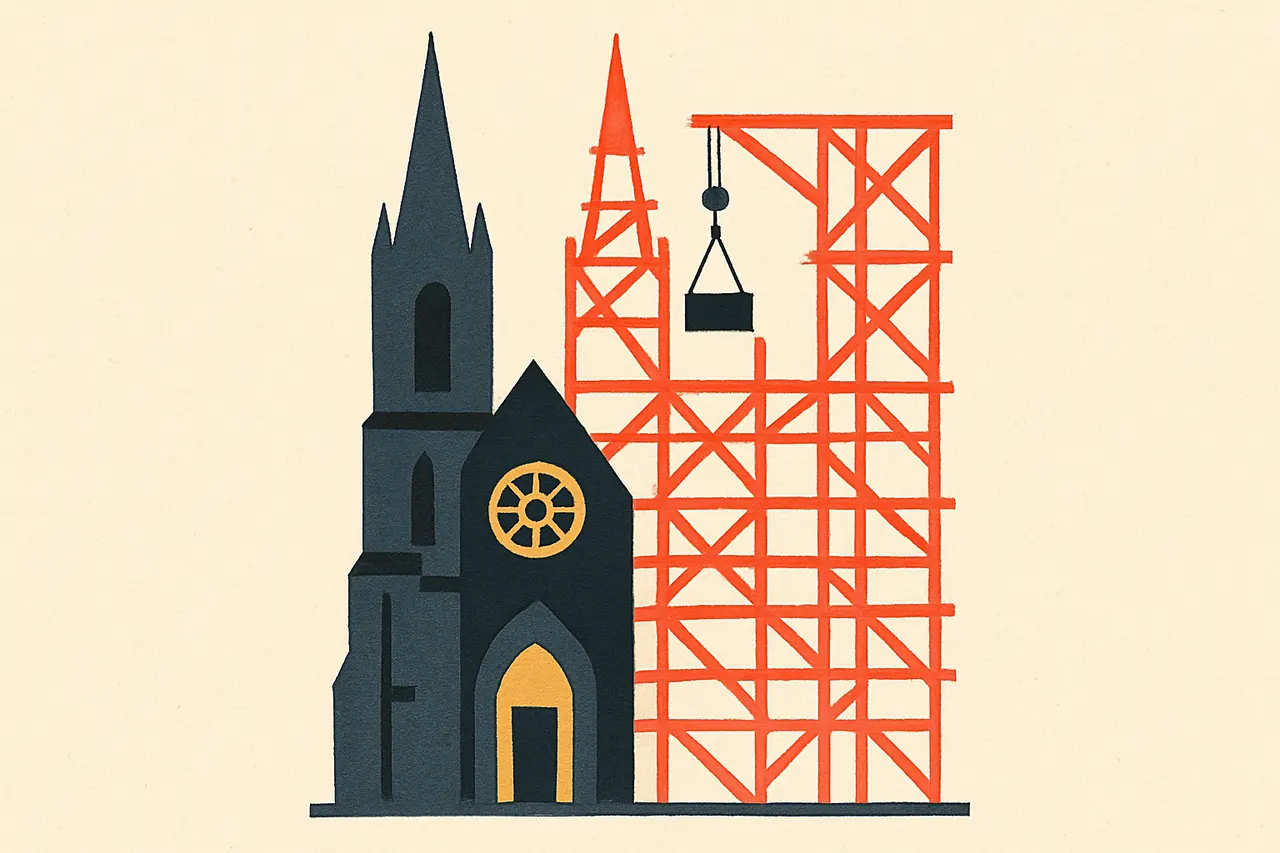
Salisbury Cathedral was consecrated 38 years after its first stone. The centuries-long builds, like Cologne's, were mostly centuries of standing still.
Not every Gothic cathedral took centuries to build. Salisbury Cathedral was begun on 28 April 1220 and consecrated in 1258, just 38 years later. The famous multi-century projects ran long mainly because work stopped for hundreds of years at a time.
The image of masons toiling for generations comes from a handful of extreme cases. The builders’ own records compare like this:
| Church | Begun | Finished | Span | Longest pause |
|---|---|---|---|---|
| Salisbury Cathedral | 1220 | 1258 (consecrated) | 38 years | none |
| Cologne Cathedral | 1248 | 1880 | 632 years | c.1520–1842 |
| Ulm Minster | 1377 | 1890 | 513 years | 1543–1844 |
Salisbury was fast because it started from nothing on an open site. Its bishop and priests had abandoned the old cathedral on the hilltop at Old Sarum, where quarrels with the castle garrison, scarce water and harsh weather made life hard, and the Pope approved the move. The east end was finished by 1225, and the spire came later.
At Cologne and Ulm, most of those centuries were spent waiting. After about 1520 Cologne’s finished choir and half-built south tower stood for more than 300 years, topped by a medieval crane that became the city’s landmark until it was taken down in 1868. Ulm Minster, a parish church built on a cathedral’s scale, stopped in 1543 and restarted in 1844.
Both were completed by the industrial 19th century, not by medieval masons. In the 1860s Cologne’s works employed more than 500 people and used a steam engine and winch carriages running on rails. A citizens’ building society founded in 1842 raised 60 percent of the cost. The towers still followed a facade plan drawn around 1280–90, and at over 157 metres they made Cologne the world’s tallest building in 1880 (there is more on how Cologne Cathedral was finally completed). Ten years later, Ulm’s 161.53-metre spire became the tallest church tower in the world.
Sources & references
3 referencesWell-established. Corroborated by 3 independent sources.