Laika was the first animal in orbit, but not in space
On this day · 3 November 1957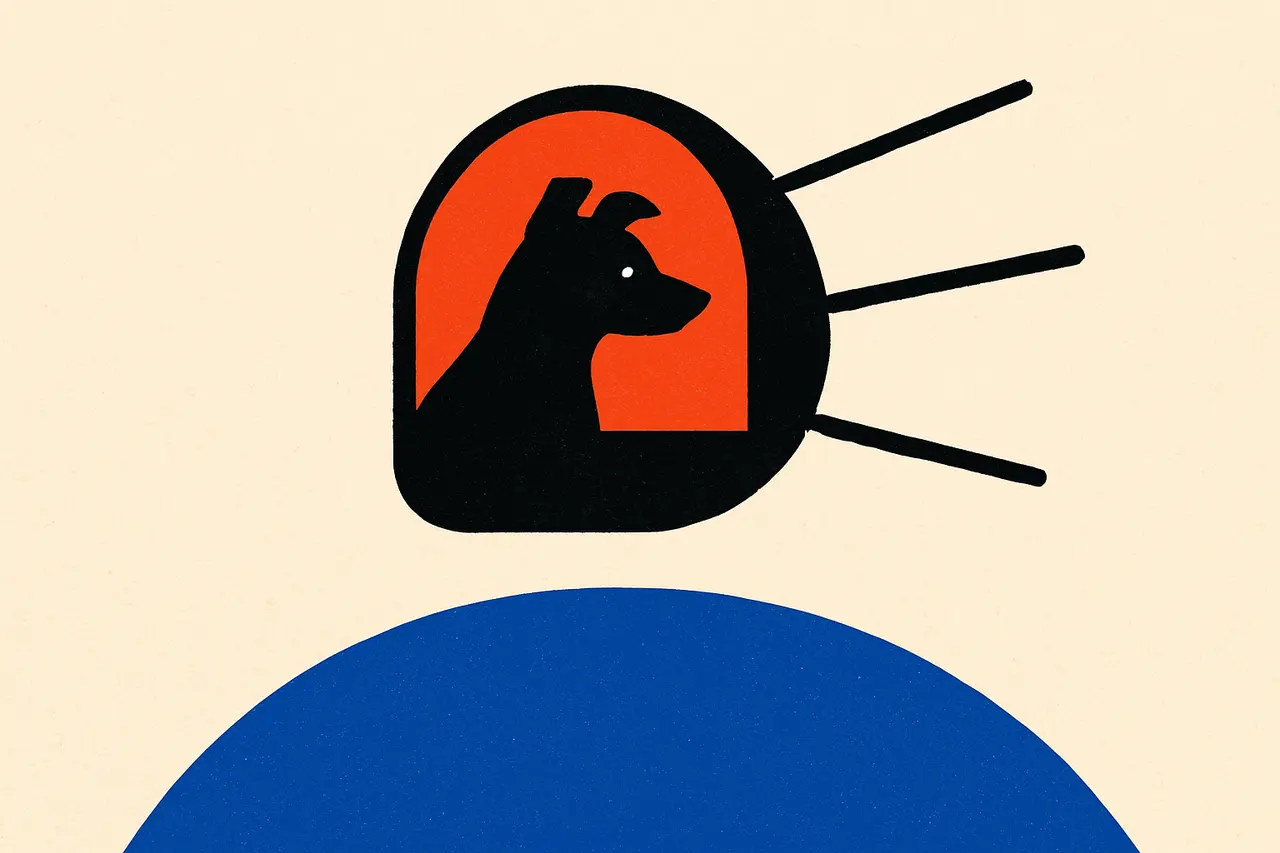
A Moscow stray rode Sputnik 2 into orbit in 1957 on a one-way trip, a decade after fruit flies became the first animals in space.
Laika, a stray dog from Moscow, became the first animal to orbit Earth when the Soviet Union launched Sputnik 2 on 3 November 1957, less than a month after Sputnik 1. She was not the first animal in space, though, and she never came home: the craft had no way to return.
Was Laika the first animal in space?
No. The first creatures deliberately sent into space were fruit flies, launched on a captured V-2 rocket from White Sands, New Mexico, on 20 February 1947. Monkeys, mice and other dogs followed, but all on suborbital hops that went up and fell back. Laika was the first to circle the planet.
How long did Laika survive in orbit?
Probably only a few hours: that is NASA’s assessment of how long she lived after reaching orbit. Sputnik 2 was rushed to exploit the propaganda value of the first satellite. At 508 kg, it was far heavier than its predecessor, yet there was no time to build a recovery system, and engineers had not designed its environmental controls for a long mission.
Her survival has been told many ways. Some Russian accounts released decades later said four days; others said the cabin overheated just five or six hours into the flight. The satellite’s batteries died on 10 November, and it burned up on reentry on 14 April 1958.
The flight still shook Washington. Robert Gilruth, later director of NASA’s Manned Spacecraft Center, recalled his reaction:
“When I saw the dog go up, I said, ‘My God, we better get going because it’s going to be a legitimate program to put man in space.’”
It was nearly three years before the Soviets orbited animals again and brought them home. Belka and Strelka, launched on 19 August 1960, became the first dogs to return alive from orbit.
Sources & references
6 referencesWell-established. Corroborated by 3 independent sources.