Intel's 4004 Put a Whole Computer Brain on One Chip
On this day · 15 November 1971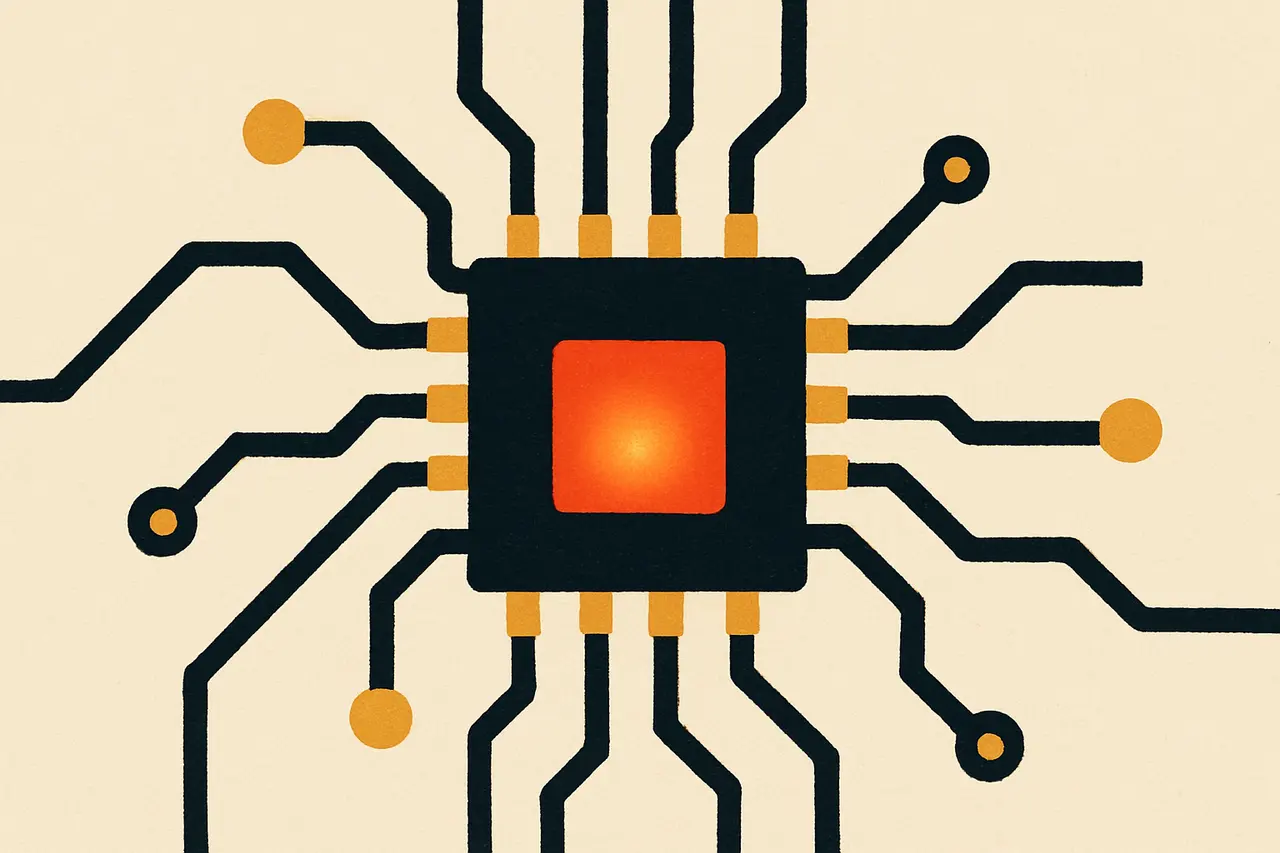
In 1971 a tiny silicon rectangle smaller than a fingernail packed the logic of a room-sized machine and lit the fuse on the digital age.
On November 15, 1971, Intel ran an advertisement in the trade paper Electronic News announcing a new kind of product: the Intel 4004, one of the first commercially available microprocessors. For the first time, the core arithmetic and control logic of a computer’s central processing unit was squeezed onto a single integrated circuit instead of being wired together from many separate parts.
The chip emerged from an unlikely place. Japanese calculator maker Busicom had hired Intel to build a custom chipset, but engineer Ted Hoff proposed a simpler, general-purpose design. Working with Federico Faggin, Stan Mazor, and Masatoshi Shima, the team fit roughly 2,300 transistors into a 16-pin package.
A device built for a calculator quietly became the ancestor of nearly every computer that followed.
The 4-bit 4004 was modest by later standards, yet it proved that a programmable processor could be mass-produced cheaply. That idea reshaped electronics, seeding the personal computers, phones, and embedded chips that surround us today.
Sources & references
2 referencesWell-established. Corroborated by 2 independent sources.