Identical twins' fingerprints differ — but are alike
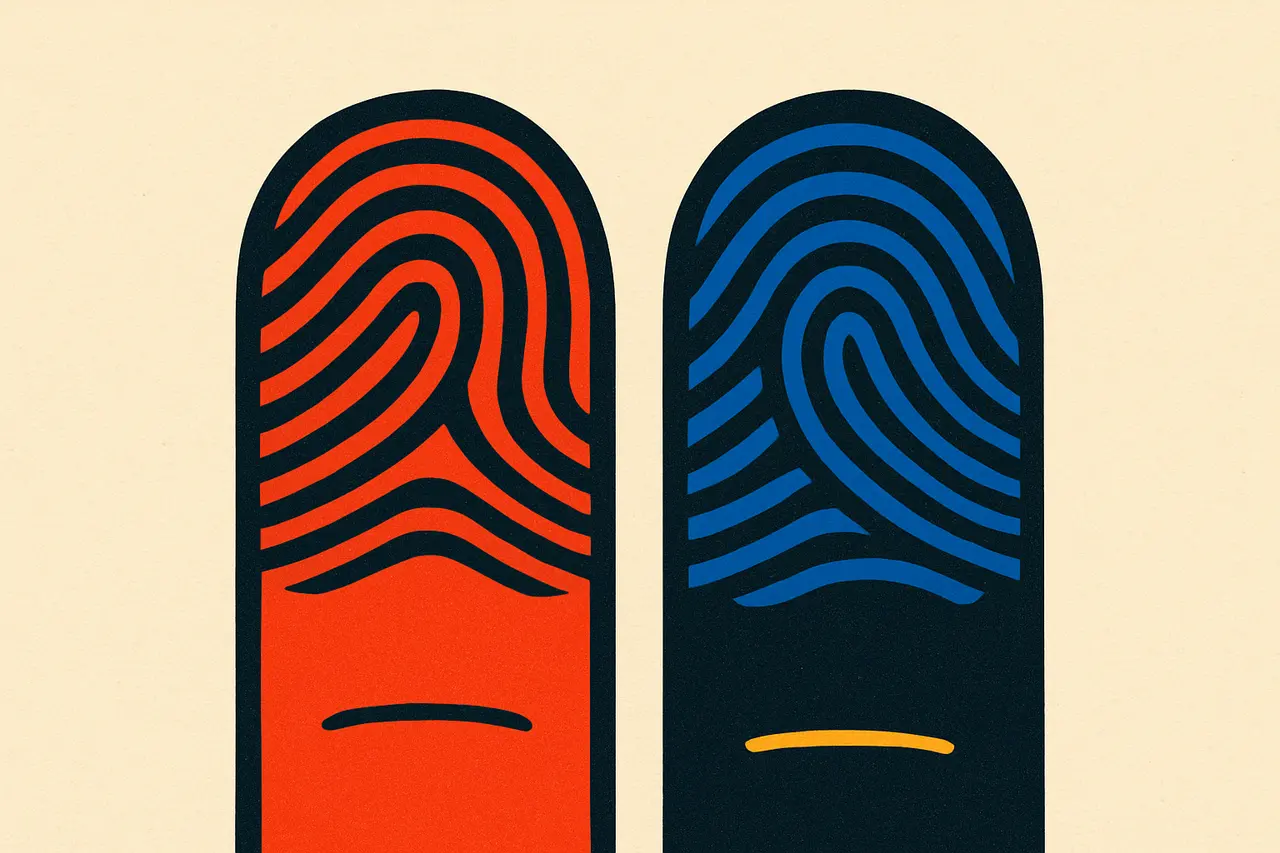
Twins share their DNA but not their fingerprints. Their prints match in overall pattern far more often than strangers', yet differ in every fine detail.
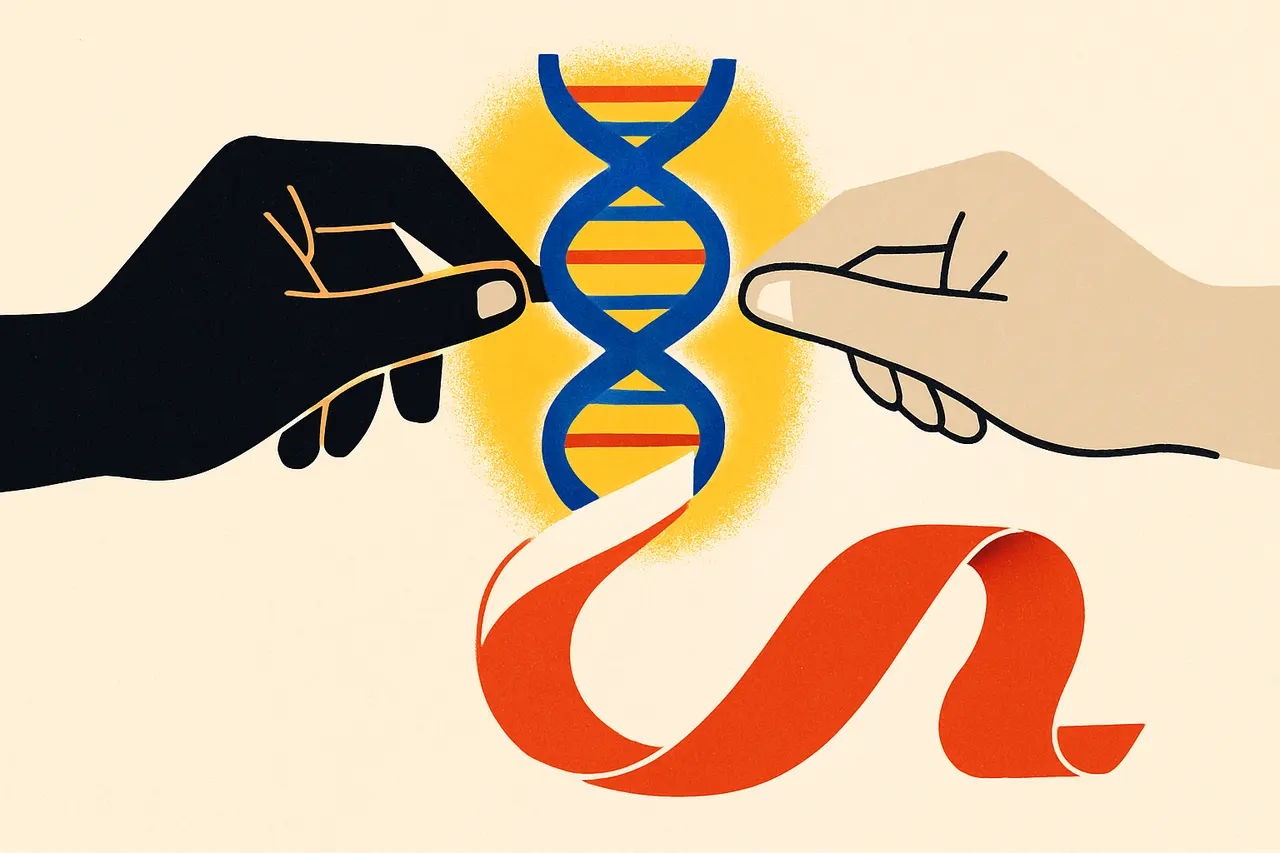
Identical twins do not have identical fingerprints: although they share essentially the same DNA, the fine detail of each print is shaped by conditions in the womb, so no two people’s prints match. Genes still leave a mark, though — twins’ prints are measurably more alike than strangers’.
How similar are twins’ fingerprints?
Similar in type, distinct in detail. A 2012 study of 83 pairs of identical twins, fingerprinted at a twins festival in Beijing, found that corresponding fingers shared the same overall pattern type — loop, whorl or arch — 74% of the time, against about 32% for two fingerprints picked at random.
Yet commercial-grade matching software still told the twins apart, with error rates only slightly higher than for unrelated people. Earlier studies reached the same verdict: alike at a glance, distinguishable in the detail.
Why don’t identical twins have identical prints?
Because shared DNA sets only the outline. According to MedlinePlus, the basic size, shape and spacing of the skin ridges appear to be influenced by genetic factors, while the finer details — where ridges branch, end or merge — depend on factors during fetal development, including the environment inside the womb.
The ridges begin forming in the third month of pregnancy, and the Washington State Twin Registry says patterns are set between the 13th and 19th weeks. Twins sharing a womb still differ in position, umbilical cord length and blood flow, nutrition, blood pressure, and how fast their fingers grow at the end of the first trimester.
A 2023 study in Cell explained the mechanism. Ridges spread as waves from three starting points on each fingertip — the centre of the pad, under the nail and the crease of the nearest joint — driven by a Turing-type chemical interplay between the WNT, EDAR and BMP signalling pathways. Where and when those waves begin, and how they collide, decides the pattern. Small differences in timing during a few weeks of development give every fingertip, even a twin’s, a signature of its own.
Sources & references
5 referencesWell-established. Corroborated by 5 independent sources.