Iceland's Laki fissure cracked open and poisoned a hemisphere
On this day · 8 June 1783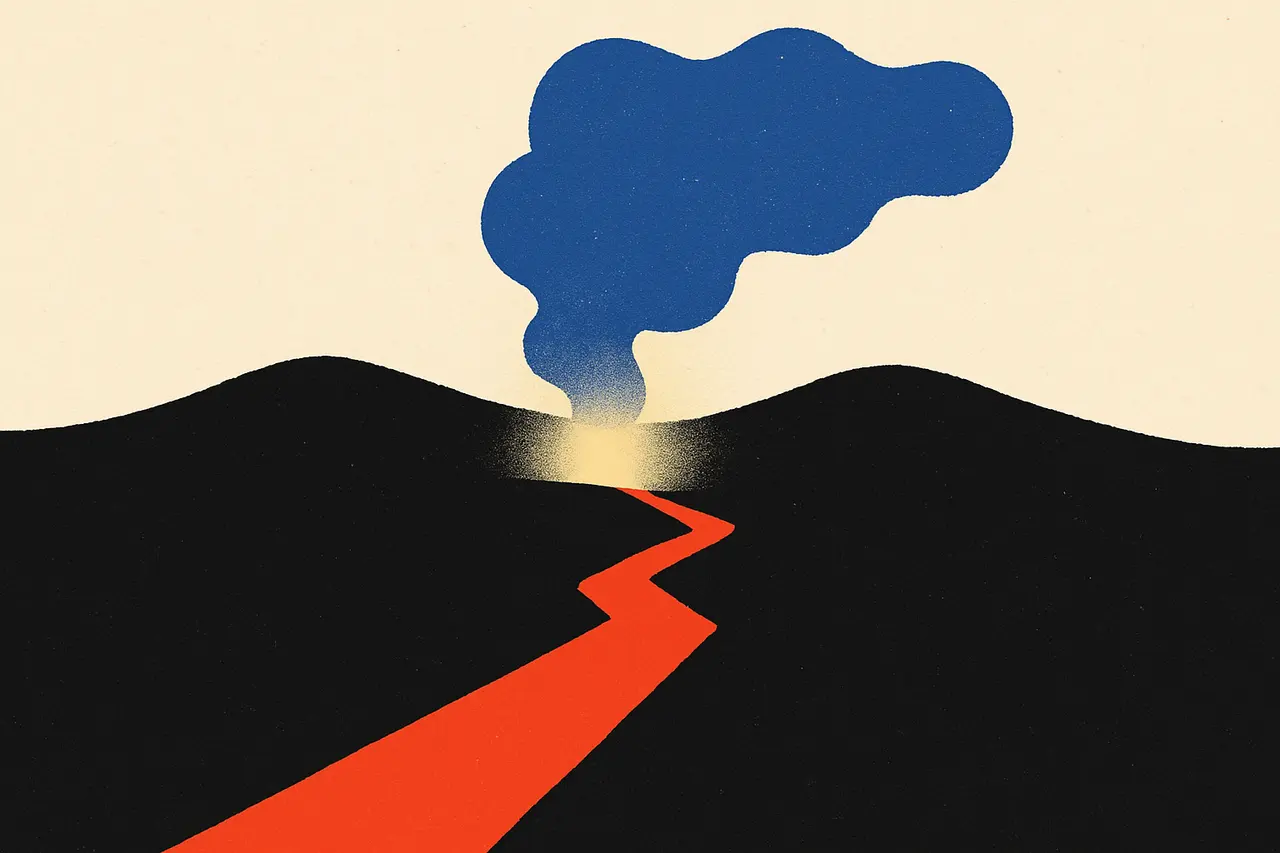
On June 8, 1783, a 16-mile fissure split southern Iceland and spent eight months bleeding lava and toxic gas across the Northern Hemisphere.
On June 8, 1783, a fissure tore open across southern Iceland and began the eruption known as the Laki (or Skaftár Fires). Over the next eight months, until February 1784, the system poured out roughly 14.7 cubic kilometers of basaltic lava—one of the largest lava flows in recorded history.
The lava was only part of the catastrophe. The eruption belched out enormous volumes of sulfur dioxide and fluorine. The fluorine settled onto grass and poisoned grazing livestock, while a choking haze and acid rain ruined crops.
The resulting “haze famine” killed an estimated 9,000-plus Icelanders—roughly a quarter of the population.
The gases did not stay local. A sulfurous haze spread across Europe, the North Atlantic, and beyond, and the following winter ran unusually cold across the Northern Hemisphere. Laki stands as a stark reminder of how a single Icelandic fissure can reach into the weather and harvests of distant lands.
Sources & references
2 referencesWell-established. Corroborated by 2 independent sources.