America's first vacuum cleaner needed a hand crank
On this day · 8 June 1869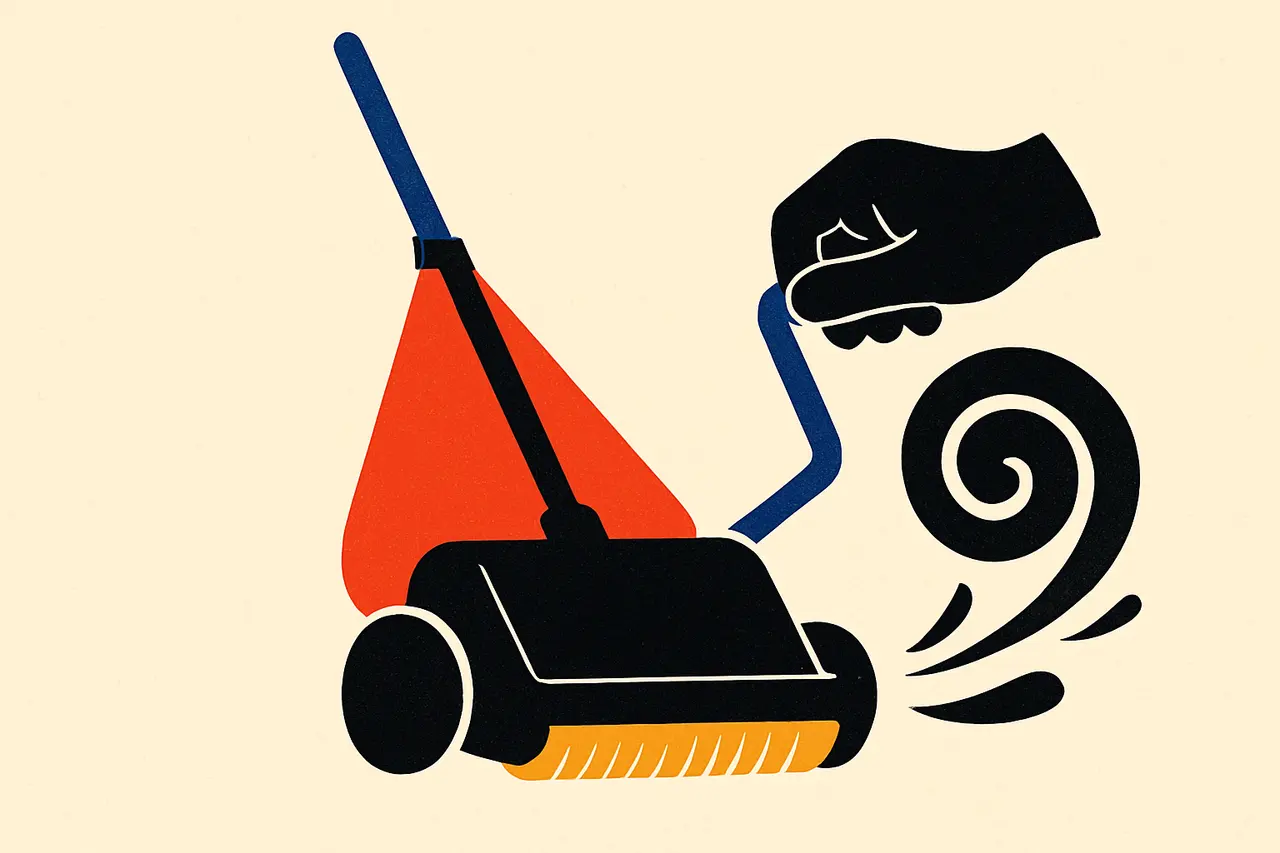
On June 8, 1869, a Chicago inventor patented a hand-powered "sweeping machine"—the awkward ancestor of every vacuum since.
On June 8, 1869, the U.S. Patent Office granted Patent No. 91,145 to Ives W. McGaffey of Chicago for an “Improved Sweeping-Machine.” It is widely recognized as the first U.S. patent for a hand-powered vacuum cleaner.
McGaffey’s device, which he marketed as the Whirlwind, was a contraption of wood and canvas. There was no motor. The operator had to turn a hand crank to create a current of air while simultaneously pushing the unit across the floor—an ungainly two-handed exercise.
Cleaning the rug meant cranking and shoving at the same time.
The airflow drew dust into a porous chamber, trapping dirt while letting the air escape. Clever, but awkward and expensive, the Whirlwind never sold well.
Electric suction had to wait. British engineer Hubert Cecil Booth patented a powered vacuum system in 1901, finally relieving households of the crank that McGaffey’s pioneering design had demanded.
Sources & references
2 referencesWell-established. Corroborated by 2 independent sources.