Iceland declared full independence from Denmark
On this day · 17 June 1944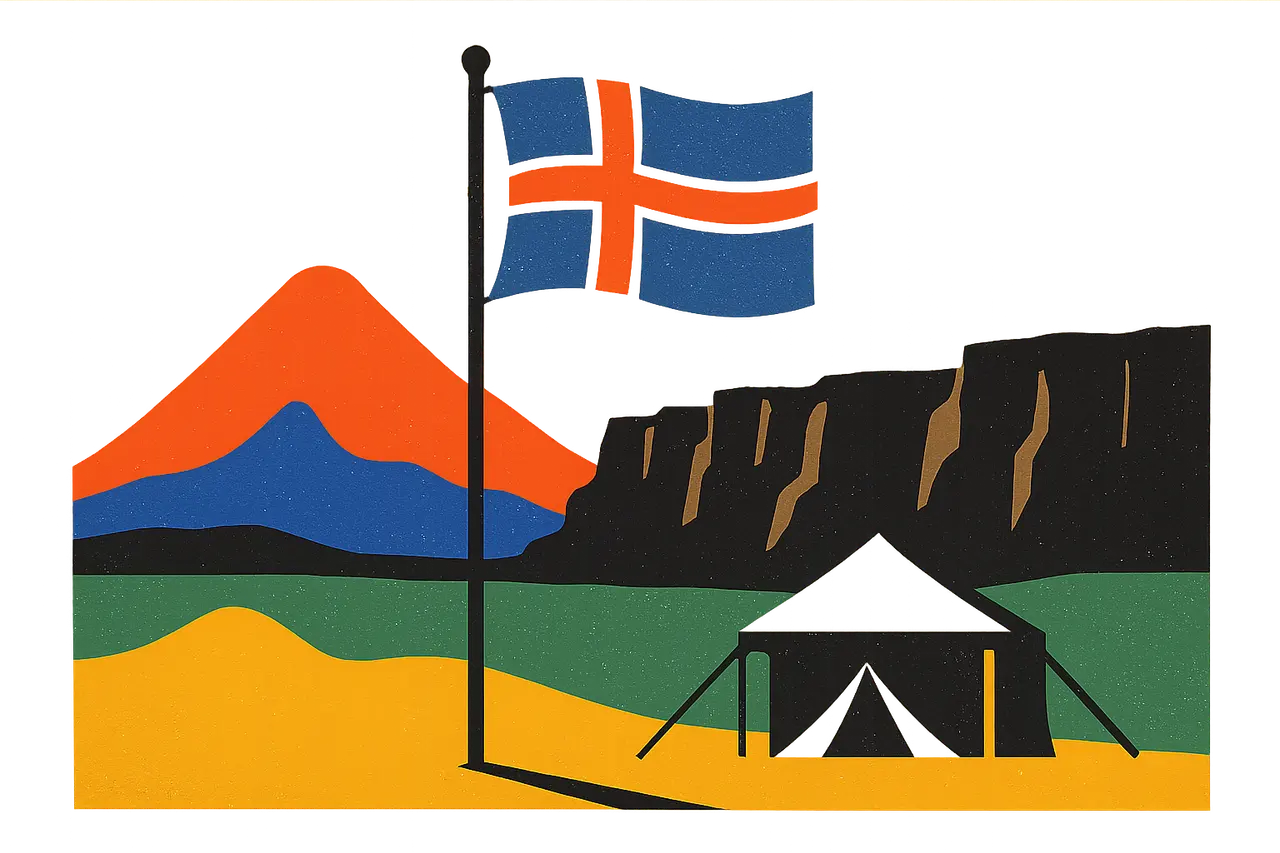
After centuries under foreign crowns, Icelanders gathered on a windswept plain to proclaim a republic of their own.
On 17 June 1944, Iceland formally became an independent republic, severing the political union that had tied it to the Danish crown. The proclamation was made at Þingvellir, the historic plain southwest of Reykjavík where Icelanders had convened their assembly since the year 930.
The timing was decisive. The 1918 Act of Union had made Iceland a sovereign state in personal union with Denmark, and its terms could be revisited after 25 years. With Denmark occupied by Nazi Germany and unable to object, Icelanders held a referendum in which roughly 98 percent turned out and an overwhelming majority backed both ending the union and founding a republic.
Sovereignty long delayed was claimed on the very ground where the old assembly first met.
Sveinn Björnsson became the first president of the new republic. The date is now celebrated annually as Iceland’s National Day, marking the end of an era under foreign monarchs that stretched back to the thirteenth century.
Sources & references
2 referencesWell-established. Corroborated by 2 independent sources.