How antibiotic resistance evolves, and how many it kills
Antibiotics select for the bacteria they cannot kill. Here is how resistance spreads, and how the real death toll compares with the famous 10 million.
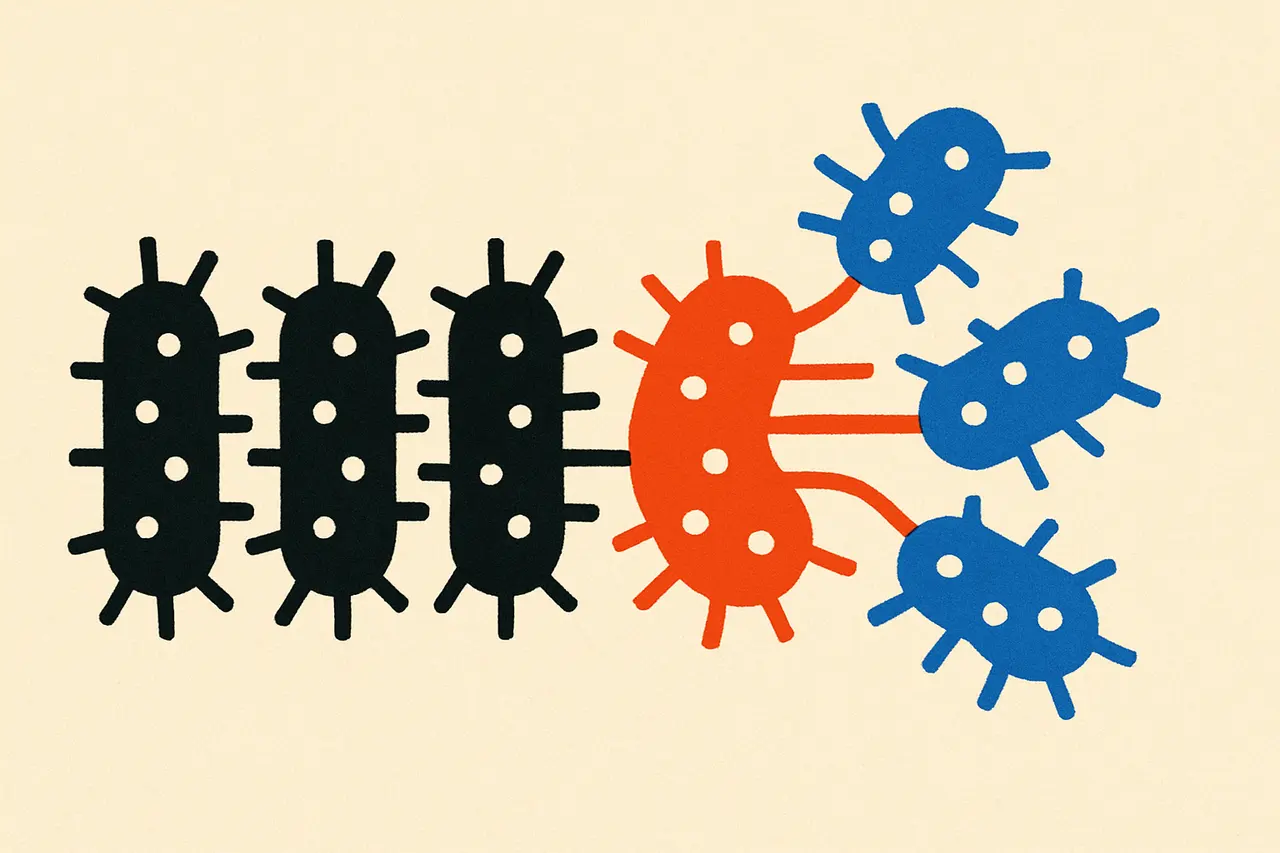
Antibiotic resistance evolves by natural selection: a drug kills the susceptible bacteria in an infection, while cells carrying a protective mutation or a borrowed resistance gene survive, multiply and take over. It is the bacteria that become resistant, not the person taking the medicine, so a resistant strain can go on to infect people who have never taken the drug.
Resistance does not only pass from a parent cell to its offspring. Through horizontal gene transfer, bacteria hand resistance genes sideways to other bacteria, so a defence that arose in one microbe can turn up in an unrelated germ that was never exposed to the antibiotic.
Human behaviour sets the pace. The World Health Organization names the misuse and overuse of antibiotics — taking them when they are not needed, or taking the wrong type — as one of the main drivers. Its surveillance found that about 1 in 6 laboratory-confirmed bacterial infections worldwide in 2023 were resistant to antibiotic treatment, and that between 2018 and 2023 resistance rose in over 40% of the drug–bacterium combinations it monitors, by an average of 5–15% a year.
The most quoted number on the subject comes from the 2014 Review on Antimicrobial Resistance, which projected that resistance could cause 10 million deaths a year by 2050. It was a projection, not a count, and it drew scientific criticism. The first comprehensive global assessment, the GRAM study published in The Lancet in 2024, gives a lower picture:
| Estimate | Directly caused | Associated |
|---|---|---|
| GRAM, deaths in 2021 | 1.14 million | 4.71 million |
| GRAM forecast, deaths a year in 2050 | 1.91 million | 8.22 million |
The GRAM forecast sits below the famous headline, but the directly attributable toll would still be roughly 70% higher than in 2022.
The toll is also shifting with age. From 1990 to 2021, resistance deaths fell by more than half among children under five, while rising by over 80% among adults aged 70 and older.
Sources & references
4 referencesWell-established. Corroborated by 2 independent sources.