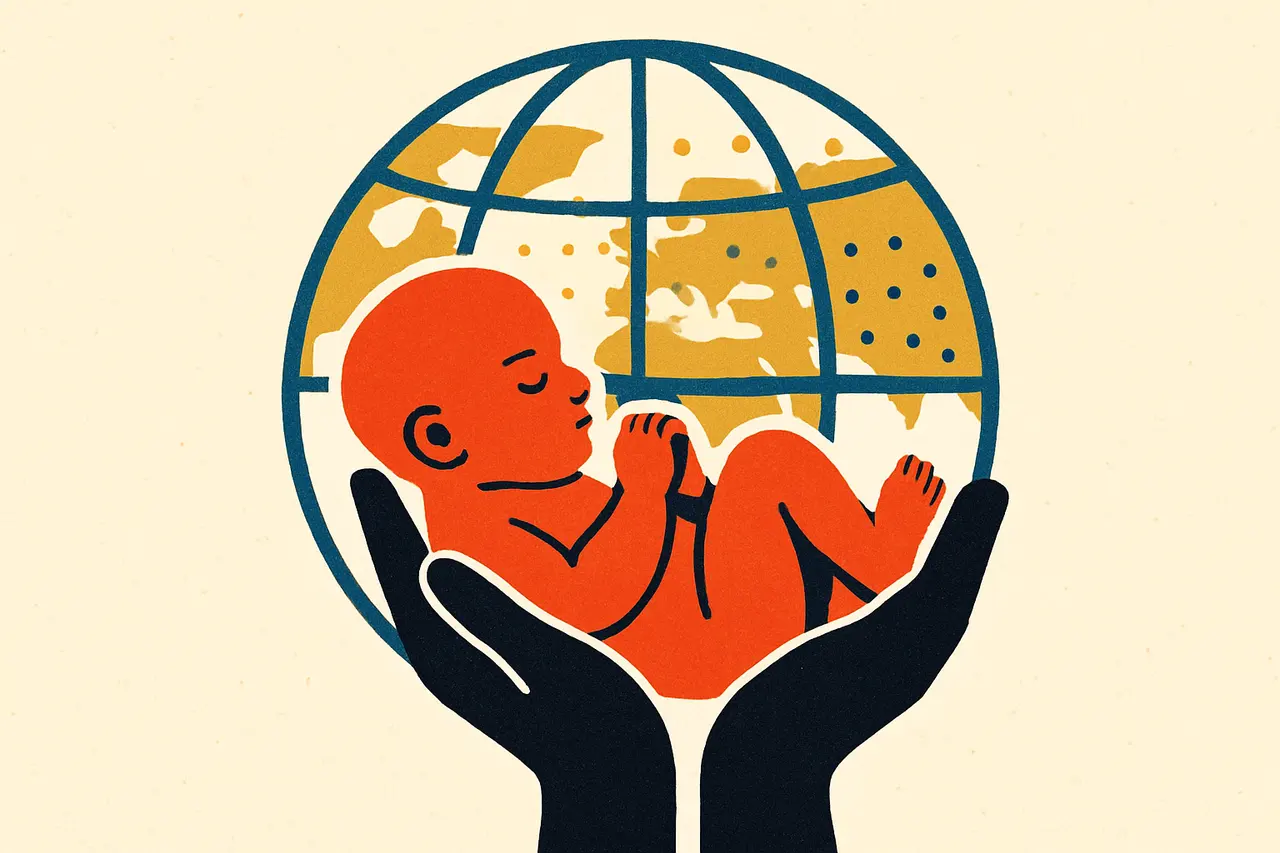
The world has roughly half as many babies per woman as in 1950
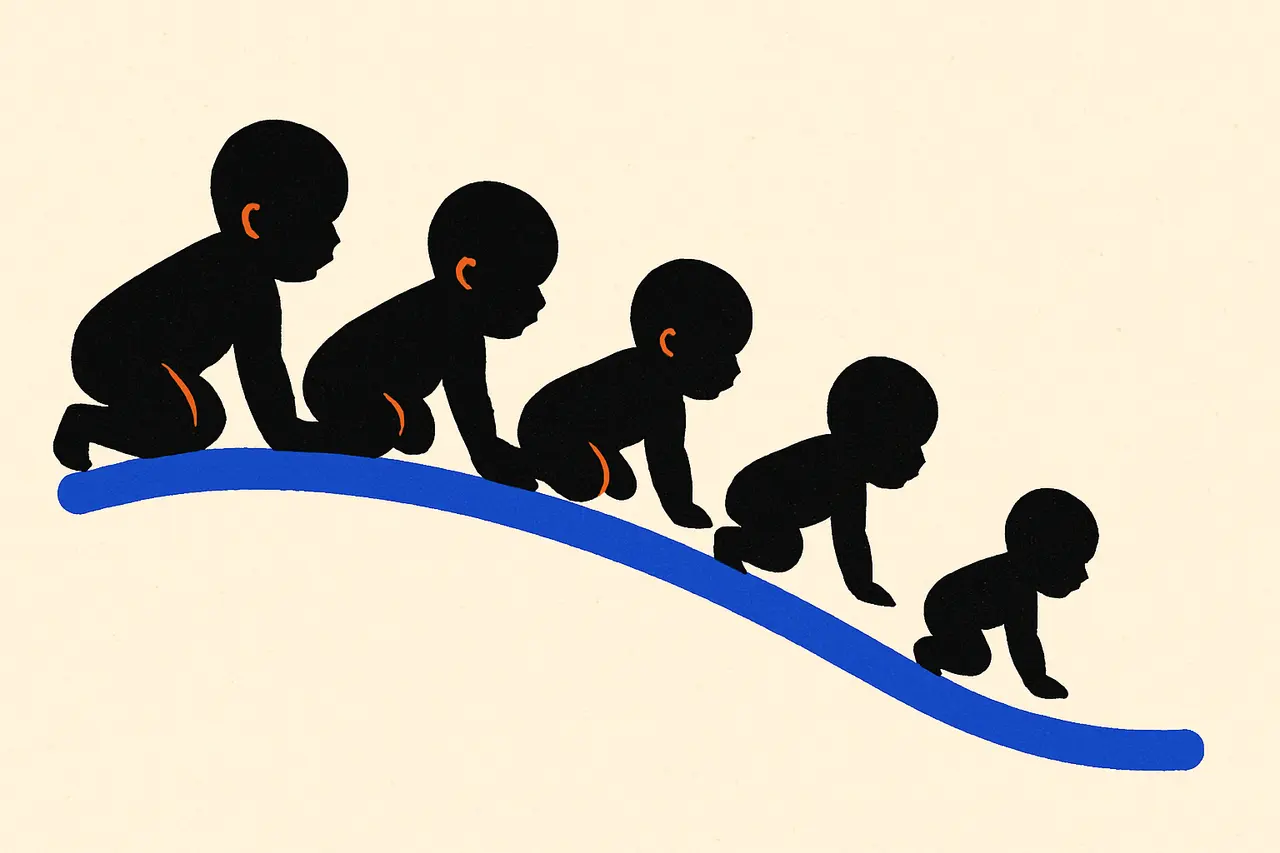
Global fertility has fallen from about 5 births per woman to around 2.3, nearing replacement level.
In 1950, the average woman worldwide had about 5 children over her lifetime. Today that figure has fallen to roughly 2.3 — a transformation demographers call the global fertility decline.
The drop is driven by widening access to education, contraception and economic opportunity, alongside lower child mortality, which means families no longer need as many births to ensure children survive.
The world is now closing in on the replacement rate of about 2.1 births per woman — the level at which a population sustains itself without growth or migration. The UN projects global fertility will reach replacement around 2050.
This is why population growth is slowing even as the total keeps rising: there is demographic momentum from past high-birth generations, but the underlying engine of rapid expansion has cooled dramatically across most of the world.
Sources & references
2 referencesWell-established. Corroborated by 2 independent sources.