Giordano Bruno was burned in 1600 for more than astronomy
On this day · 17 February 1600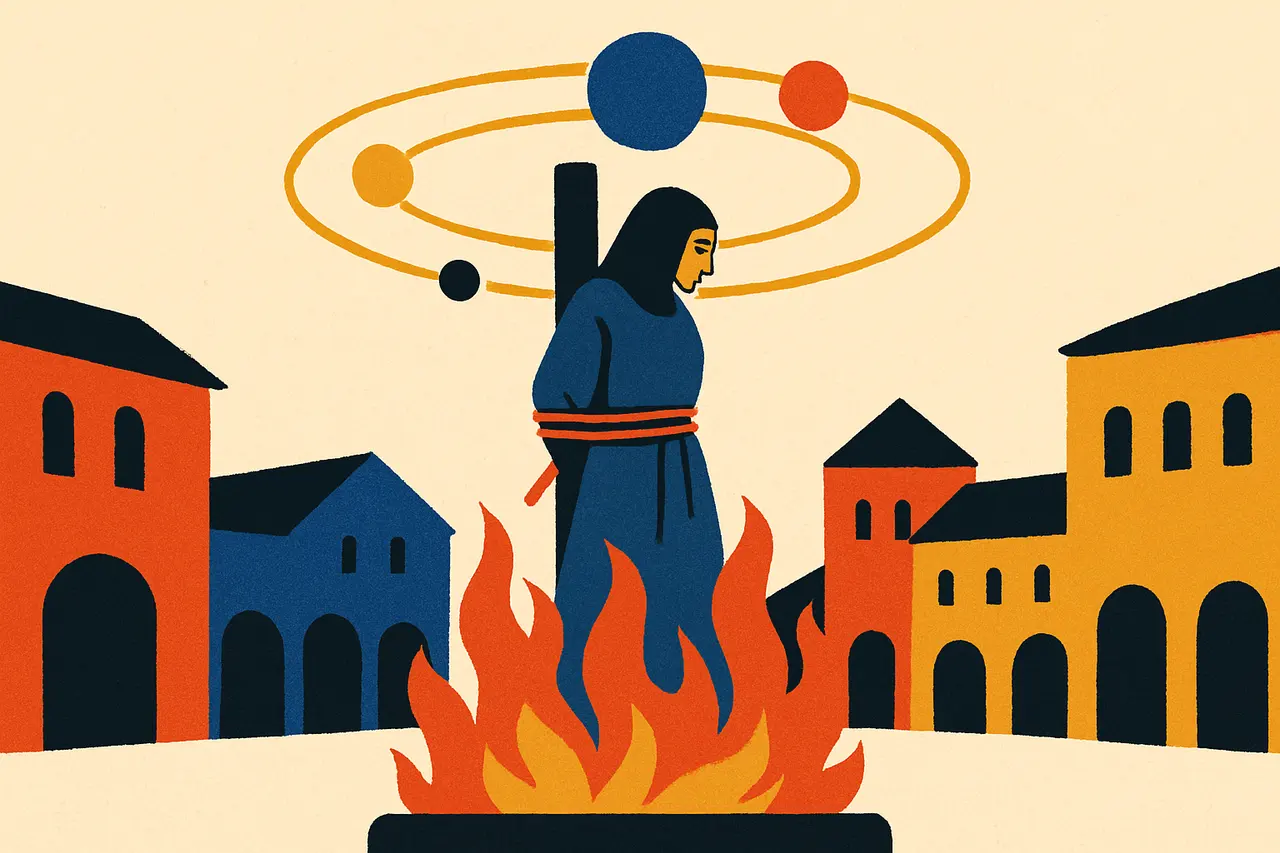
Bruno is remembered as a martyr for astronomy, but the list of heresies that condemned him is lost and the known charges were theological.
Giordano Bruno was burned alive for heresy at dawn on 17 February 1600 in Rome’s Campo de’ Fiori, after almost eight years in the custody of the Inquisition. With a metal plate clamped over his tongue, the former Dominican friar was stripped, tied to a stake and burned as the Confraternity of the Beheading of St John chanted.
He is often remembered as a martyr for Copernican astronomy, but the charges ranged far beyond astronomy. The accusations covered the eternity of creation, the transmigration of the human soul, the nature of the soul, the motion of the Earth as it related to the Bible, and Bruno’s belief in countless worlds. The decisive document, a list of eight heretical propositions drawn up by Cardinal Robert Bellarmine and Alberto Tragagliolo, is now lost. Only two of the eight are known, and neither concerns the heavens: one questioned the sacrament of reconciliation, the other described the soul as the helmsman of the body.
The road from arrest to the stake:
- 22 May 1592: denounced to the Venetian Inquisition by his patron, the nobleman Giovanni Mocenigo.
- January 1593: handed over to Rome after the Holy Office requested his extradition.
- 14 January 1599: the eight propositions approved; days later Bruno is ordered to abjure them.
- 20 January 1600: a congregation with Pope Clement VIII presiding puts his works on the Index and hands him to the secular authorities as an “impenitent, pertinacious and obstinate heretic.” His last written plea to the pope was opened but not read.
- 17 February 1600: executed.
Bruno’s afterlife was political. Popular nineteenth-century accounts likened him to Socrates, Christ and the martyrs of the Risorgimento, and in 1889, over fierce Vatican opposition, a bronze statue by the sculptor Ettore Ferrari was raised on the spot where he was believed to have died, glaring towards the Holy See.
Sources & references
5 referencesWell-established. Corroborated by 2 independent sources.