Why a scientific theory must be able to be proven wrong
Karl Popper's falsifiability test says a theory that no observation could ever refute isn't strong — it isn't science. Here's what it does and doesn't mean.
A theory counts as scientific only if some possible observation could prove it wrong. This principle of falsifiability was set out by philosopher Karl Popper in Logik der Forschung (1935; English edition 1959). A claim that fits every conceivable outcome isn’t strong; by Popper’s test it isn’t science at all.
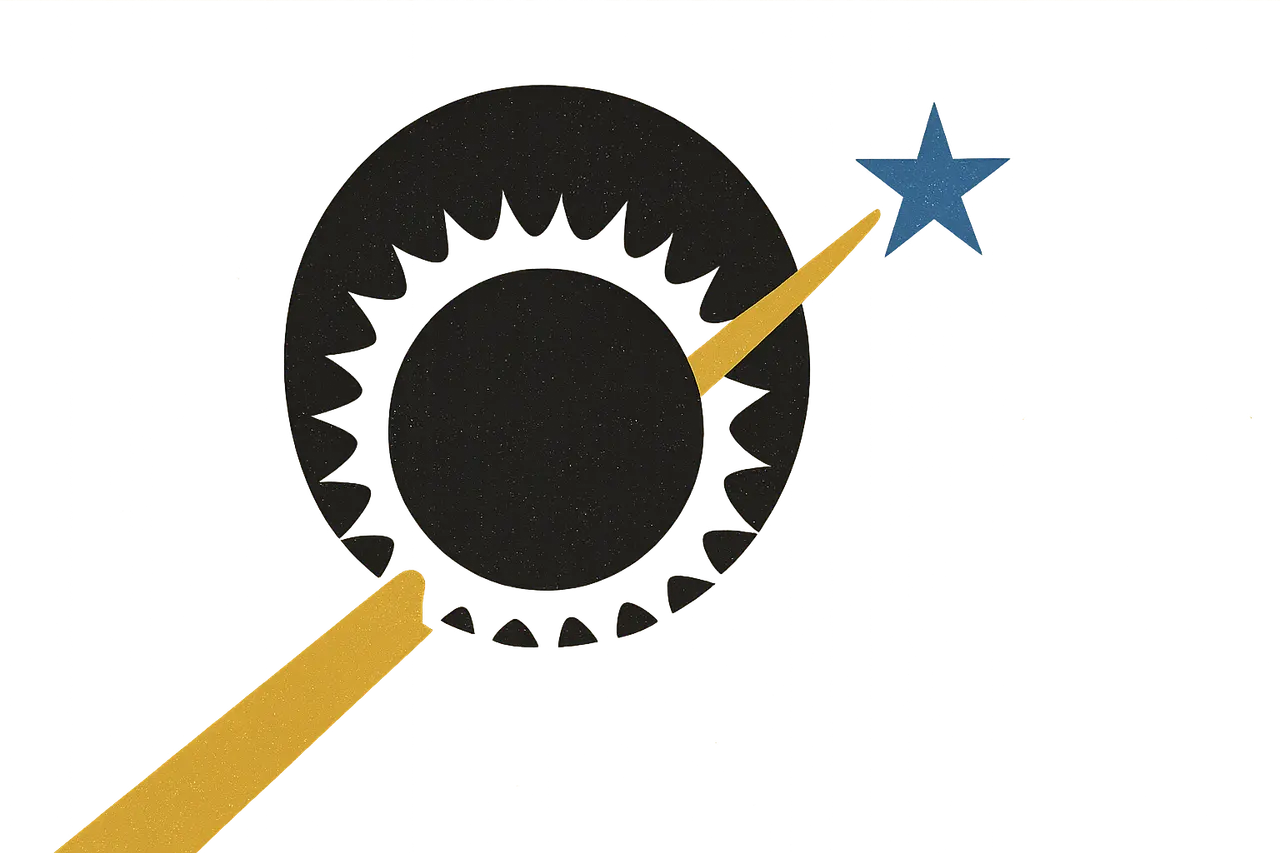
Popper’s starting point was a contrast he saw as a young man in Vienna around 1919. The psychoanalytic theories of Freud and Adler could explain any behaviour after the fact, so nothing could ever count against them. Einstein’s general relativity instead predicted how far the Sun’s gravity would bend starlight, a number that could have come out wrong during the 1919 solar eclipse, and didn’t.
“A theory which is not refutable by any conceivable event is non-scientific. Irrefutability is not a virtue of a theory (as people often think) but a vice.” — Karl Popper, Conjectures and Refutations (1963)
The logic is lopsided. Seeing 1,000 white swans does nothing to prove that all swans are white, while one black swan shows it is false. So science, for Popper, advances through bold conjectures that survive serious attempts to refute them, not by piling up confirmations.
None of this means “falsifiable” means false, or even doubtful. It means testable: a falsifiable theory may well be true, and the strongest are those that have survived many chances to fail. Nor is one awkward result usually fatal. Popper liked to cite the discovery of Neptune, predicted from Newtonian physics, as a critical test passed. His former student Imre Lakatos asked what would have happened had astronomers not found it: they would have blamed something else, not abandoned Newton.
The criterion is still argued over. In 2014 cosmologists George Ellis and Joe Silk warned in Nature that exempting speculative theories of the Universe from experimental testing undermines science.
Sources & references
4 referencesWell-established. Corroborated by 4 independent sources.