The V-2's first successful 1942 flight fell short of space
On this day · 3 October 1942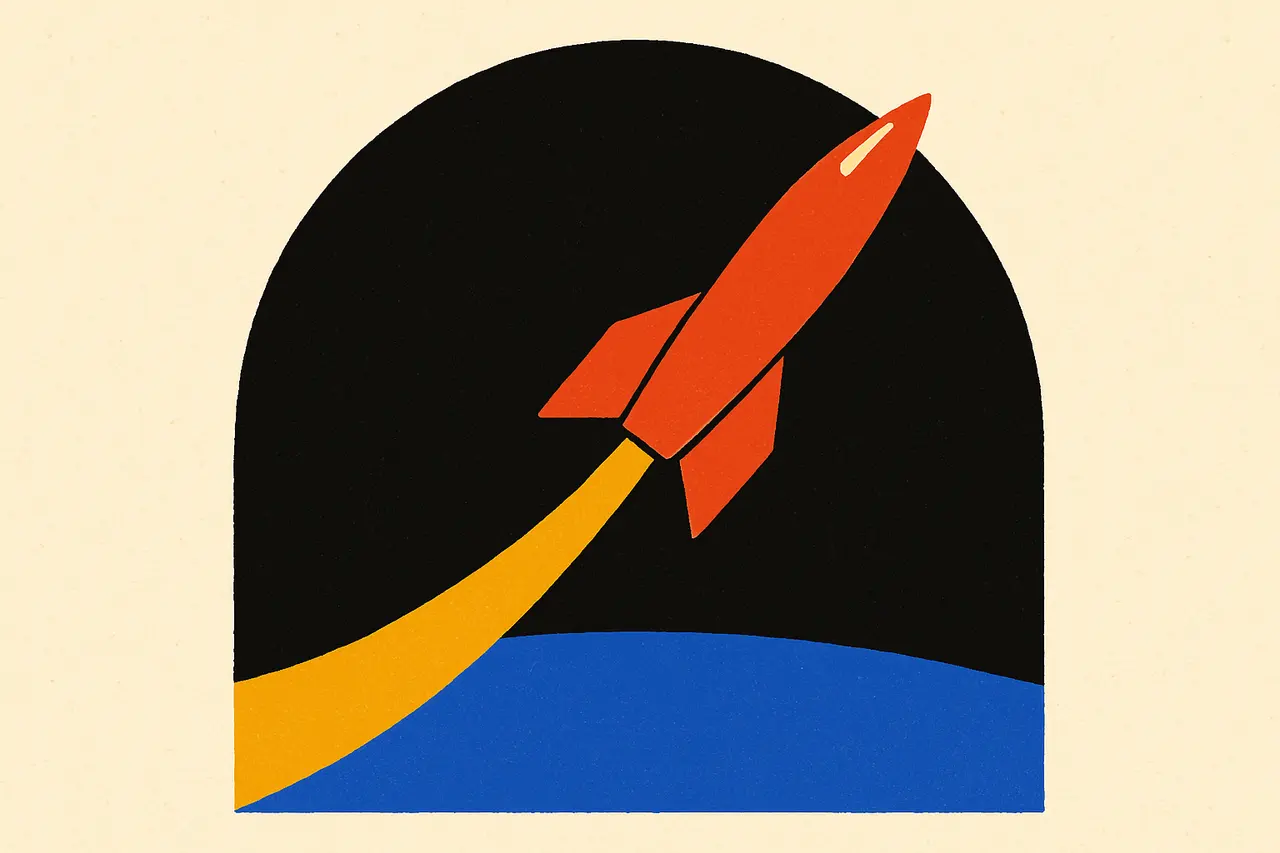
Germany's A-4 rocket first flew successfully on October 3, 1942, but its roughly 85–97 km climb stopped short of the 100 km line.
Germany’s A-4 rocket, later called the V-2, made its first successful flight from Peenemünde on October 3, 1942, but it did not reach space: it peaked somewhere between 85 and 97 kilometers, below the 100 km Kármán line now most widely used as space’s boundary.
How high did the first V-2 go?
Not high enough, though sources disagree on the numbers. The Smithsonian’s National Air and Space Museum gives 60 miles (about 97 km) of altitude and 125 miles of range in a 296-second flight, with a top speed of 3,300 mph and a landing within 2.5 miles of the target. Other accounts give 85–90 km and about 190 km downrange. Every figure falls short of 100 km, which is why some sites still call the flight the first to reach space, and why that claim does not hold up. The first human-made object to clearly cross the line was a vertically launched V-2, MW 18014, which climbed to 174.6 km in June 1944.
The test, by the fourth prototype after two failures that summer, still delighted its makers. Walter Dornberger, the army officer in charge of the program, declared the day “the first of a new era in transportation, that of space travel.” On November 22, Hitler ordered it into mass production.
How many people did the V-2 kill?
More in its making than in its use. The space-travel rhetoric hid a weapon built on slave labor. V-2s were assembled in the underground Mittelwerk factory by about 10,000 prisoner laborers alongside 2,000 civilian technicians. Of roughly 20,000 deaths at Mittelbau-Dora, about half are ascribed to the V-2 program. The rockets fired at London, Antwerp and other cities from September 1944 killed an estimated 5,500 people.
After 1945, captured V-2s and their engineers seeded both the American and Soviet space programs.
Sources & references
6 referencesWell-established. Corroborated by 3 independent sources.