Machu Picchu wasn't lost: farmers led Bingham there in 1911
On this day · 24 July 1911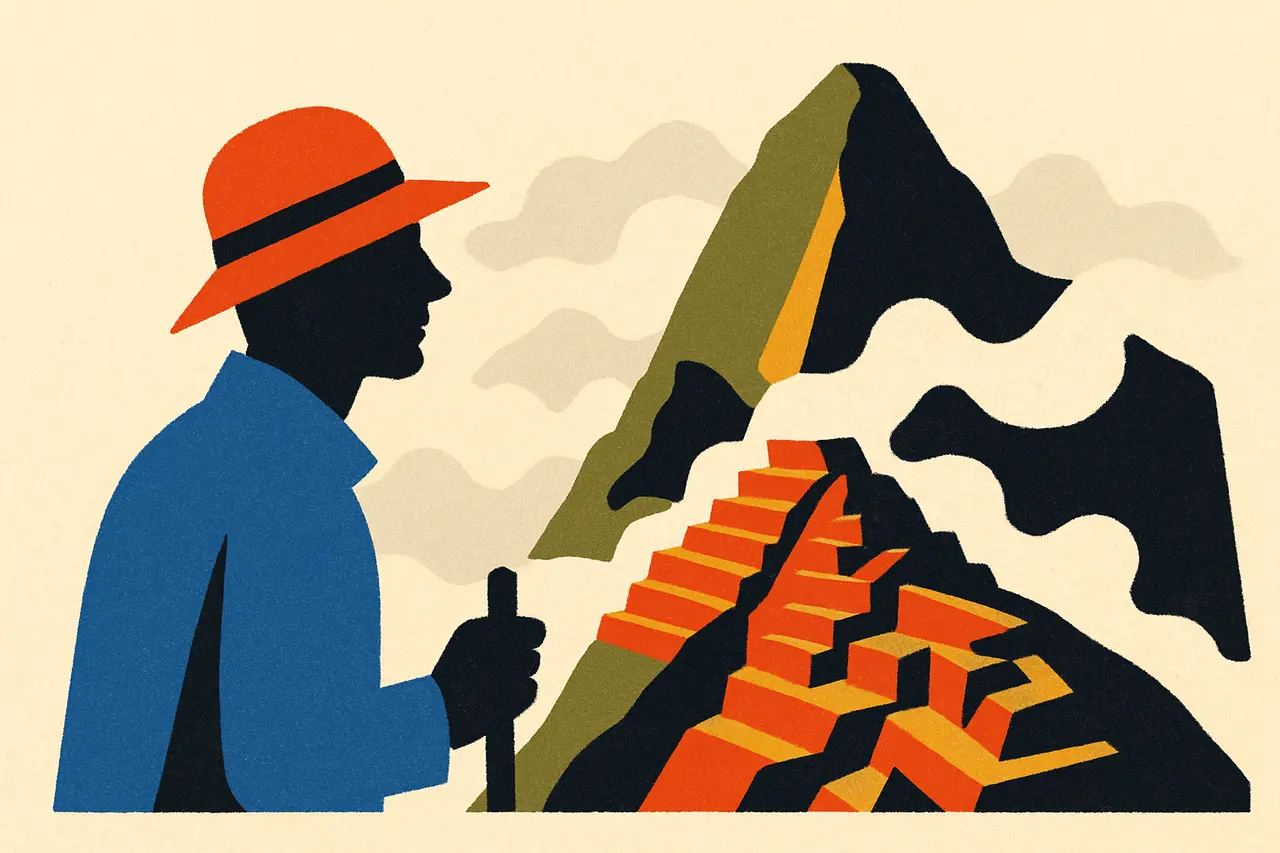
Hiram Bingham reached Machu Picchu on 24 July 1911 with a paid local guide, and found Quechua families already farming its Inca terraces.
Hiram Bingham, a Yale history lecturer, reached the Inca site of Machu Picchu on 24 July 1911, but he was led there by local guides and found Quechua farmers already growing crops on its terraces. It was a “lost city” only to outsiders.
Bingham was actually hunting for Vilcabamba, the last Inca refuge. The evening before, at a clearing called Mandor Pampa, a farmer named Melchor Arteaga told him about ruins on two nearby peaks, Huayna Picchu and Machu Picchu. The next morning it was drizzling and cold. Bingham’s companions stayed in camp, and Arteaga had to be paid triple wages to lead the climb. With Sergeant Carrasco, a military policeman assigned by the Peruvian government, they reached a farm run by Toribio Richarte and Anacleto Alvarez, who had been planting on the old Inca terraces.
What happened next
- 1912: Bingham came back with a larger Yale expedition to clear and excavate the site. Over this and later visits he took thousands of artefacts, most of which stayed at Yale’s Peabody Museum.
- 1910s: His articles for the National Geographic Society made Machu Picchu famous around the world.
- November 2010: After a long and bitter custody battle, Yale and the Government of Peru agreed to return the excavated collection.
- 2011–2012: The material went back to Cusco in three shipments, in March 2011, December 2011 and November 2012. It is now held at a joint study centre run by Yale and Cusco’s national university, UNSAAC.
- 2021: Precise radiocarbon dates from 26 people buried in four of the site’s cemeteries showed it was occupied from about AD 1420 to 1530. That is at least two decades earlier than the 1438 date historians had taken from colonial-era chronicles. You can read more about how radiocarbon dating works.
The new dates matter beyond Machu Picchu. The site is thought to have been an estate of the emperor Pachacuti, so an earlier start also moves his rise to power, and the early growth of the Inca Empire, about 20 years earlier.
Sources & references
4 referencesWell-established. Corroborated by 4 independent sources.