The 1818 Flag Act froze the US flag at 13 stripes
On this day · 4 April 1818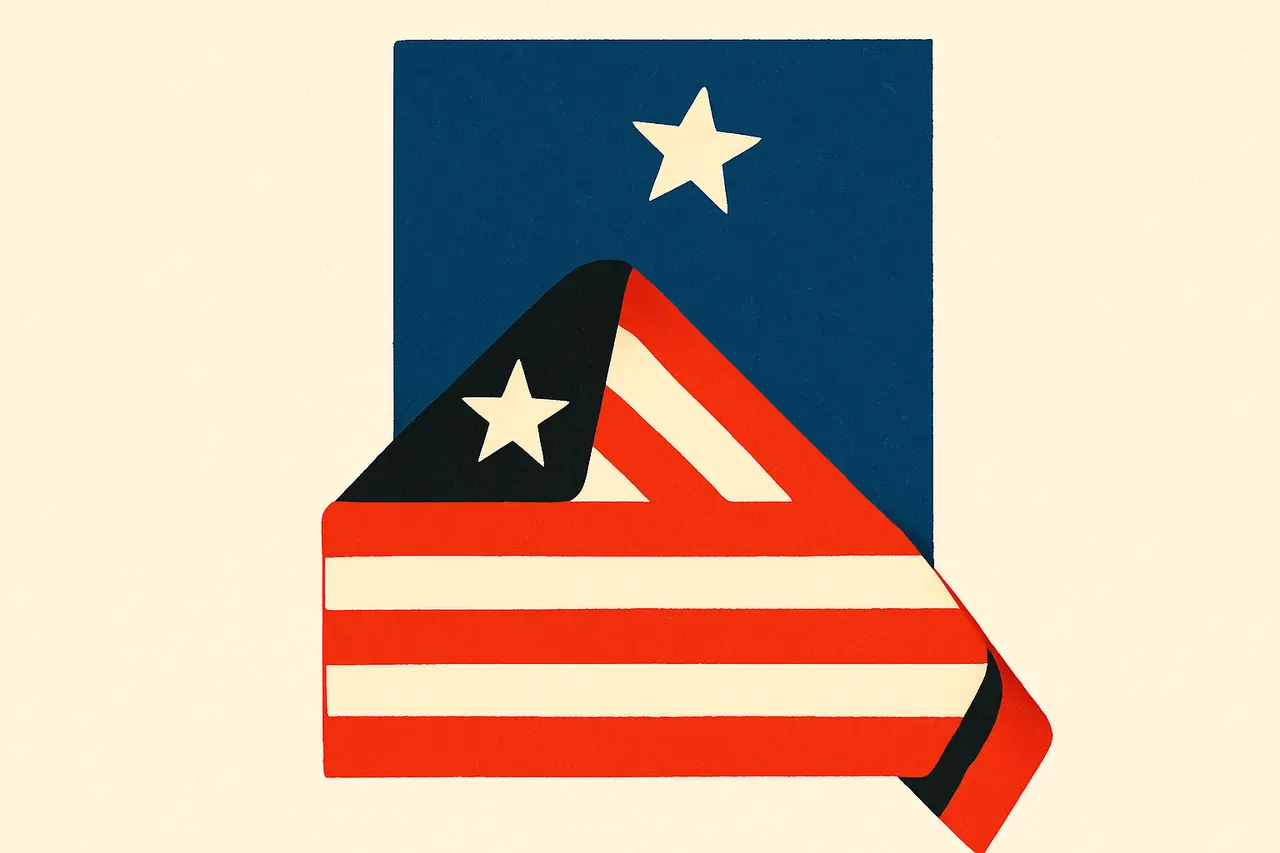
Monroe's 1818 law stopped the flag gaining a stripe for each new state. The statute in today's US Code still calls for 48 stars.
The Flag Act of 1818, signed by President James Monroe on April 4, 1818, fixed the US flag at 13 stripes and gave the counting of states to the stars alone: one star for each new state, added on the Fourth of July after it joined. The law took effect on 4 July 1818 with 20 stars.
A fix was needed because the previous rule added stripes as well. After Vermont and Kentucky joined, Congress voted in 1794 for a flag of 15 stars and 15 stripes, which lasted 23 years. By 1818 five more states had been admitted and several territories were seeking statehood, so the stripes would soon have become impossibly thin. Restoring the original 13 stripes, one for each founding colony, let the flag grow without redrawing it.
| Law or order | In force from | Stripes | Stars |
|---|---|---|---|
| Continental Congress resolution | June 14, 1777 | 13 | 13 |
| Flag Act of 1794 | May 1, 1795 | 15 | 15 |
| Flag Act of 1818 | July 4, 1818 | 13 | 20 |
| Eisenhower order (Alaska) | July 4, 1959 | 13 | 49 |
| Executive Order 10834 (Hawaii) | July 4, 1960 | 13 | 50 |
The first row is the 1777 Stars and Stripes resolution. The 1818 Act said nothing about how the stars should be arranged, so the modern layouts come from executive orders. Eisenhower issued two in 1959: seven rows of seven after Alaska joined as the 49th state, then today’s nine staggered rows of six and five after Hawaii.
There is one oddity in the law itself. When Congress wrote the flag rules into the US Code in 1947, Title 4, section 1 said the union “shall be forty-eight stars,” and that line has never been changed. The 49- and 50-star flags rest instead on section 2, the 1818 rule restated: one star per new state, effective the next Fourth of July. The 50-star flag has flown since July 4, 1960, unchanged for more than 65 years.
Sources & references
6 referencesWell-established. Corroborated by 4 independent sources.