Columbus left Palos on 3 August 1492 in renamed ships
On this day · 3 August 1492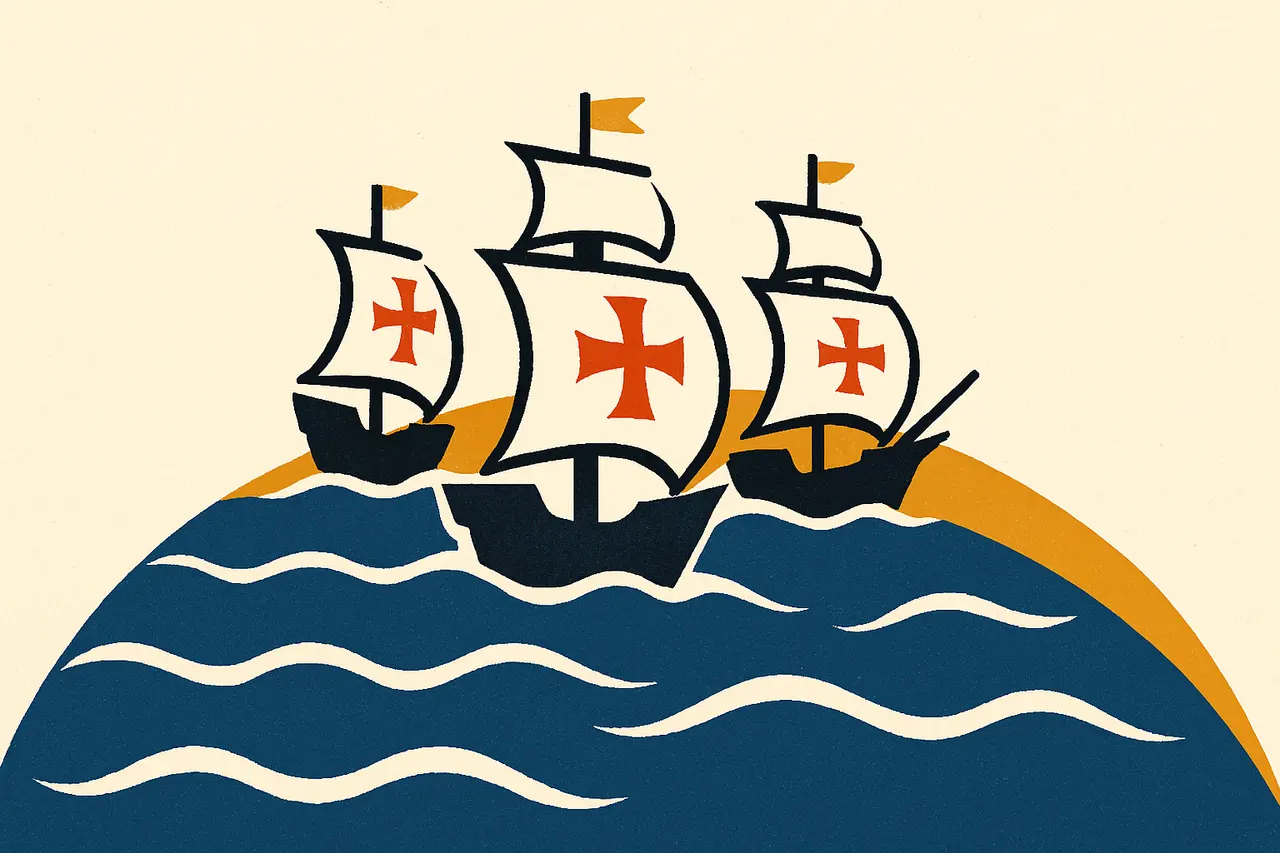
The three ships that left Palos at dawn went by other names, and despite the legend, their crews never mutinied.
Christopher Columbus sailed from Palos in southern Spain on Friday, August 3, 1492, “half an hour before sunrise,” with three ships and roughly 90 men (estimates run from 87 to 90), heading west for Asia by way of the Canary Islands. He left in the year Ferdinand and Isabella conquered Granada, the last Muslim kingdom in Spain, and expelled every Jew who would not convert.
What were the ships really called?
Not quite what the rhyme says. The flagship was La Gallega, named for Galicia, where she was built, and known to her sailors as “Marigalante.” Columbus renamed her Santa María. The Niña was officially the Santa Clara; her nickname was a pun on her owner, Juan Niño. Pinta means “painted one.” The two caravels and their crews came from the towns of Palos and Moguer, which supplied them to pay off a fine imposed by the Crown, and the local Pinzón and Niño families led much of the expedition.
The Santa María was a slow, tubby cargo ship whose deck, about the size of a tennis court, was shared by some 40 men. Columbus himself called her “very heavy and not suitable for the business of discovery,” and she sank off Haiti on Christmas Eve.
Did the crew mutiny?
No, though the story is still repeated. The log records grumbling. In late September sailors feared no wind would ever blow them home, and on 10 October “the men lost all patience” until Columbus talked them round with the profits ahead. The crews were experienced seamen, and archaeologist William Keegan puts it bluntly: there was no mutiny. Columbus did keep a double reckoning, though. That day he logged 59 leagues but told the crew 44.
Land was sighted two days later, and the fleet made its landfall in the Bahamas. Five years on, Portugal took the eastern route instead when Vasco da Gama set sail for India.
Sources & references
6 referencesWell-established. Corroborated by 4 independent sources.