Bloody Sunday: troopers beat Selma marchers on March 7, 1965
On this day · 7 March 1965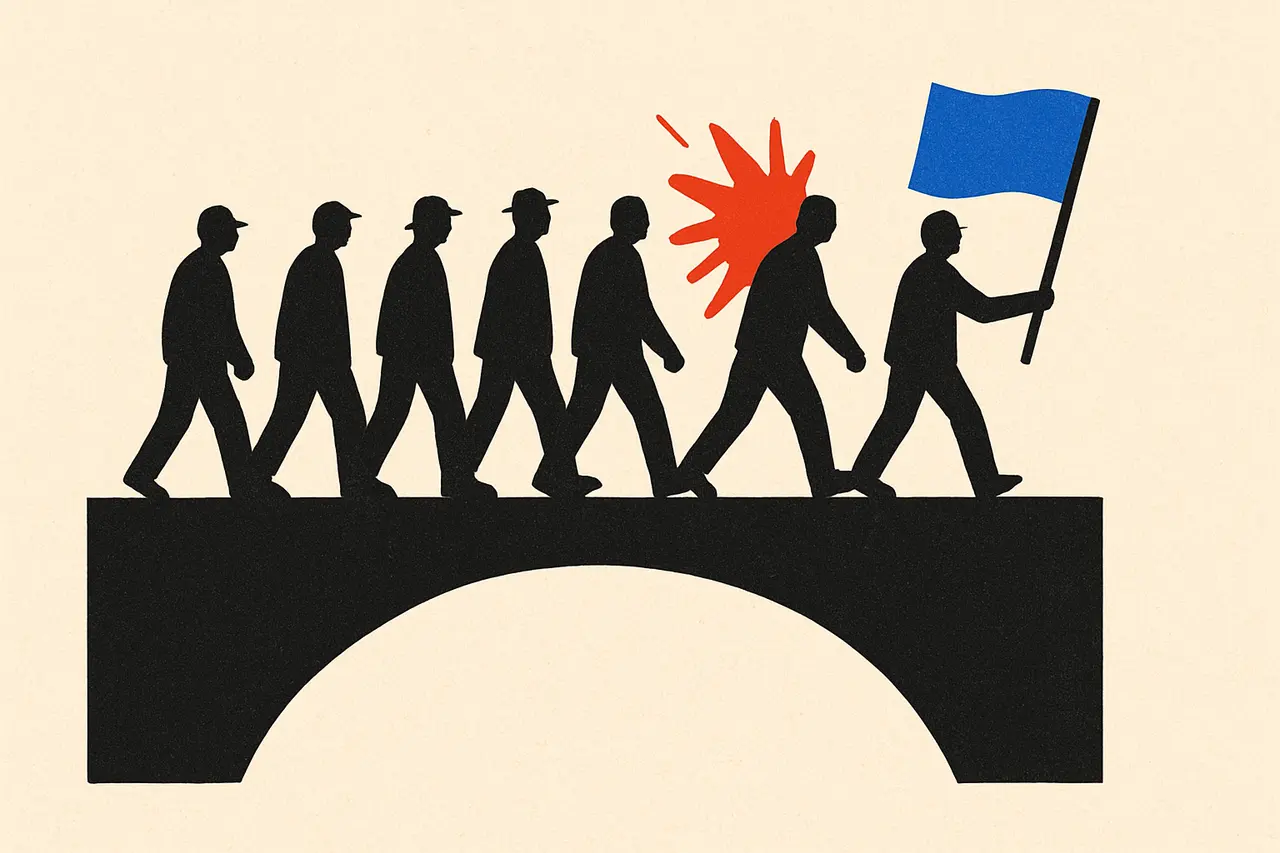
Troopers charged before their own two-minute warning was up. Within a week John Lewis was testifying in federal court about the attack.
On March 7, 1965, Alabama state troopers and a mounted county posse attacked about 600 voting-rights marchers at the end of the Edmund Pettus Bridge in Selma with clubs, bullwhips and tear gas, a day remembered as Bloody Sunday. Led by Hosea Williams of the SCLC and John Lewis of SNCC, the marchers were setting out on a 54-mile walk to the state capitol in Montgomery.
The march answered a killing. On February 18, troopers had broken up a night march in nearby Marion, and Jimmie Lee Jackson, a 26-year-old activist, was shot while trying to protect his mother and grandfather. Refused treatment in Marion, he was taken to Selma’s Good Samaritan Hospital and died seven days later.
On the bridge, about 150 troopers, deputies and possemen ordered the crowd to disperse. According to the National Archives, they advanced one minute and five seconds after a two-minute warning was announced. The Archives counts 58 people treated for injuries at the local hospital, among them Lewis with a fractured skull, and the National Park Service says hundreds of non-violent protesters were injured that afternoon.
How we know what happened on the bridge
Film crews were there, and the footage was broadcast across the country. The sworn record came quickly too. Less than a week later, Lewis described the attack at a federal hearing where the demonstrators asked for protection for a full march to Montgomery; the transcript of his testimony is held by the National Archives. Two weeks after the beating, the march finally set off under federal protection.
The law followed. President Lyndon Johnson signed the Voting Rights Act on August 6, 1965, outlawing literacy tests and other devices used to keep Black Southerners from voting. By the end of that year, about 250,000 new Black voters had registered, a third of them by federal examiners.
Sources & references
4 referencesWell-established. Corroborated by 3 independent sources.