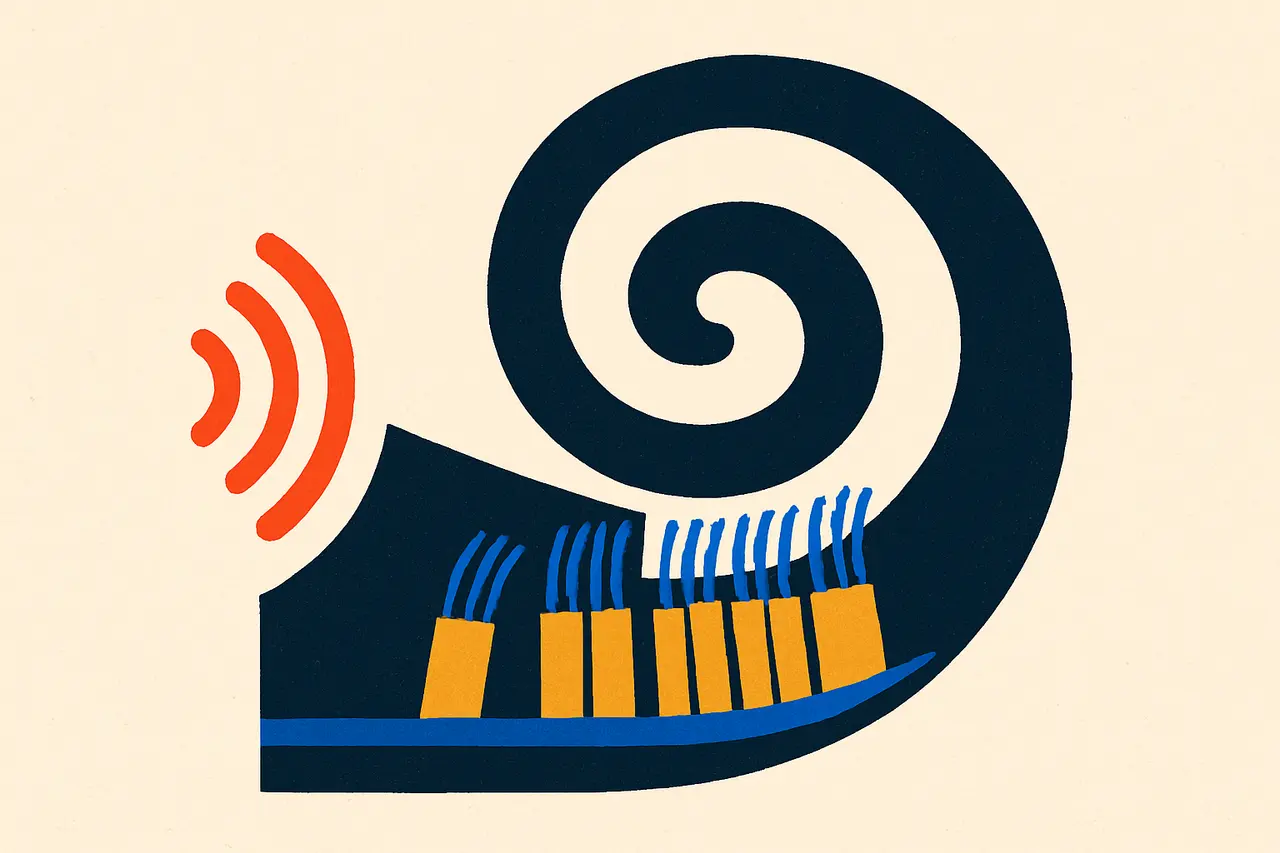
Each eye has a blind spot the size of nine full Moons
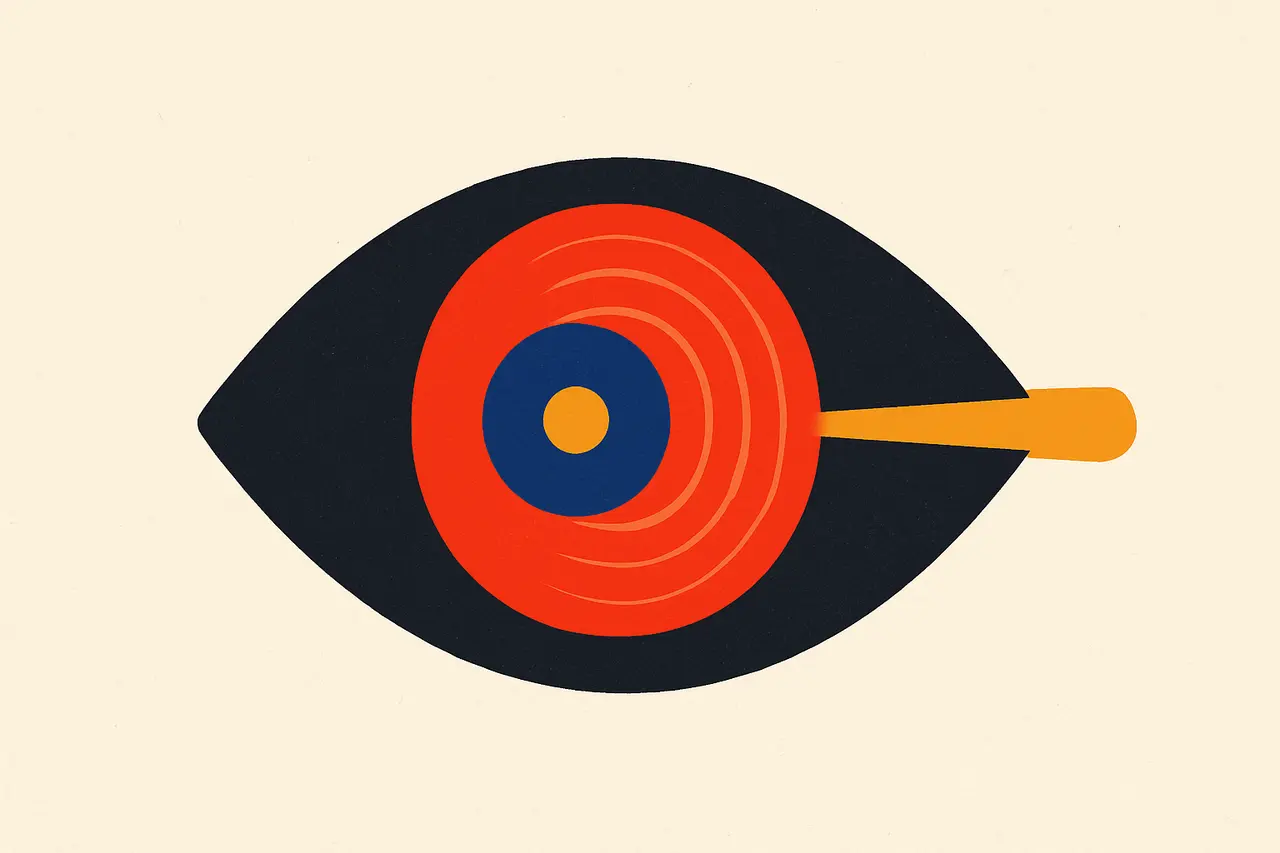
Where the optic nerve leaves the retina there are no light receptors, leaving a gap the size of nine full Moons that your brain paints over.
Every human eye has a blind spot that covers a patch of sky roughly nine times as large as the full Moon: the optic disc, where nerve fibres and blood vessels gather to leave the eye as the optic nerve, has no light-sensing cells at all, so any image that lands there is simply not seen.
The disc itself is tiny, about the size of a dot of spaghetti, but the hole it leaves in your view is large enough that, with practice, you can aim it at a small object and make it disappear. The left eye’s blind spot sits a little to the left of where you are looking, the right eye’s a little to the right.
You never notice it for two reasons. With both eyes open, each eye covers the patch the other misses. With one eye shut, the brain fills in the gap with what it expects to be there: a straight line running through the blind spot looks unbroken rather than cut in two.
As for why we have one at all, blame the wiring. In the human retina, the cells that carry signals to the brain lie in front of the light-sensing cells, so their wiring has to gather and exit through the retina itself. The octopus evolved the opposite layout, with photoreceptors on the inner side and the signalling cells behind them, so its optic nerve interrupts no part of the retina and it has no blind spot.
The gap is easy to find. Draw a small dot and a + about 6–8 inches apart, close your right eye, look at the + with your left eye from about 20 inches away and move slowly closer: at some point the dot vanishes. Neuroscientist V. S. Ramachandran notes that King Charles II of England used to aim his blind spot at a prisoner’s head to “decapitate” him visually before an actual beheading.
Sources & references
5 referencesWell-established. Corroborated by 4 independent sources.