Did the Black Death kill half of Europe? It depends where
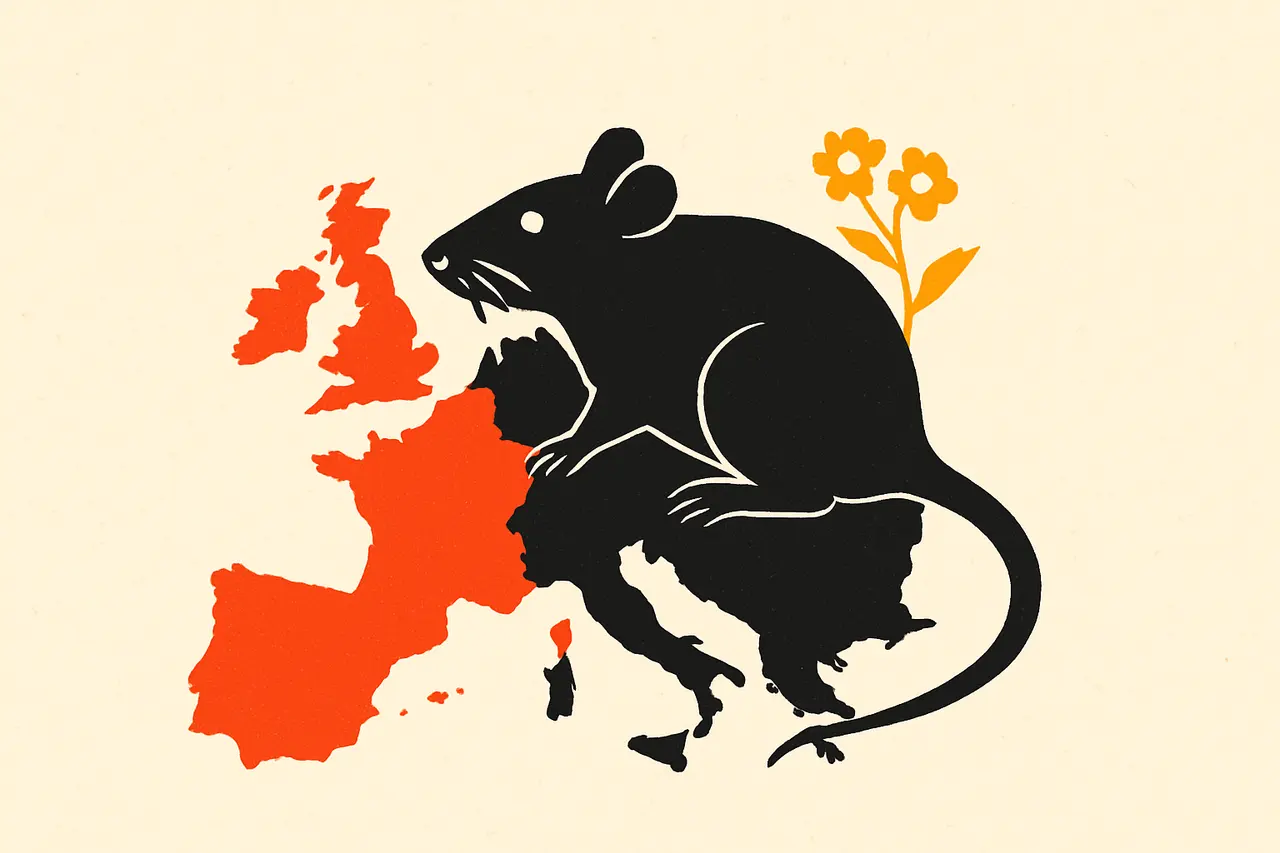
Historians now put the Black Death's toll near 50% — but pollen evidence shows some regions were devastated while others barely suffered.
The Black Death killed somewhere between a third and a half of Europe’s people between 1347 and 1351, but the higher figure is a recent revision, and new evidence shows the toll varied enormously from one region to the next.
For most of the 20th century, historians accepted that 25–33% of western Europeans died. They did so uneasily: modern bubonic plague kills at most 3% of a population. Research since 2004 into manorial records of tenant turnover pushed the estimate up, as Oxford historian James Belich summarises:
| Measure | Estimate |
|---|---|
| Traditional share of western Europe killed | 25–33% |
| Revised share, from manorial records | about 50% |
| England, 1348 to 1351 | 4.8m to 2.6m (−46%) |
| England by 1450, after repeat outbreaks | 1.9m (−60% on 1348) |
| Total deaths in Europe (WHO) | more than 50 million |
Populations did not start growing again until about 1500, and recurring outbreaks restrained them into the 18th century.
Was it the same everywhere?
No. In 2022 a team led by Adam Izdebski of the Max Planck Institute analysed 1,634 pollen samples from 261 sites in 19 countries to track whether farmland was abandoned after 1347. Sharp agricultural declines in Scandinavia, France, southwestern Germany, Greece and central Italy match the catastrophic chronicles. But much of Central and Eastern Europe, and parts of the west including Ireland and Iberia, show continuity or even growth. Because upwards of 75% of people lived in the countryside, city-based chronicles may exaggerate the continental average.
“There is no single model of ‘the pandemic’ or a ‘plague outbreak’ that can be applied to any place at any time regardless of the context.” — Adam Izdebski
The killer was the bacterium Yersinia pestis, carried by fleas. Untreated, bubonic plague kills 30–60% of those infected; the pneumonic form, spread person to person through the air, is invariably fatal without early treatment. Fear bred scapegoats: in some cities, as in the Strasbourg massacre of 1349, Jewish communities were murdered before the plague had even arrived.
Sources & references
3 referencesWell-established. Corroborated by 3 independent sources.