Apollo 12 landed on the Moon 538 feet from Surveyor 3
On this day · 19 November 1969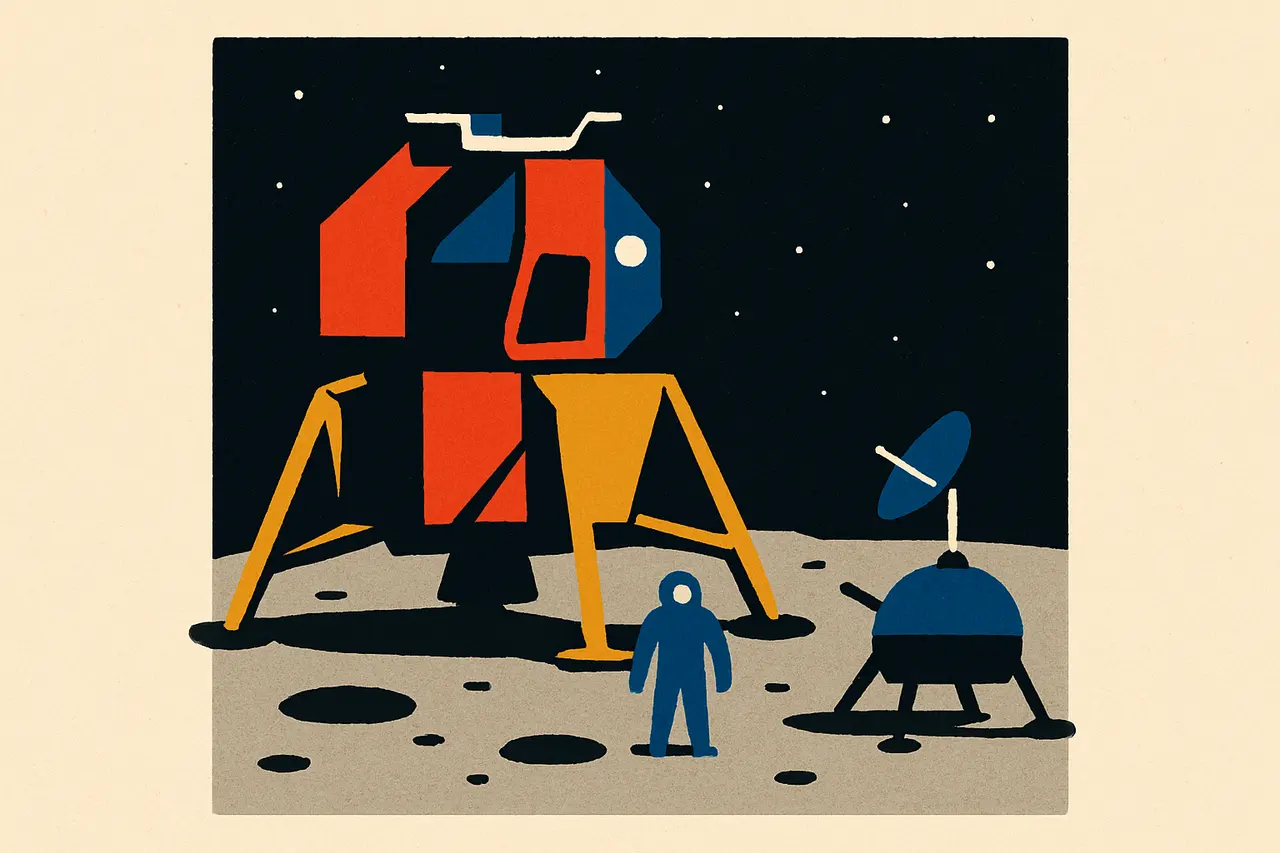
Four months after Apollo 11 missed its mark by kilometres, Apollo 12 survived two lightning strikes and parked within walking distance of a robot probe.
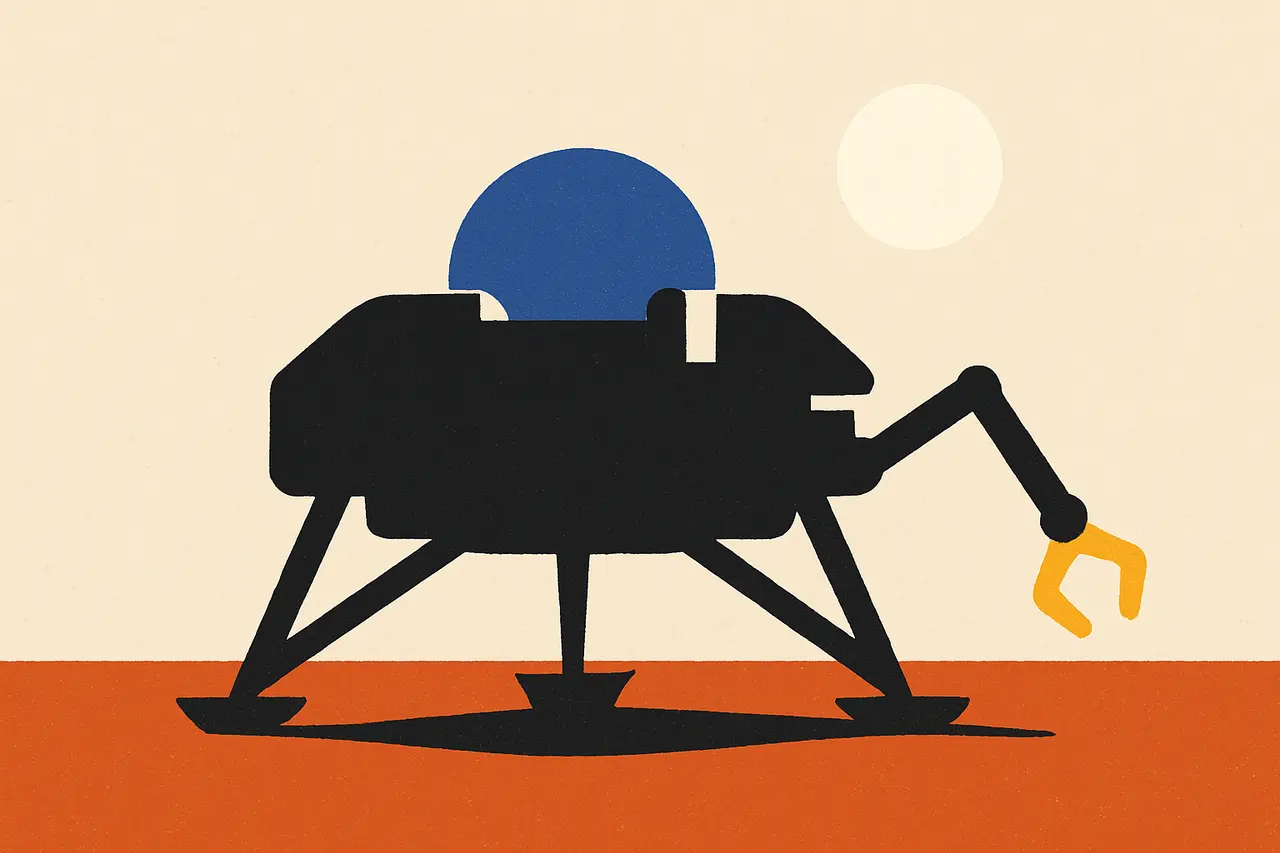
Apollo 12 made the second crewed Moon landing on November 19, 1969, when Pete Conrad and Alan Bean set the lunar module Intrepid down in the Ocean of Storms just 538 feet (about 160 m) from Surveyor 3, a robotic probe that had landed in April 1967. Richard Gordon stayed in lunar orbit.
The mission nearly ended at launch on November 14. About 37 seconds into the flight, lightning struck the Saturn V twice during ascent, scrambling the instruments, until a flight controller’s suggestion, “Try SCE to AUX,” let the crew restore power and carry on.
Why did Apollo 12 land next to Surveyor 3?
To prove NASA could land on a chosen spot. Apollo 11 had touched down more than 6 kilometres from its target after Neil Armstrong steered around a boulder field, and NASA needed that precision before sending crews to rougher, more interesting terrain. Lunar scientist Ewen Whitaker had pinpointed exactly where Surveyor 3 sat, giving Conrad a bullseye, and on his next pass Gordon picked out both craft on the surface through a 28-power sextant.
On the surface, the short Conrad poked fun at Armstrong’s famous line: “Whoopee! Man, that may have been a small one for Neil, but that’s a long one for me.” NASA’s history gives “Whoopee”; the Smithsonian quotes it as “Yippee!” Soon after, Bean accidentally pointed the colour TV camera at the Sun, burning out its tube and ending live pictures from the Moon.
Did bacteria survive on the Moon inside Surveyor 3?
Not necessarily, despite the popular story. On the second of two moonwalks, totalling about 7 hours 45 minutes, the pair cut the camera and other parts off Surveyor 3 so engineers could study 31 months of lunar exposure. Bacteria were later found inside the camera and are often described as microbes that survived on the Moon, but some studies suggest they got in after it returned to Earth.
Sources & references
3 referencesWell-established. Corroborated by 3 independent sources.