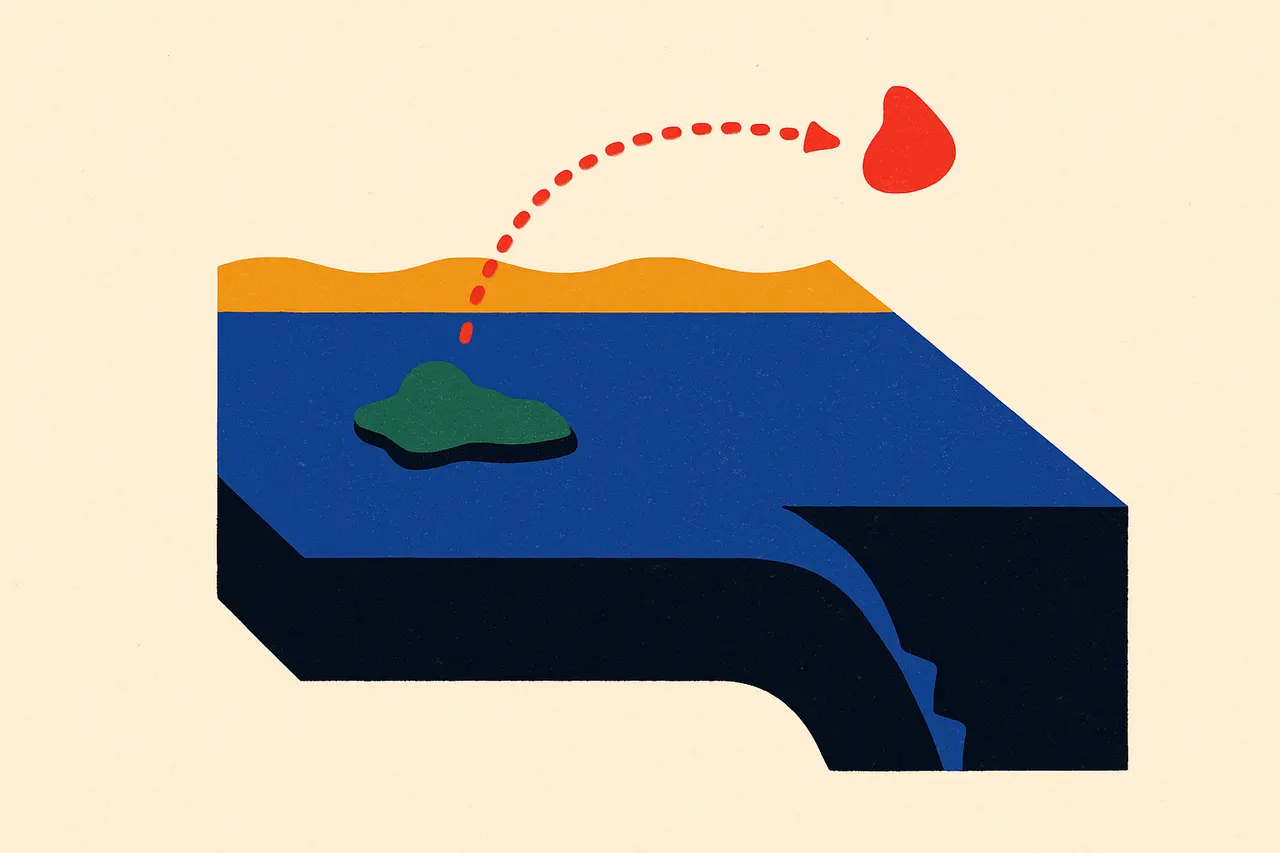
Alfred Wegener proposes continental drift
On this day · 6 January 1912
A young meteorologist told a room of geologists the continents had drifted apart, and spent the rest of his life being doubted.
On January 6, 1912, the meteorologist Alfred Wegener stood before the Geological Association at the Senckenberg Museum in Frankfurt and made a radical claim: the continents had once been joined and had since drifted across the globe. He pointed to matching coastlines, shared fossils, and rock formations that lined up across oceans.
Wegener later named the lost supercontinent Pangaea, “all lands,” reconstructing a single mass that began breaking apart roughly 200 million years ago. It was a sweeping, almost reckless idea from someone trained in weather, not rocks.
Geologists mostly scoffed. Wegener could describe the drift but could not explain what force moved entire continents, and that gap let critics dismiss him for decades. He died on a Greenland expedition in 1930, still unvindicated.
Only in the 1950s and 1960s did paleomagnetism and seafloor mapping reveal the missing engine. The modern theory of plate tectonics confirmed that Wegener had been right about his biggest idea all along.
Sources & references
2 referencesWell-established. Corroborated by 2 independent sources.