Samuel Morse demonstrates the telegraph
On this day · 6 January 1838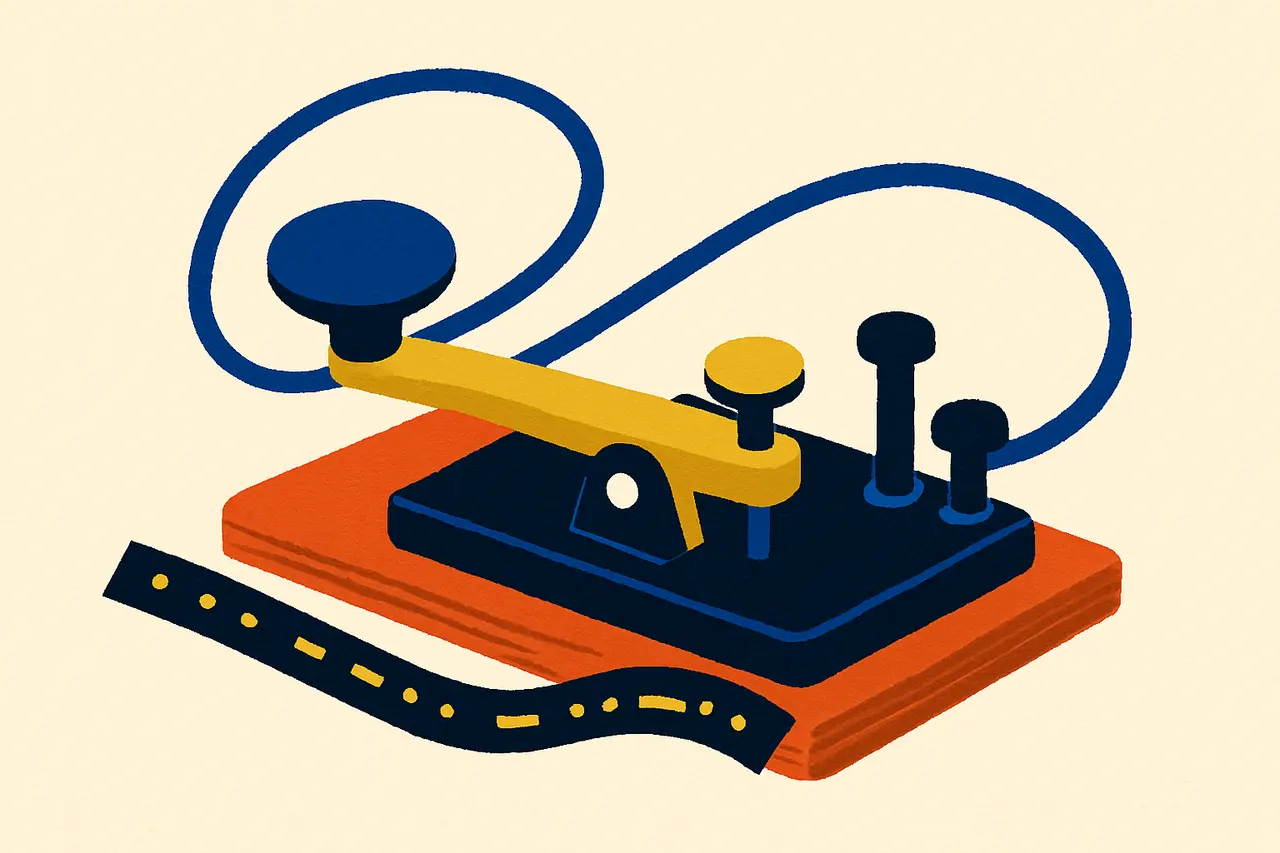
A loop of wire strung around a New Jersey factory carried the first practical electric message, and distance suddenly stopped mattering.
On January 6, 1838, Samuel Morse strung roughly two miles of wire around a room at the Speedwell Iron Works in Morristown, New Jersey, and sent a coded message that arrived almost instantly. Electric pulses nudged an electromagnet to ink dots and dashes onto a moving paper strip, spelling out a sly motto chosen for the occasion: A patient waiter is no loser.
Morse was a painter by training and far from a lone genius. His assistant Alfred Vail, whose family owned the ironworks, was a gifted machinist who rebuilt Morse’s clumsy prototype into something worth showing and helped shape the dot-and-dash alphabet now called Morse code.
The really clever part was the code itself, letting a single wire carry a whole language.
The Morristown trial led to public demonstrations days later and, eventually, to a federal line between Washington and Baltimore. Operators soon learned to read the clicks by ear, speeding the whole process tenfold and turning a parlor novelty into the backbone of long-distance communication.
Sources & references
3 referencesWell-established. Corroborated by 3 independent sources.