HD 189733b, the blue planet where it rains glass sideways
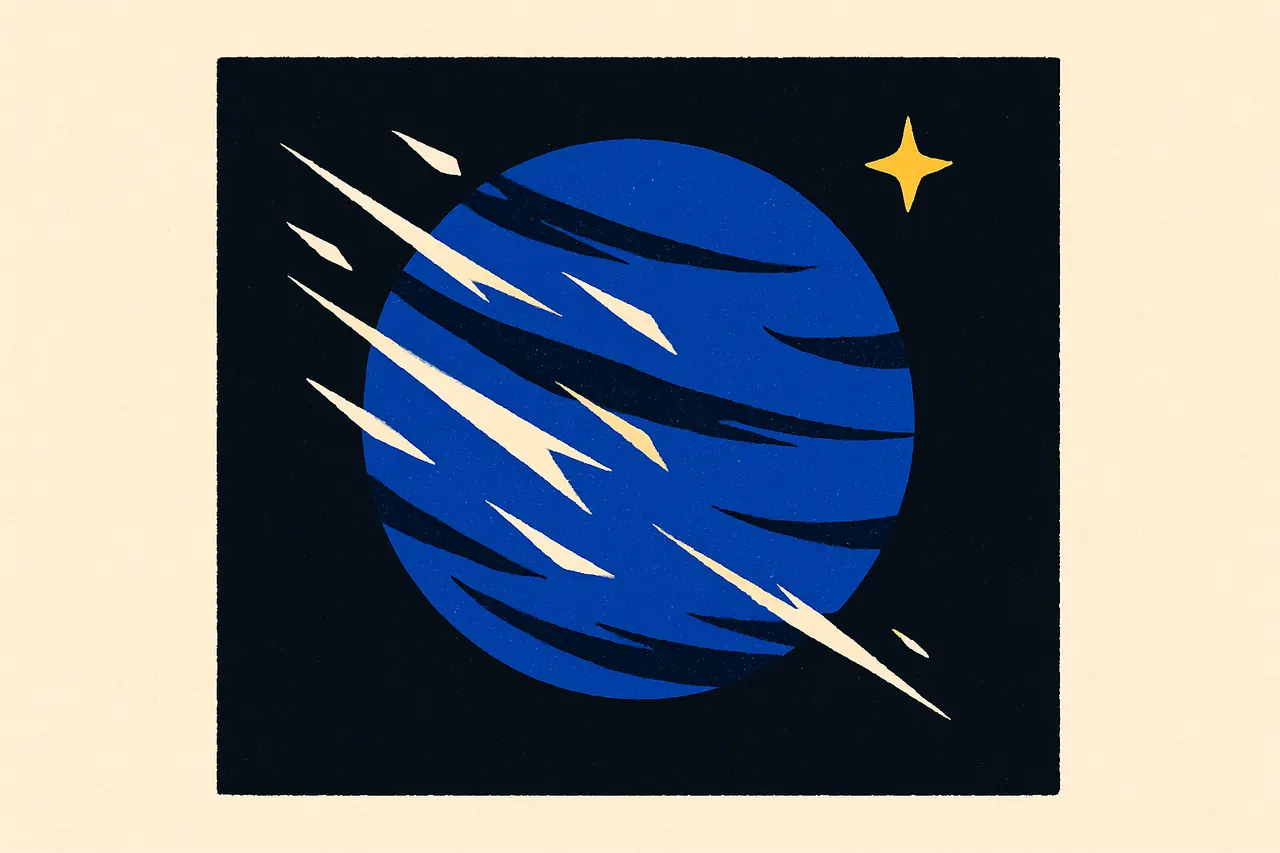
Hubble found that HD 189733b is deep azure, the first exoplanet colour ever measured. Its blue sky may hold sideways-blown grains of glass.
HD 189733b is a gas giant 63 light-years away whose deep azure colour, measured by the Hubble Space Telescope in 2013, was the first visible colour ever determined for a planet orbiting another star. The blue comes not from oceans but from a scorching, hazy atmosphere where glass may rain sideways.
How do you see a planet’s colour?
By watching it disappear. Hubble cannot photograph the planet separately from its star, so astronomers watched the system before, during and after the planet slipped behind its star, an eclipse that dims the combined light by only about one part in 10,000. The dip appeared in blue light and not at the other colours measured, so the hidden light had to be blue. The team measured a reflectivity (albedo) of about 0.40 in blue-violet light and under 0.12 at longer wavelengths.
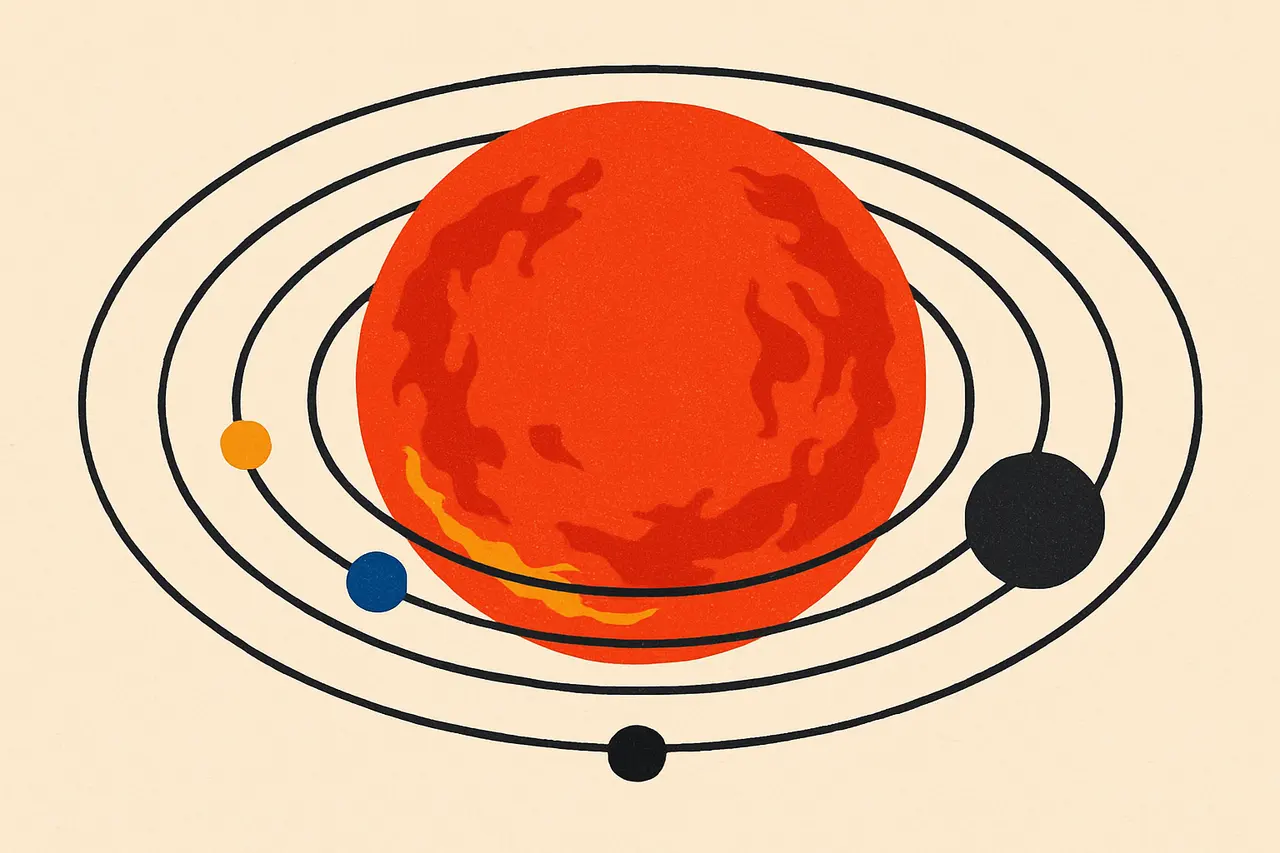
That geometry is why the planet is so well known: because it passes across the face of its star as seen from Earth, it is one of the nearest such transiting exoplanets, and one of the most intensively studied.
Does it really rain molten glass sideways?
Possibly glass, but not molten. Researchers think the haze is laced with silicate particles that scatter blue light; because silicates condense above about 1,300 °C, they could form very small solid grains of glass. NASA says the planet possibly rains glass, and the discovery paper credits the colour to reflective clouds plus sodium, which absorbs the redder light.
The “sideways” part comes from the weather. This “hot Jupiter” orbits so close to its star that its atmosphere tops 1,000 °C, and it is whipped by winds of up to 7,000 km/h (about 5,400 mph), roughly seven times the speed of sound, fast enough to drive any falling grains sideways around the planet.
Sources & references
3 referencesWell-established. Corroborated by 3 independent sources.