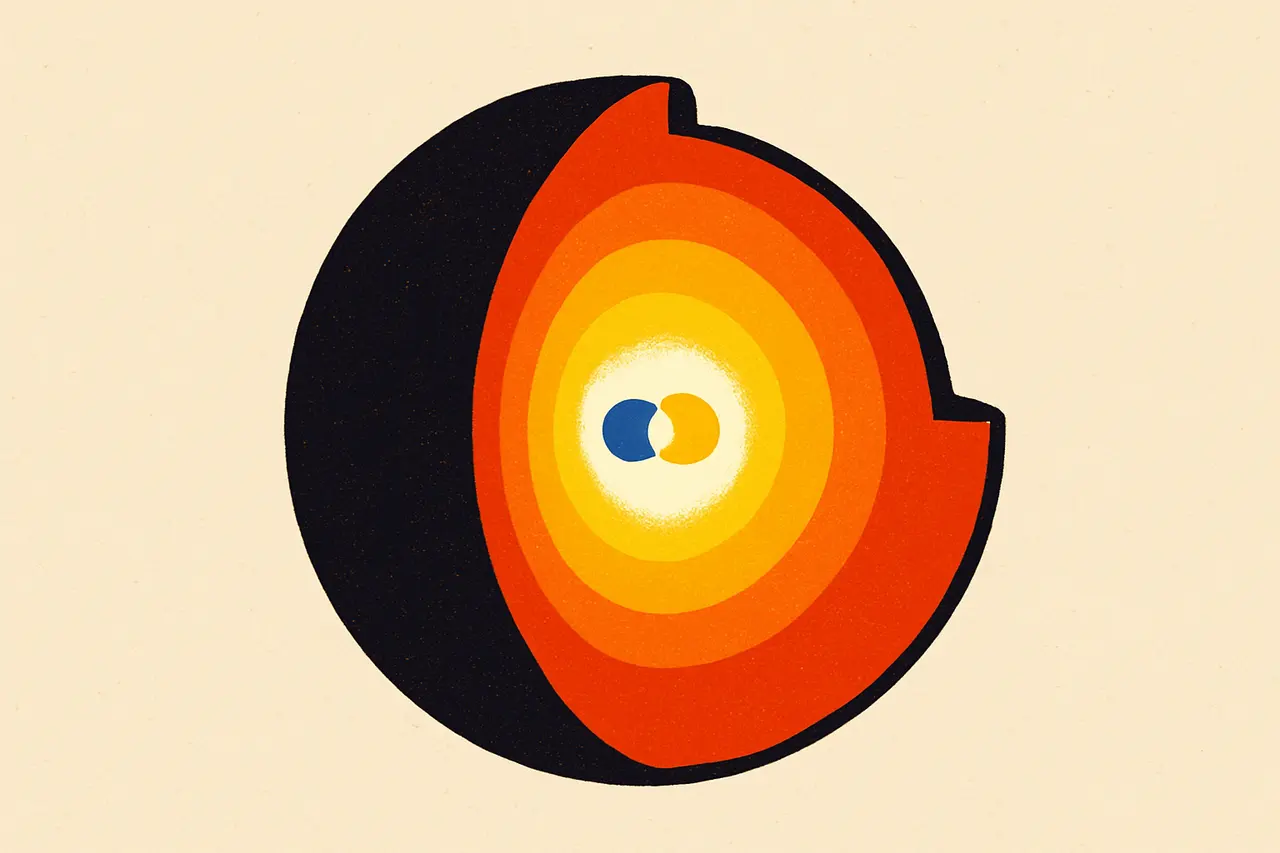
If Betelgeuse replaced the Sun, it would swallow Mars
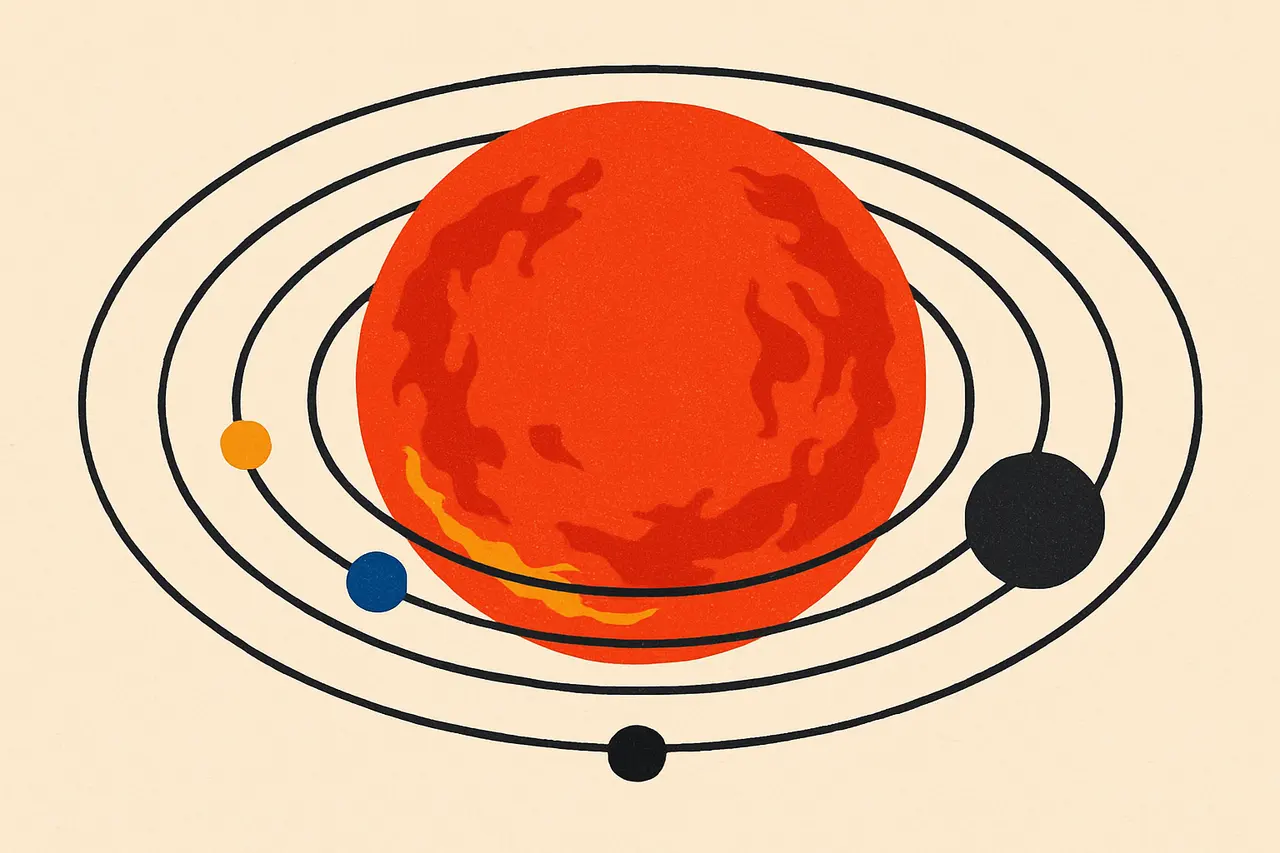
Betelgeuse is about 750 times wider than the Sun: big enough to engulf Mars's orbit, but not the 'past Jupiter' of popular lore.
If Betelgeuse replaced the Sun, its surface would reach beyond the orbit of Mars but stop well short of Jupiter: a 2020 study led by the Australian National University put the red supergiant’s radius at about 750 times the Sun’s, enough to swallow Mercury, Venus, Earth and Mars.
Would Betelgeuse reach Jupiter’s orbit?
No, though many popular accounts say it would. Even NASA’s own explainer says so, while giving a size of “about 700 times” the Sun, which is too small to reach that far. The Jupiter figure comes from older, larger estimates. Using models of the star’s pulsations, the ANU-led team trimmed it down.
“Our results say Betelgeuse only extends out to two thirds of that, with a radius 750 times the radius of the sun.” — Dr László Molnár, Konkoly Observatory, study co-author
The same work put the star about 530 light-years away, 25% closer than previously thought. Its exact size stays slippery, because the star pulsates and has no sharp edge.
Is Betelgeuse about to explode?
Not soon: the ANU team concluded it is “nowhere near exploding”, and the likely wait is around 100,000 years. For all its bulk it holds only about 15 times the Sun’s mass. Late in life and burning helium in its core, it has bloated into a cool, tenuous giant, and that instability makes headlines. In late 2019 it faded by about 60%, the “Great Dimming”, prompting talk of an imminent supernova. Hubble data later showed the star had blown off a chunk of its surface that cooled into a light-blocking dust cloud.
It also isn’t alone. In July 2025 a NASA-led team using the Gemini North telescope reported a faint companion star, named Siwarha (“her bracelet”), orbiting close to Betelgeuse’s outer edge. It will next be easiest to spot in November 2027.
Sources & references
4 referencesWell-established. Corroborated by 4 independent sources.