Returning wolves to Yellowstone may have helped regrow its riverbanks
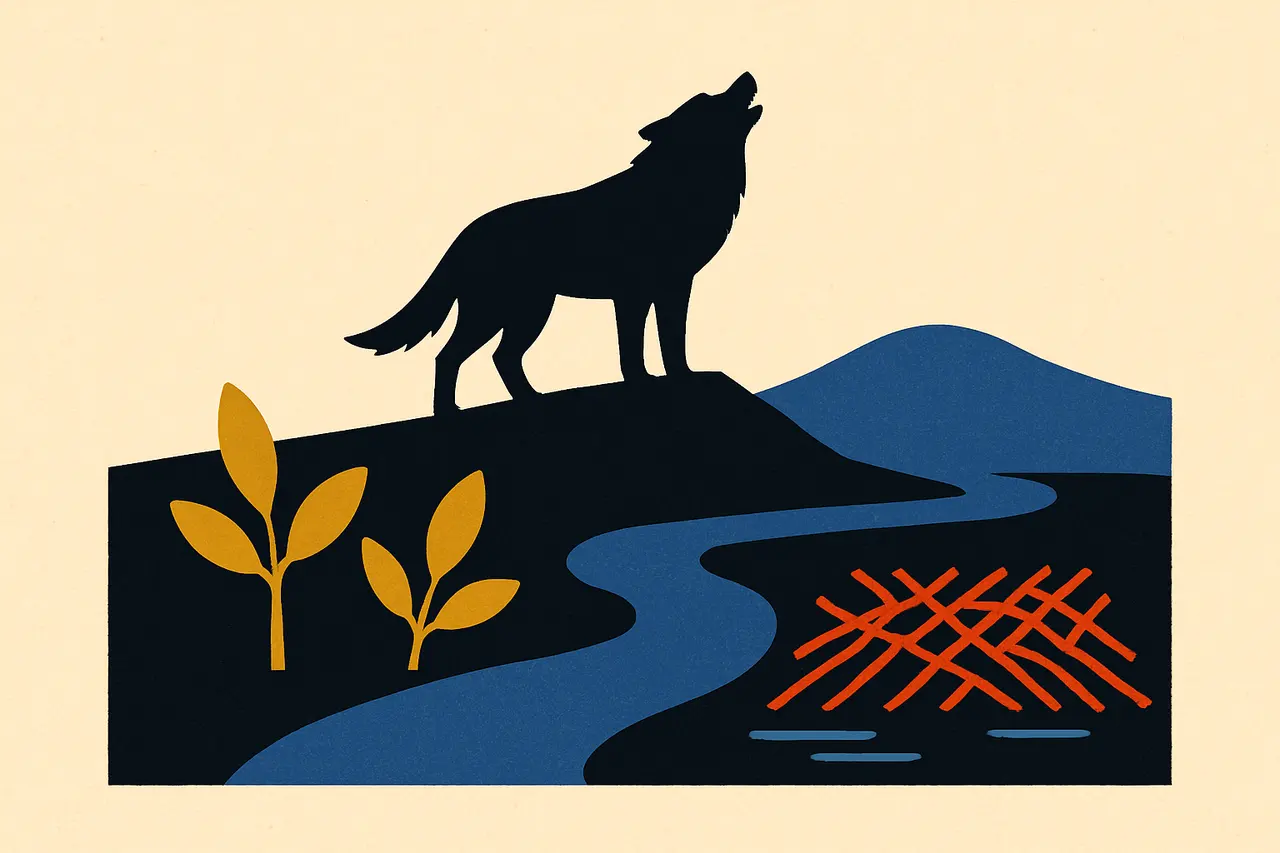
Bring back a top predator, and the changes can ripple all the way down to the willows and beavers.
When wolves were exterminated from Yellowstone by the 1920s, elk multiplied and browsed riverside willows, aspen and cottonwood down to stubble. After wolves were reintroduced in 1995–96, scientists watched parts of those streamside woodlands rebound for the first time in decades. The idea is a trophic cascade: wolves thin elk numbers and keep them moving, easing the browsing pressure that had stunted young trees.
That story escaped the journals and went viral as “How Wolves Change Rivers,” a slickly narrated video claiming wolves so reshaped elk behavior that willows returned, beavers came back, and the very rivers changed course. Ecologists pushed back hard — not because nothing happened, but because the clip compressed a messy, contested decade of research into a tidy fable that skipped the confounding variables.
And those variables are real. USGS researchers documented riparian willows growing significantly for the first time since the 1920s, with some stands surging from under 80 cm to over 400 cm tall — but recovery was patchy, and plenty of sites stayed stunted. The National Park Service points to other forces at work: swelling bison numbers that browse where elk no longer do, drought and climate, predation by bears and cougars, and the earlier loss of dam-building beavers, whose ponds once raised the water tables willows depend on.
What holds up is narrower than the legend. The well-supported piece is behaviorally mediated: elk avoiding risky terrain, allowing localized riparian release in some drainages. The overstated piece is the clean, wolf-driven landscape-scale rescue.
The case became a landmark in rewilding debates precisely because it shows how a single predator’s return is real, partial, and never the whole story.
Sources & references
2 referencesWell-established. Corroborated by 2 independent sources.