Wood frogs freeze solid all winter, then thaw back to life
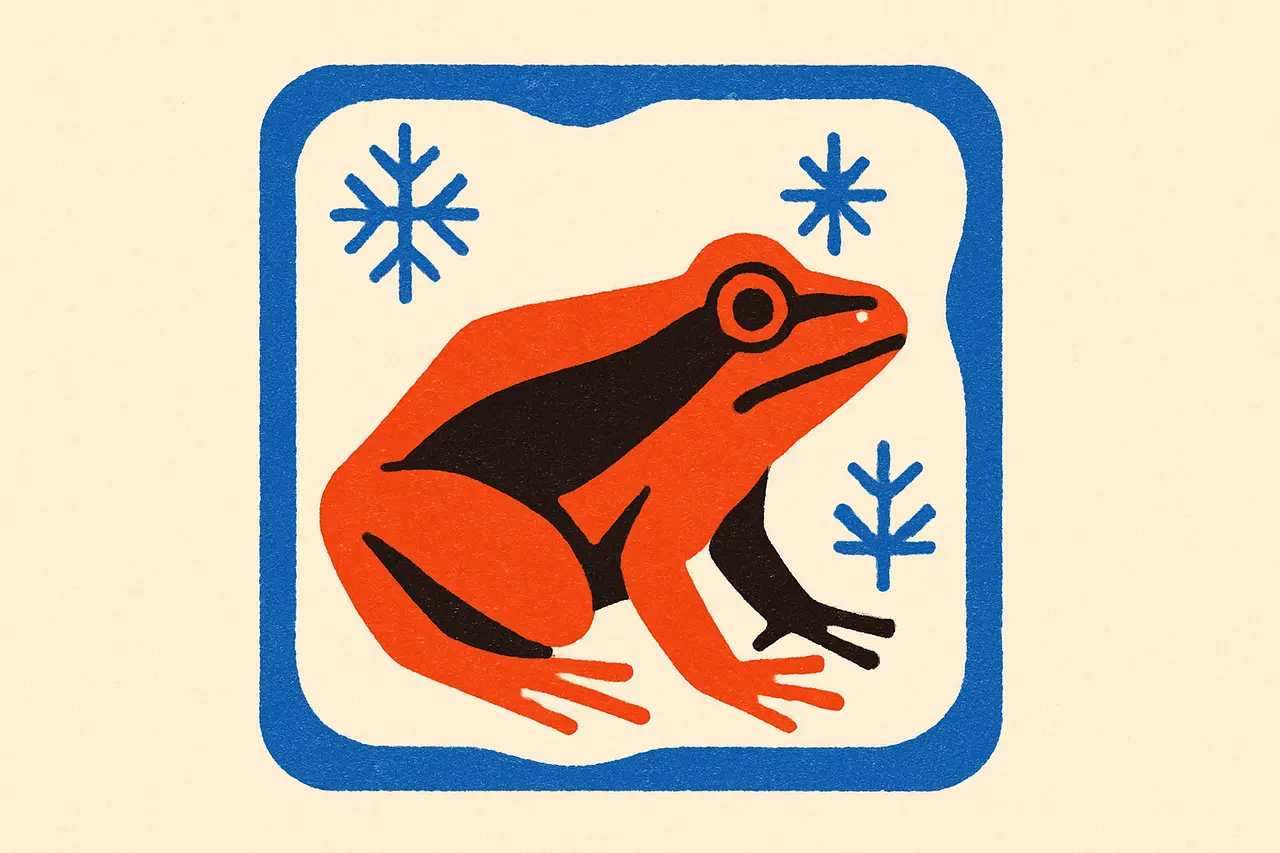
Its heart stops, its breathing halts, and most of its body turns to ice — yet spring brings it back undamaged.
Each winter the wood frog (Rana sylvatica) does something that would kill almost any other vertebrate: it freezes solid. Up to 65–70% of the water in its body turns to ice, its heart stops beating, and it stops breathing altogether.
The trick is homemade antifreeze, and the chemistry is precise. As ice begins to form, the frog’s liver rapidly converts stored glycogen into glucose — joined by urea — and floods this sugar into its cells. As a colligative antifreeze, the glucose lowers the freezing point inside the cells while ice nucleation is steered to the outside. Crystals grow in the spaces around the cells, drawing water out so the cells gently dehydrate rather than rupture.
That controlled freeze lets the frog endure a near-total shutdown. It tolerates complete cardiac arrest and no oxygen for weeks, with biochemical safeguards preventing cell damage, and when warmth returns it thaws from the inside out. Frogs in Interior Alaska push this to extremes: researchers recorded them frozen for an average of 193 days — more than seven months — surviving down to about −18°C with 100% survival.
When the ground thaws in spring, the heart restarts, neurons fire, and the frog hops away as if nothing happened. The mechanism is now studied as a blueprint for banking human organs: insights from wood-frog cryoprotection feed efforts to supercool and vitrify rat and pig livers, the long sought-after goal being transplant organs that can wait.
Sources & references
2 referencesWell-established. Corroborated by 2 independent sources.