We date dinosaur fossils using radioactive clocks in the rock
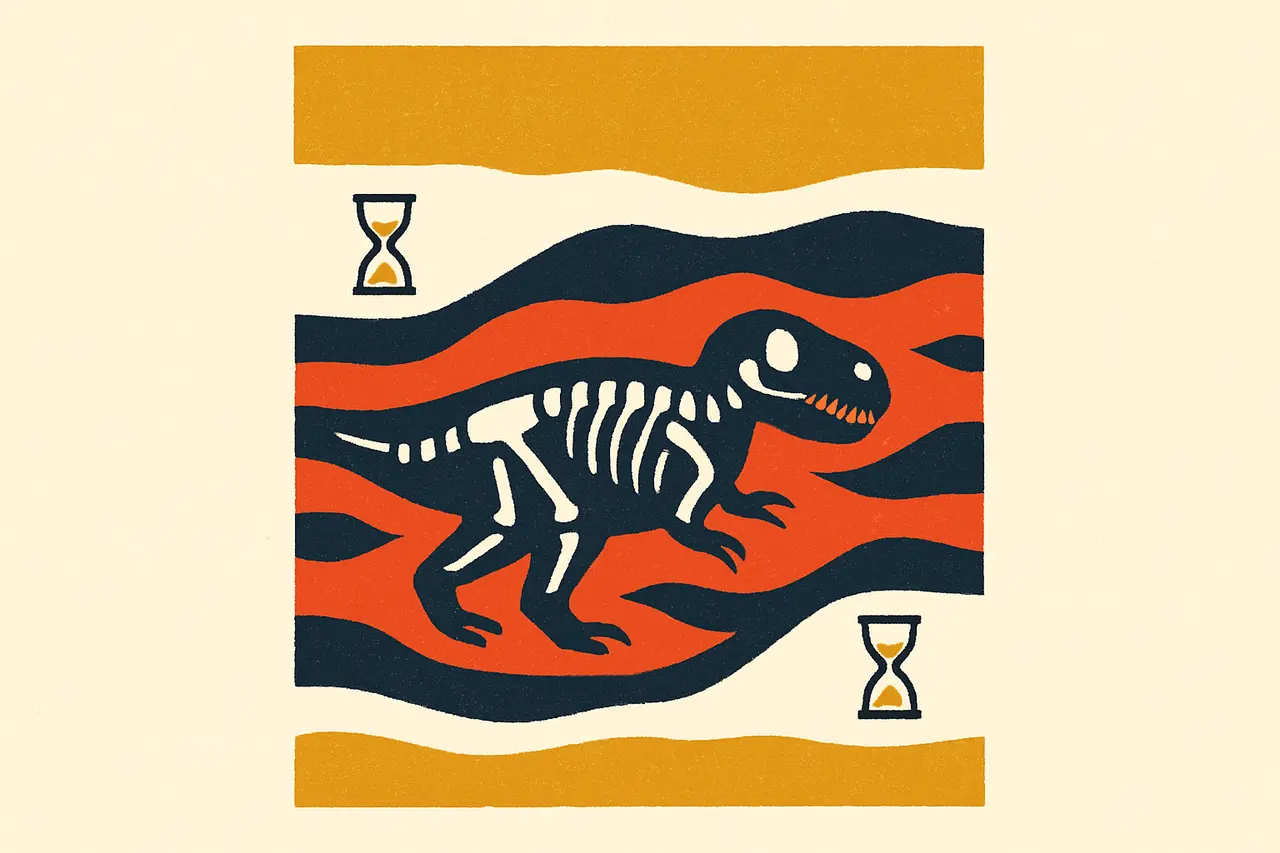
Carbon dating can't touch a dinosaur—so scientists read the age from radioactive clocks ticking in the volcanic ash around the bones.
There’s a common assumption that paleontologists carbon-date their dinosaurs. They can’t. Carbon-14 decays far too quickly: after roughly 50,000 to 60,000 years, almost none is left to measure. A dinosaur bone tens of millions of years old has no usable carbon-14 signal whatsoever.
Instead, scientists date the rock, not the bone. Fossils are typically sandwiched between layers of volcanic ash, and that ash carries its own slow-ticking clock. Tiny crystals of the mineral zircon form as magma cools and trap uranium while excluding lead.
Because uranium decays into lead at a known, glacially steady rate, any lead found inside a zircon crystal must have come from that decay. Measure the ratio, and you read the age. Uranium’s half-lives run into the hundreds of millions to billions of years—perfect for the depths of the Mesozoic.
A fossil must be younger than the ash below it and older than the ash above it.
By dating ash layers that bracket a fossil, geologists can pin a dinosaur’s age to within a few hundred thousand years—remarkable precision across tens of millions. The bones don’t carry the clock; the rocks around them do.
Sources & references
2 referencesWell-established. Corroborated by 2 independent sources.