In the Pale Blue Dot photo, Earth is just 0.12 of a pixel
On this day · 14 February 1990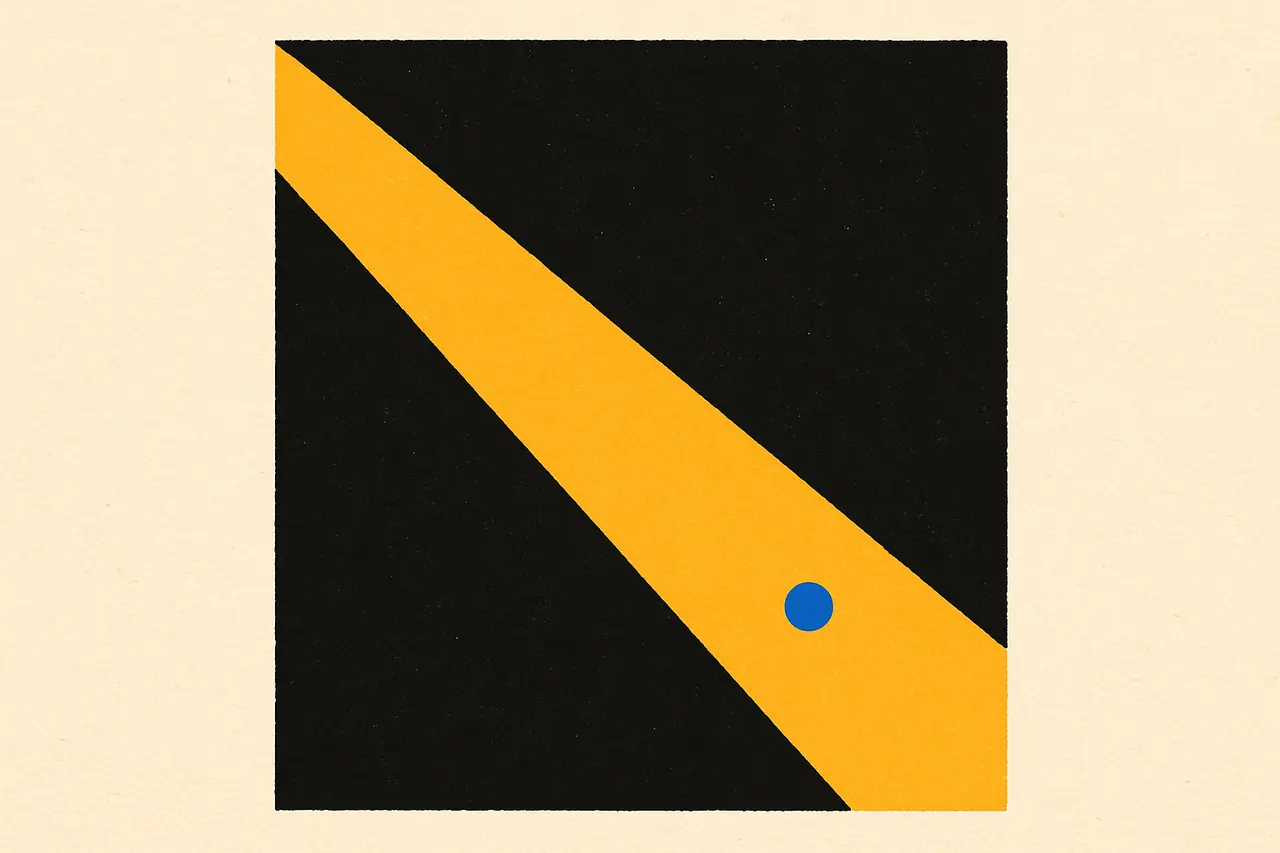
Voyager 1's Valentine's Day 1990 portrait shrank Earth to a fraction of a pixel, and the famous sunbeam around it is a camera artefact.
Voyager 1 took the Pale Blue Dot photograph of Earth on February 14, 1990, from about 3.7 billion miles (6 billion km) from the Sun, so far away that our planet fills just 0.12 of a pixel. It was the first image of Earth ever taken from the outer solar system.
The “sunbeam” Earth appears to float in is not a ray of light crossing space. The camera was pointed close to the Sun, and the bright bands are sunlight scattered inside its optics. The same glare explains gaps in the wider 60-frame family portrait: Mars was washed out by scattered light, Mercury sat too close to the Sun, and Pluto was too small and dark to register.
How the shot happened
- 1981: Carl Sagan, a member of the Voyager imaging team, first proposed turning a camera back on Earth.
- February 13, 1990: Voyager 1 warmed up its cameras for three hours, then began with Neptune.
- February 14, 04:48 GMT: the Earth frames were taken.
- 05:22 GMT: the cameras were switched off for good, to save power for the long journey ahead.
- May 1, 1990: the last image data reached Earth, after four Deep Space Network passes.
Sagan argued the picture was worth taking precisely because Earth would look so small. In his 1994 book he wrote:
“Look again at that dot. That’s here. That’s home. That’s us.”
In 2020, for the 30th anniversary, JPL engineer Kevin Gill reprocessed the frame with modern software, guided by two of its original planners, producing “Pale Blue Dot Revisited.” No spacecraft has attempted a full solar system portrait since.
Sources & references
3 referencesWell-established. Corroborated by 3 independent sources.