Volcanoes are ranked on a scale where each step is ten times bigger
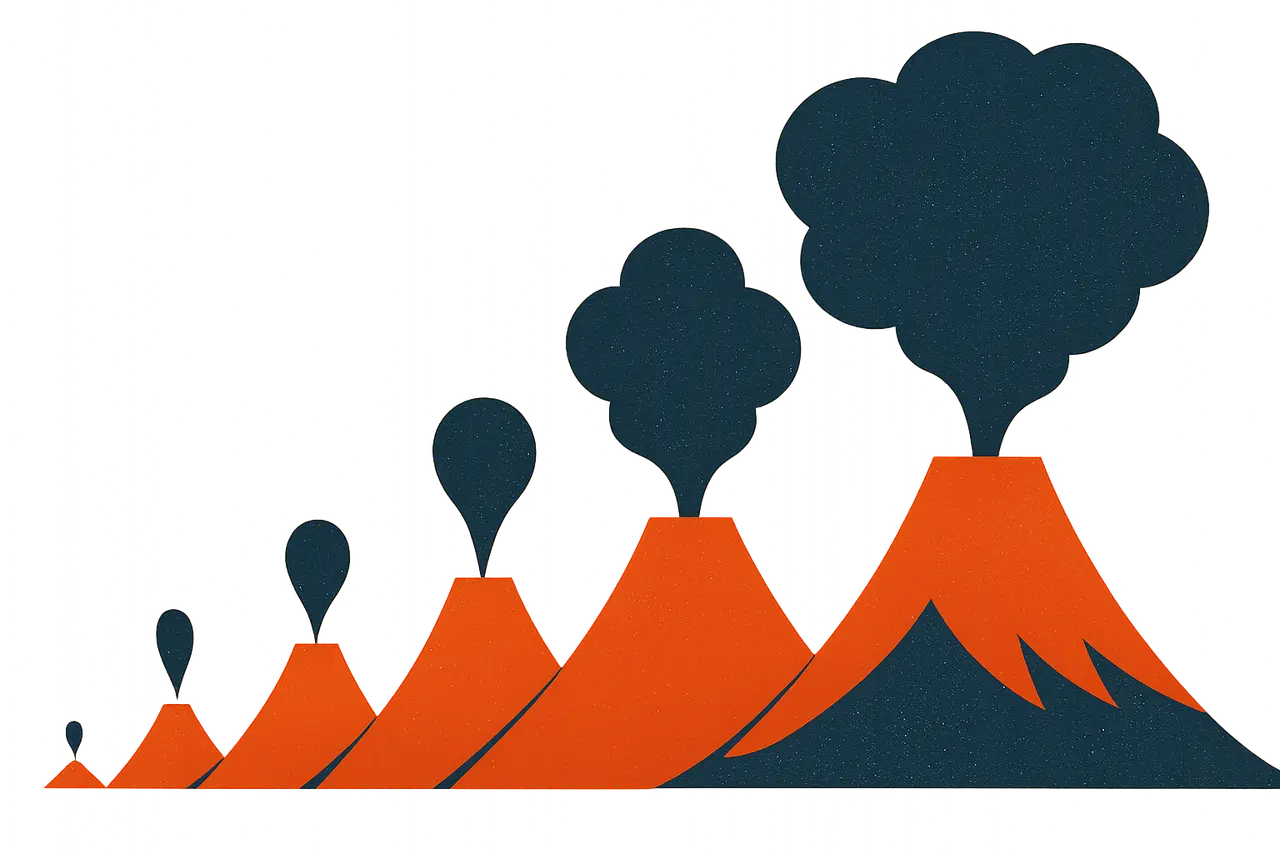
The Volcanic Explosivity Index runs 0 to 8, and a VEI 8 supereruption is a thousand times the size of a VEI 5.
To compare eruptions across history, volcanologists Chris Newhall of the USGS and Stephen Self of the University of Hawaii devised the Volcanic Explosivity Index (VEI) in 1982.
The index runs from 0 (gentle, effusive eruptions) to 8 (the rarest, most violent blasts). Above the bottom of the scale it is logarithmic: each whole step represents roughly a tenfold increase in the volume of material thrown out. A VEI 5 is about ten times bigger than a VEI 4, and a VEI 8 is a thousand times a VEI 5.
The yardstick is the volume of erupted ash, pumice and rock, alongside how high the eruption column climbs. At the very top sit the supereruptions: a VEI 8 ejects more than 1,000 cubic kilometres of material—so much that only about fifty such events are known in the geological record.
It is, in effect, the Richter scale for volcanoes.
Sources & references
2 referencesWell-established. Corroborated by 2 independent sources.