Viking 2 landed on Mars in 1976 and saw water-ice frost
On this day · 3 September 1976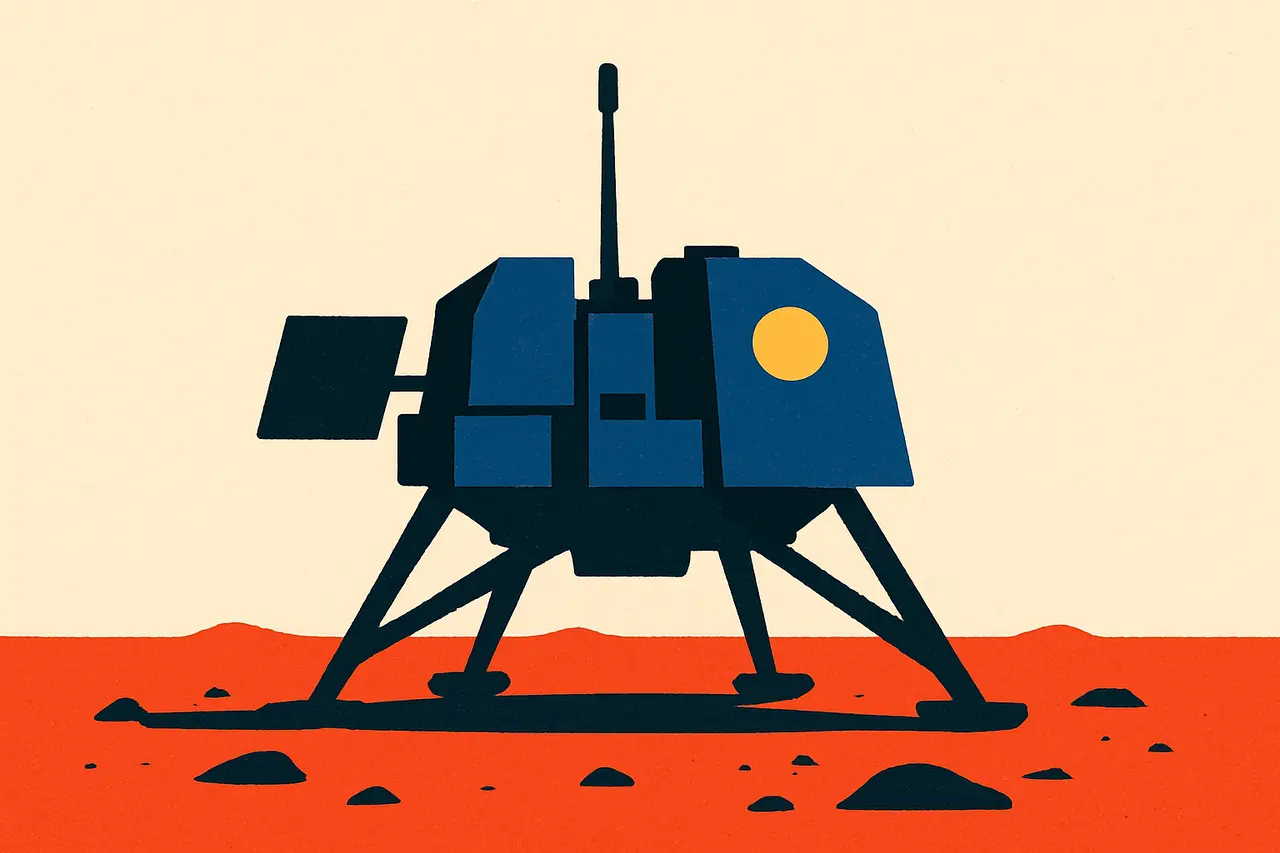
NASA's second Mars lander touched down on Utopia Planitia on September 3, 1976, chosen for nearby water, and later photographed frost on the rocks.
NASA’s Viking 2 lander touched down on Utopia Planitia, a northern plain of Mars near 48 degrees N, on September 3, 1976, about 4,000 miles (6,460 km) from its twin Viking 1, and worked there until April 12, 1980.
The site was picked for water. As with Viking 1, orbital photos showed the original target was too rough, so planners moved the lander to Utopia Planitia, near the edge of the polar ice cap, where water was located and the chances of finding signs of life looked better. The ground turned out rockier and flatter than Viking 1’s, and the lander settled tilted 8.5 degrees to the west. Its second picture was a panorama sweeping about 330 degrees across a field of boulders.
Frost, then a chemistry puzzle
In winter the lander photographed a thin coating of water ice on rocks and soil. An image taken on May 18, 1979 showed the frost returning almost exactly one Martian year (23 Earth months) after it first appeared.
Viking 2’s biology experiments, run on soil scooped three times from September 12, 1976, gave the same verdict as its twin: inconclusive. Viking scientists suspected the soil held reactive chemicals, produced by ultraviolet light, that could mimic living organisms. The only organic compounds the landers detected, chloromethane and dichloromethane, were written off as contamination from cleaning fluids.
That reading was challenged in 2010. After the Phoenix lander found perchlorate in Martian soil in 2008, researchers showed that heating soil with a little perchlorate produces exactly those two chemicals, so organics may have been present at both Viking sites after all.
“For 30 years we were looking at a jigsaw puzzle with a piece missing. Phoenix has provided the missing piece: perchlorate.” — Chris McKay, NASA Ames
In 2001 the lander was renamed the Gerald Soffen Memorial Station, after Viking’s project scientist.
Sources & references
5 referencesWell-established. Corroborated by 4 independent sources.