The universe's expansion is speeding up, not slowing down
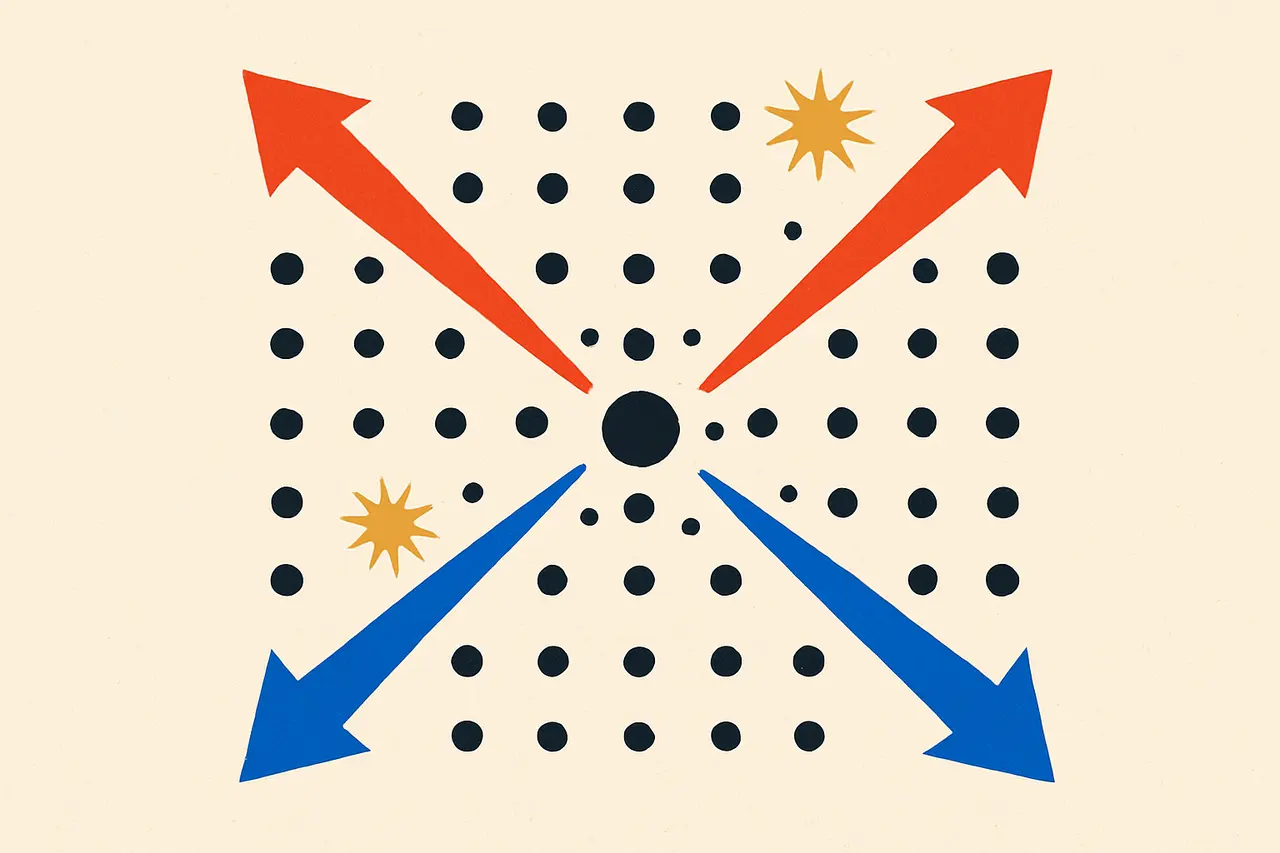
Two supernova teams expected to measure cosmic braking in 1998 and found acceleration instead. Since 2025, new data hint dark energy itself may be fading.
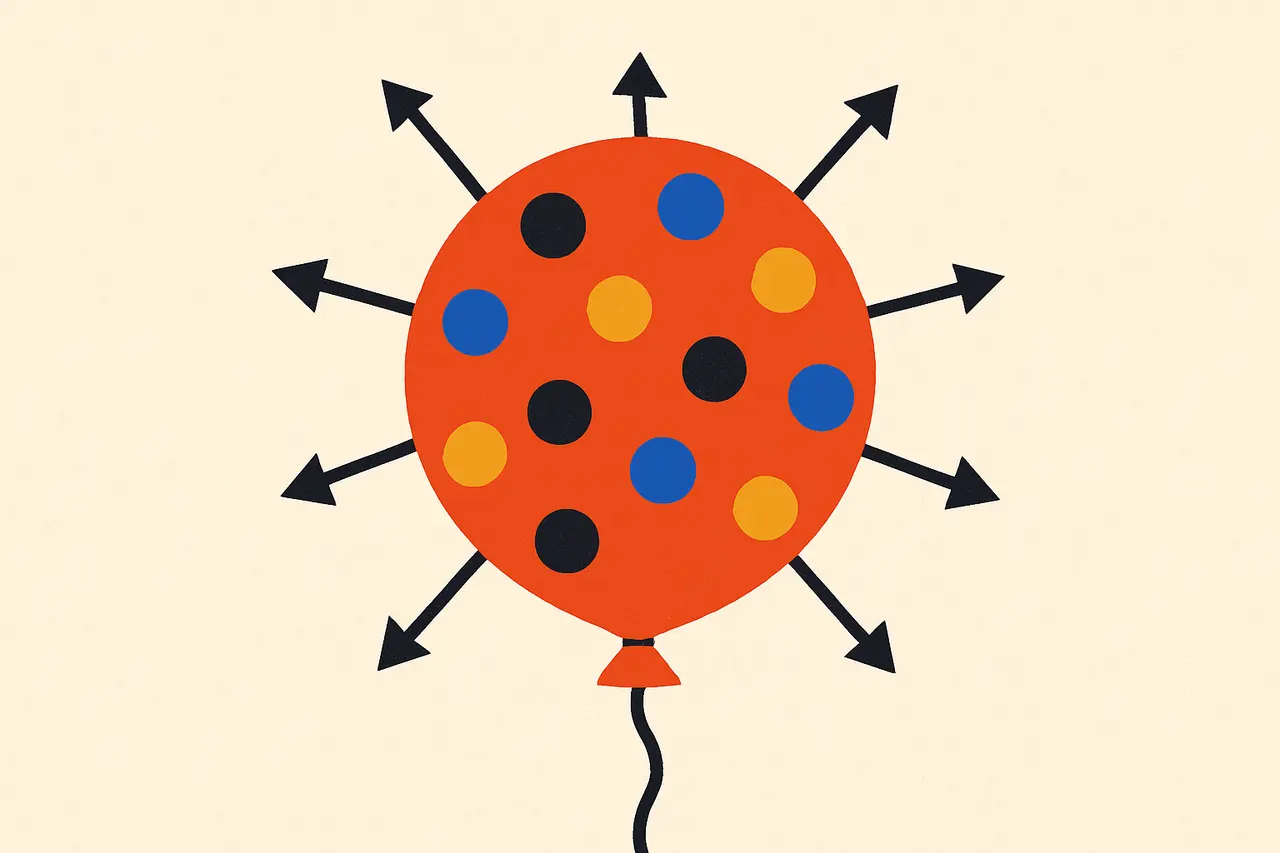
The expansion of the universe is speeding up, not slowing down, a discovery announced in 1998 by two independent teams that measured distant exploding stars and later shared the 2011 Nobel Prize in Physics.
Astronomers expected the opposite. The gravity of all the matter in the cosmos should have been braking the expansion; the open question was by how much. Saul Perlmutter’s Supernova Cosmology Project, begun in 1988, and the High-z Supernova Search Team, launched at the end of 1994 under Brian Schmidt with Adam Riess in a crucial role, raced to find out using Type Ia supernovae. Each is the explosion of a compact star as heavy as the Sun but as small as Earth, shining as brightly as a whole galaxy. Between them the teams found over 50 distant supernovae whose light was weaker than a slowing universe allowed. The prize announcement noted that the result came as a complete surprise even to the laureates.
The two teams were not both in Berkeley, California, as is sometimes assumed. Only Perlmutter’s was based at Lawrence Berkeley National Laboratory and UC Berkeley; Schmidt’s team was run from the Australian National University.
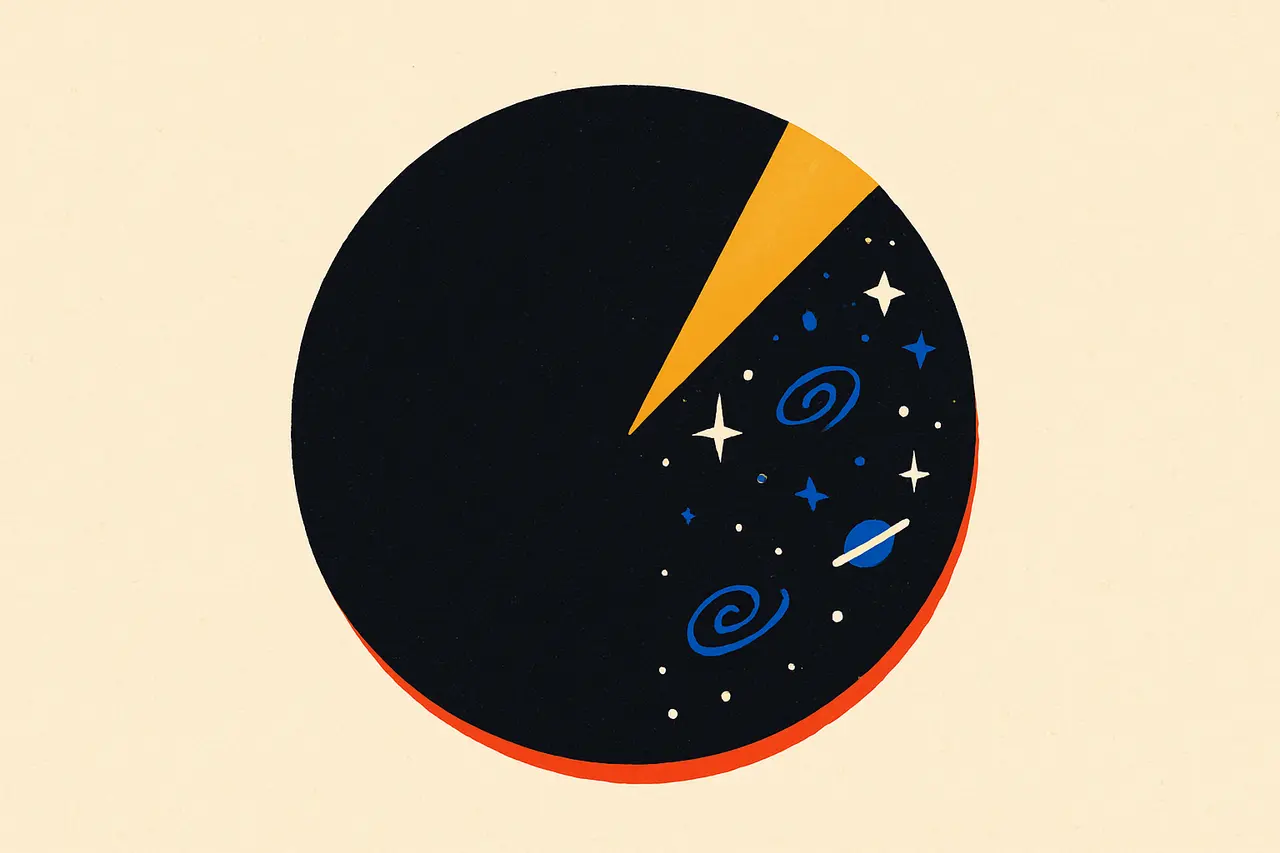
According to NASA, the speed-up began about 9 billion years after the Big Bang, roughly 5 billion years ago, driven by what scientists call dark energy, now about 68 to 70% of the universe.
What’s changed since
The simplest explanation, a dark energy that never changes, is now under pressure. In March 2025 the DESI collaboration, led by Berkeley Lab, analysed nearly 15 million galaxies and quasars. Combined with cosmic microwave background, supernova and gravitational-lensing data, the results hint that dark energy’s influence may be weakening over time, at 2.8 to 4.2 sigma: suggestive, but short of the 5-sigma standard for a discovery.
“We’re guided by Occam’s razor, and the simplest explanation for what we see is shifting.” — Will Percival, DESI co-spokesperson, 2025
Sources & references
3 referencesWell-established. Corroborated by 3 independent sources.