The Tohoku earthquake and tsunami struck Japan
On this day · 11 March 2011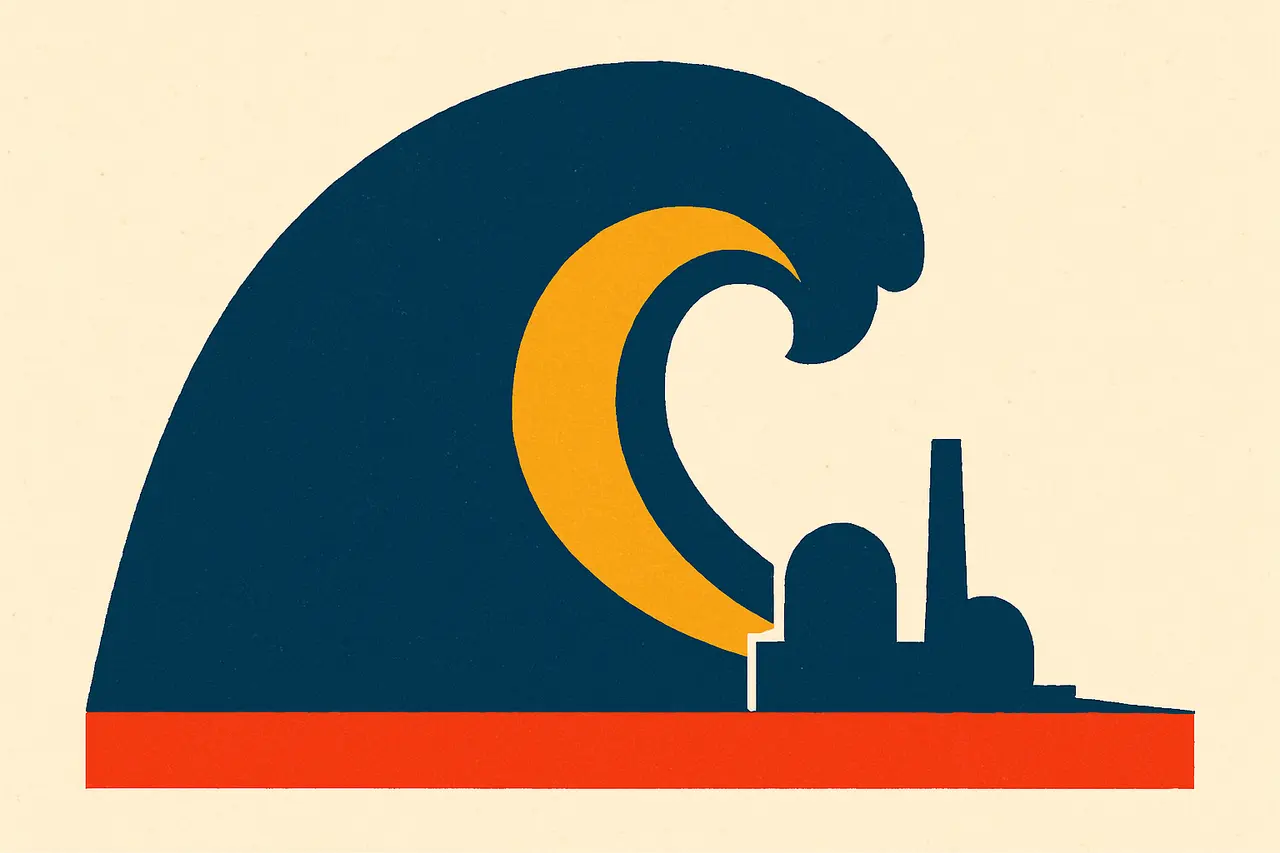
A magnitude-9.0 megathrust quake off Japan unleashed a towering tsunami and triggered the Fukushima nuclear disaster.
At 2:46 pm on March 11, 2011, a magnitude-9.0 earthquake ruptured the seabed about 80 miles (130 km) east of Sendai, on the Japan Trench. It was the most powerful quake ever recorded in Japan and among the strongest worldwide since 1900.
The shaking was only the prelude. Within roughly 30 minutes, a tsunami reached the coast, in places towering close to 40 meters (130 feet) and surging miles inland over seawalls built to hold it back.
The official total of dead and missing reached about 18,500, most of them drowned by the waves.
The same waves swamped the backup generators at the Fukushima Daiichi nuclear plant, cutting cooling to its reactors and igniting one of the worst accidents in nuclear power’s history. More than 450,000 people were left homeless. The disaster reshaped how Japan plans for seawalls, evacuation, and atomic energy.
Sources & references
2 referencesWell-established. Corroborated by 2 independent sources.