The @ symbol has wildly different names — many of them animals
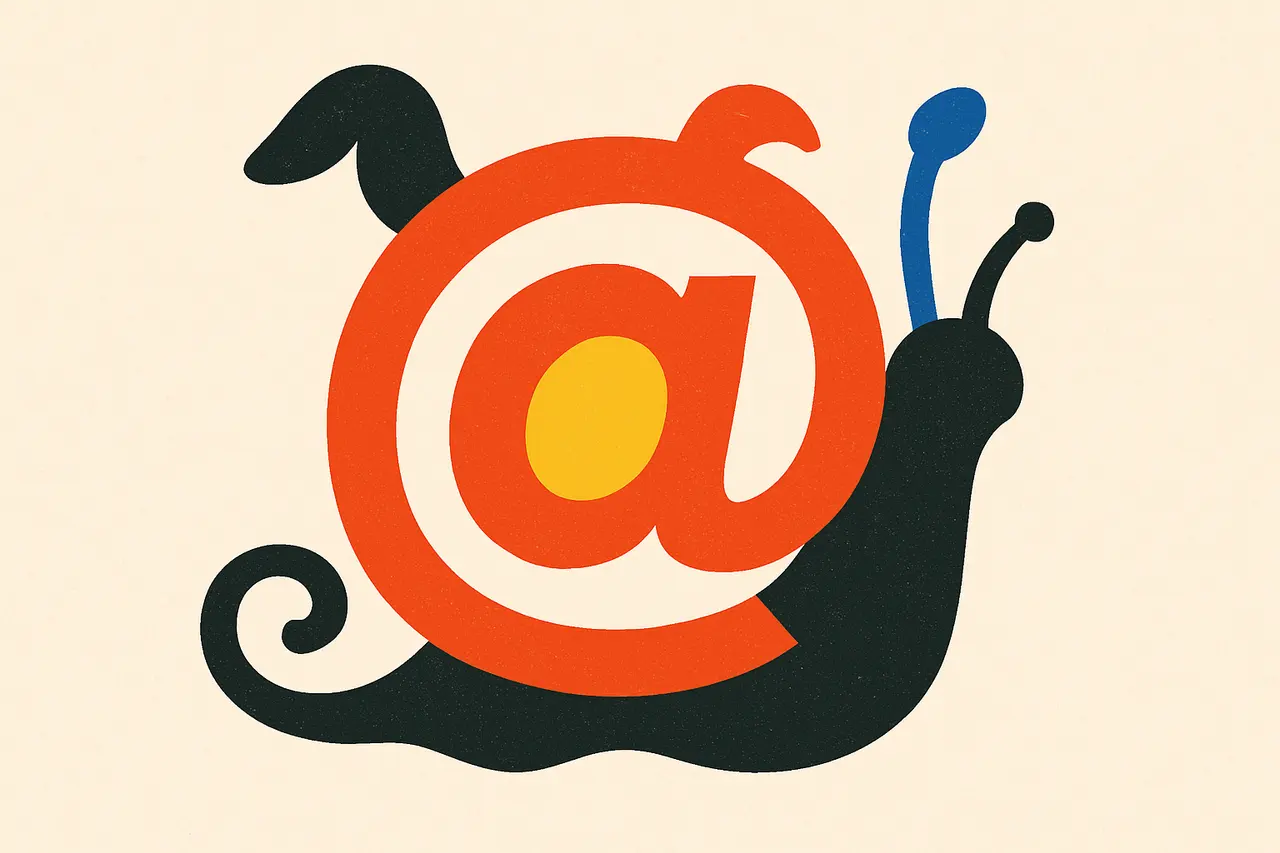
A dusty commercial mark, rescued for email in 1971, is a snail in Italy, a monkey's tail in the Netherlands, and a little dog in Russia.
For centuries the @ was a quiet bookkeeping mark, used by merchants to mean “at the rate of” — three apples @ two cents. It sat on typewriters mostly ignored. Then, in 1971, engineer Ray Tomlinson sent the first network email and needed a character to split a user’s name from their computer’s name. The @ was perfect: already on the keyboard, but used in almost no actual words. He plucked it from obscurity, and it became the linchpin of every email address since.
The Museum of Modern Art was so taken with the choice it added the @ to its collection in 2010.
What’s charming is how differently the world names the same little glyph — and how often it becomes an animal. To Italians it’s a chiocciola, a snail, for its coiled shape; French speakers reach for a snail too. The Dutch and Germans see a monkey’s tail. Russians read it as a little dog. Elsewhere it’s an elephant’s trunk, a pig’s tail, even a pickled herring.
The pattern isn’t random. Faced with a curl that looked like nothing in particular, speakers everywhere grabbed the nearest familiar shape from the farmyard and the zoo. One symbol, one job — and a small global menagerie of nicknames hiding in plain sight on your keyboard.
Sources & references
2 referencesWell-established. Corroborated by 2 independent sources.