Not all scripts are alphabets — there are four basic kinds
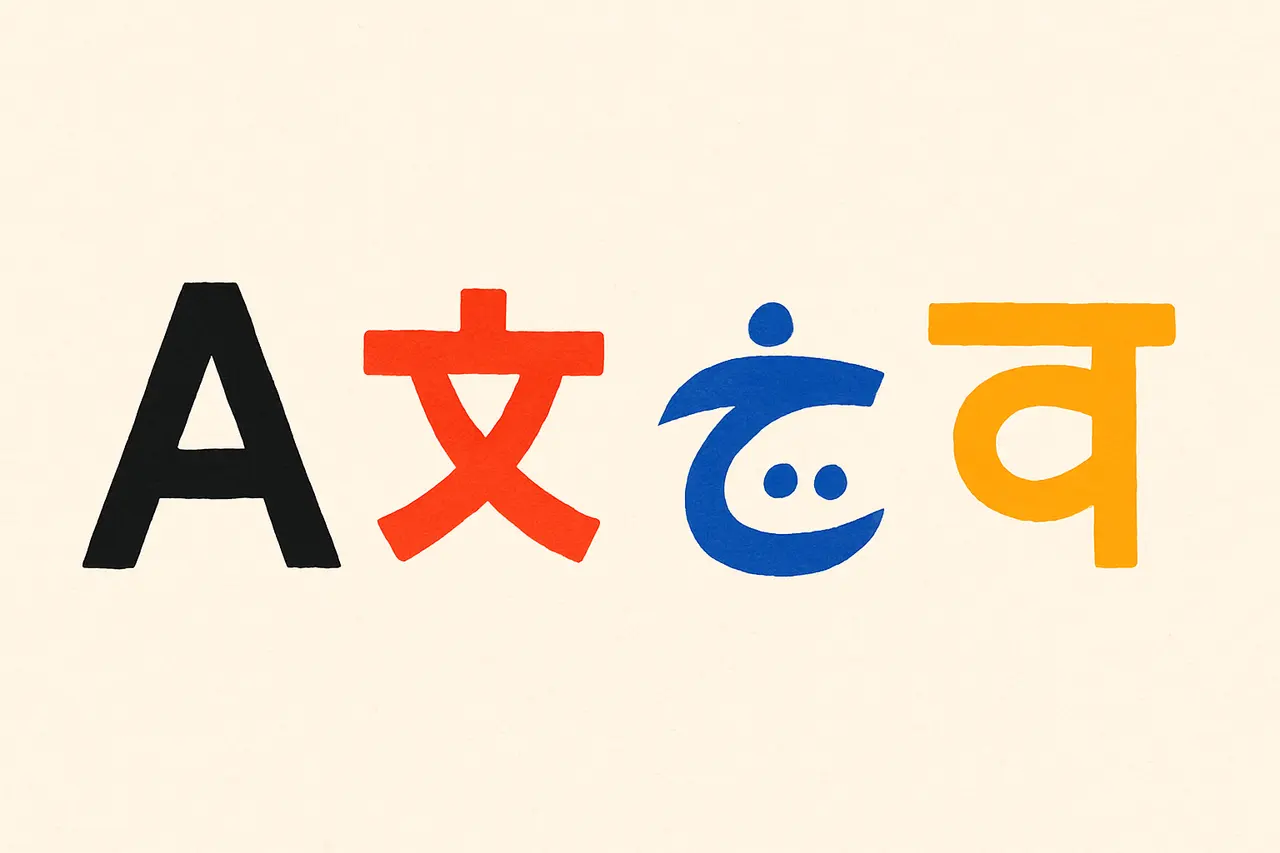
An "alphabet" is just one of several ways a script can map symbols to language.
We tend to call any script an “alphabet,” but linguists sort the world’s writing systems by what each symbol actually represents.
A true alphabet gives separate letters to both consonants and vowels — the Latin and Greek scripts work this way. An abjad writes only consonants, leaving vowels to be inferred; Arabic and Hebrew are abjads. An abugida sits in between: each base symbol is a consonant carrying a built-in default vowel, with other vowels marked by small modifications — the Brahmic scripts of India and Southeast Asia are the largest family.
The outlier is the logography, where a symbol stands for a whole word or meaningful unit rather than a sound. Chinese characters are the prime living example.
The distinction matters for learning: an abjad reader supplies missing vowels from context, while a logography demands memorizing thousands of distinct characters before fluent reading is possible.
Sources & references
2 referencesWell-established. Corroborated by 2 independent sources.