The liner Slavonia sent one of the first SOS calls
On this day · 10 June 1909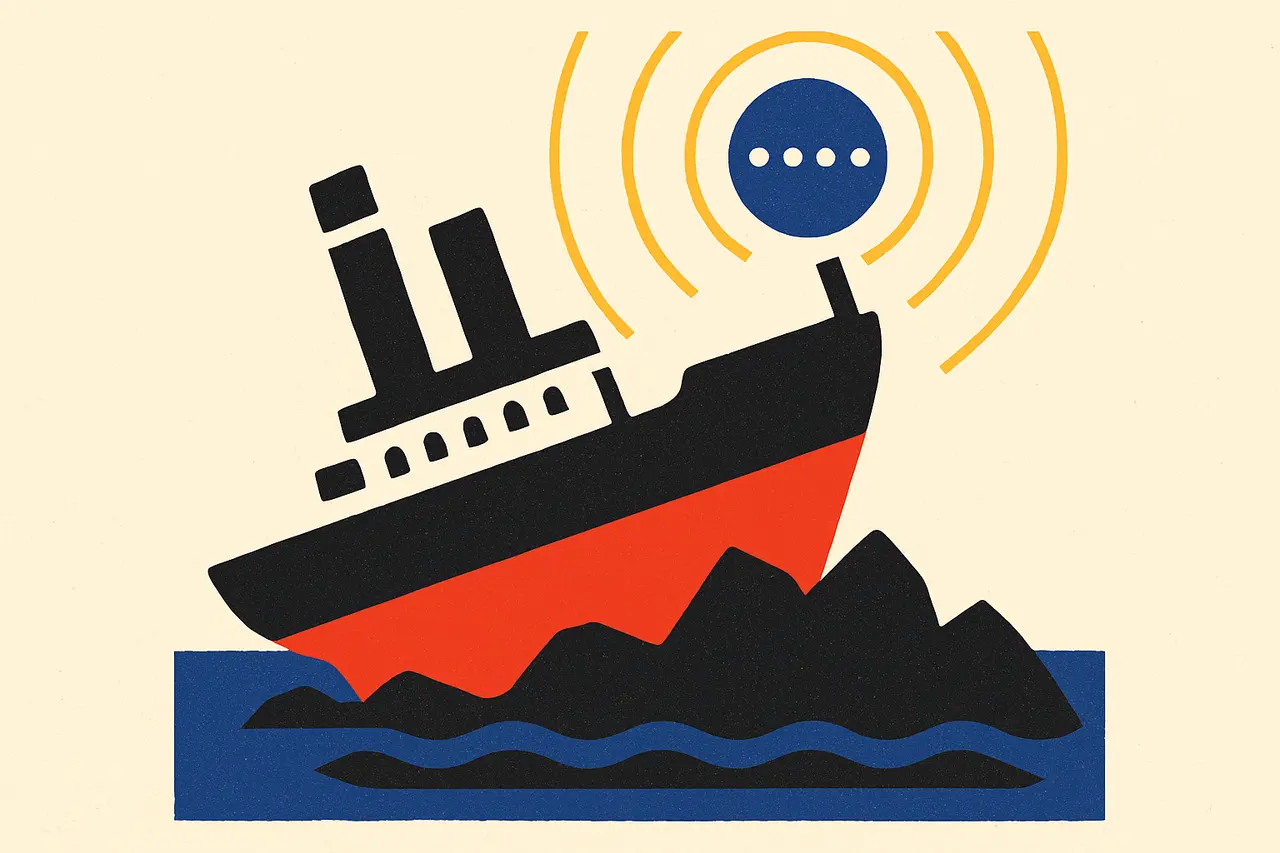
A Cunard liner aground in the Atlantic fog gave the new three-letter Morse signal one of its earliest real-world outings.
On June 10, 1909, the Cunard liner Slavonia smashed onto the rocks off Flores in the Azores while steaming from New York to Trieste. With the ship fast aground in fog, her wireless operators tapped out the new distress signal SOS — three dots, three dashes, three dots — one of the first ships ever to use it in earnest.
The call carried across the dark Atlantic to two nearby liners, including the North German Lloyd ship Princess Irene, which raced to the scene. Every passenger and crew member was taken off safely, though the Slavonia herself was a total loss.
A simple, unmistakable rhythm — chosen precisely because it was easy to send and hard to mistake — was already saving lives.
Wireless operators had agreed on SOS only a couple of years earlier, in 1906, replacing a clutter of rival codes. The Slavonia’s brush with disaster helped prove the signal worked, three years before the Titanic made it famous.
Sources & references
2 referencesWell-established. Corroborated by 2 independent sources.