The Sahara was green just a few thousand years ago
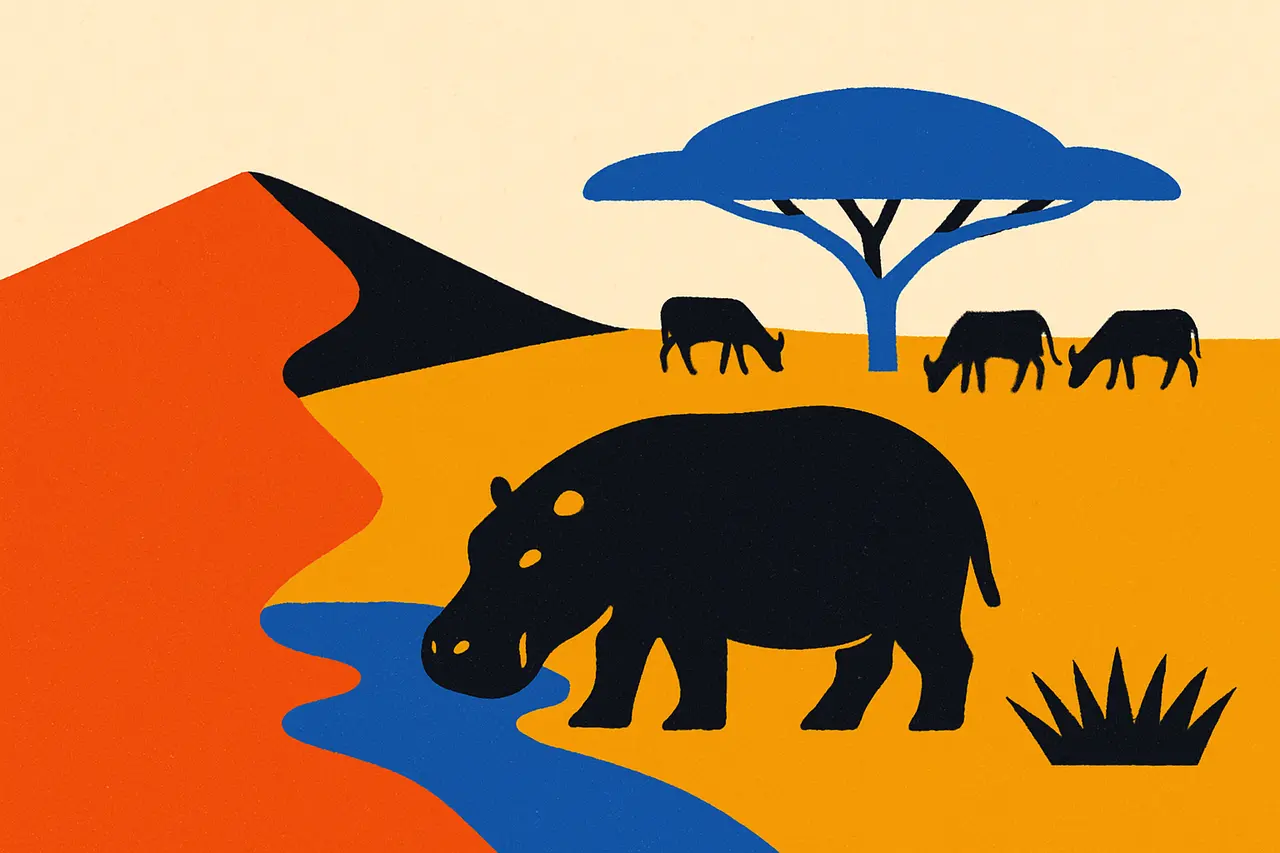
Within the span of recorded human prehistory, the world's largest hot desert was a savanna full of lakes, rivers, and grazing herds.
Picture the Sahara not as endless dunes but as rolling grassland threaded with rivers and dotted with lakes. That landscape is not science fiction. According to NASA, roughly 11,000 to 5,000 years ago, during what scientists call the African Humid Period, the Sahara was far wetter and greener than it is today.
The greening was no fluke. It was driven by Milankovitch cycles — slow, predictable wobbles in Earth’s orbit and the tilt of its axis. These shifts changed how sunlight was distributed across the planet, strengthening and pushing the North African monsoon farther north. More rain fell, vegetation took hold, and a near-continuous cover of grasses and shrubs spread across millions of square miles.
The evidence is written into the rocks and the art. Buried river channels, lake sediments, and the fossils of hippos, fish, and crocodiles all confirm a watery past. Rock paintings scattered across the central Sahara show people herding cattle, paddling boats, swimming, and living beside water that has long since vanished. These were not isolated nomads but settled communities sustained by a landscape that bears no resemblance to the desert standing there today.
A desert this vast was, in human terms, a recent garden.
Then the orbital configuration shifted again. As summer sunlight in the Northern Hemisphere waned, the monsoon retreated, rainfall collapsed, and the green Sahara dried back into the hyperarid expanse we know. The transition was geologically swift, unfolding over centuries rather than eons. The same orbital clock that drained it is still ticking — which means, on a timescale of thousands of years, the Sahara could one day turn green again.
Sources & references
2 referencesWell-established. Corroborated by 2 independent sources.