The Quran was first compiled from memory and scattered scraps
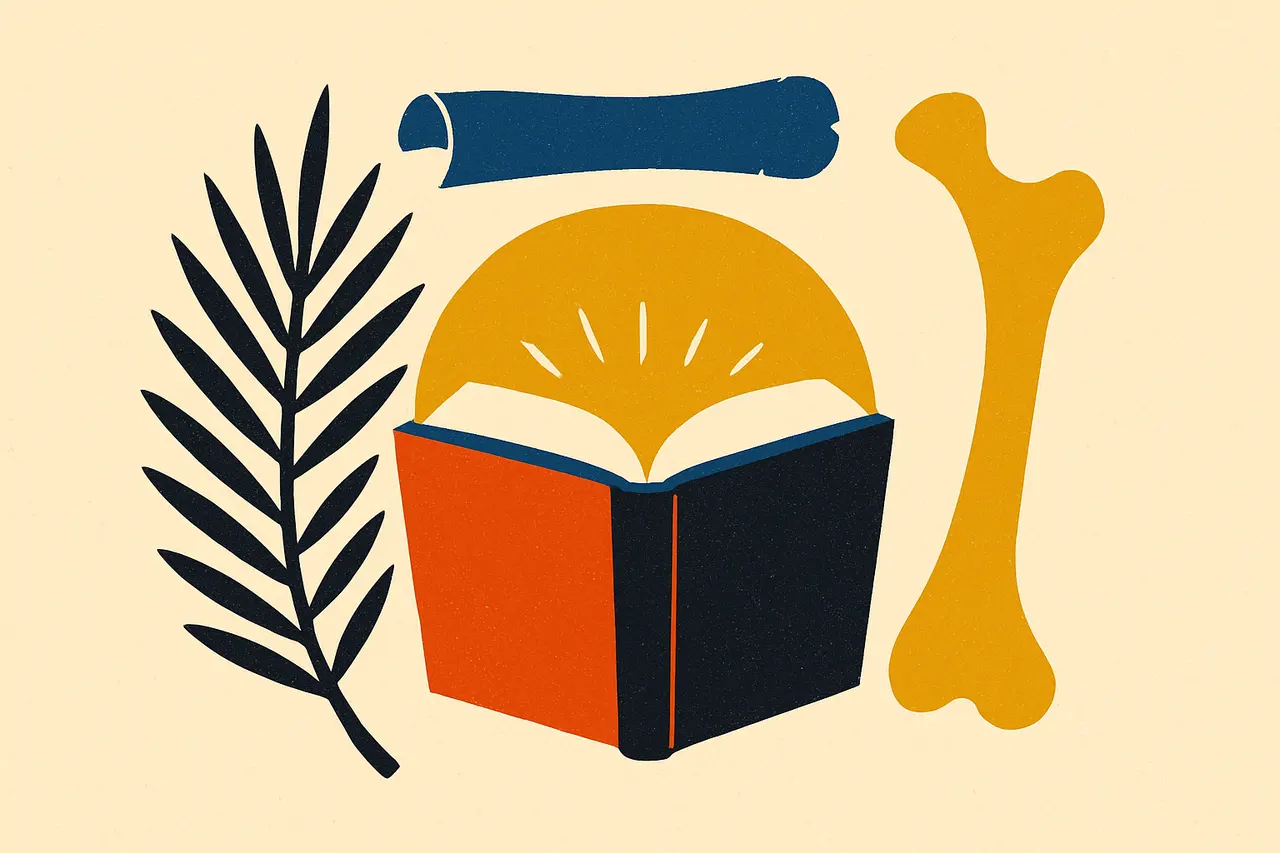
When Muhammad died, the Quran had no single book form — it lived in memories and on palm leaves, parchment, and camel bones.
When the Prophet Muhammad died in 632 CE, the Quran existed as no single bound book. Its verses survived in two places at once: the trained memories of his followers, and a scatter of writing surfaces. According to the University of Birmingham, the revelations “were preserved in ‘the memories of men’. Parts of it had also been written down on parchment, stone, palm leaves and the shoulder blades of camels.”
That fragility worried the early Muslim community. After many memorizers died in battle, the first caliph Abu Bakr ordered the scattered material gathered, and the scribe Zayd ibn Thabit assembled it “from date-palm tree bark, parchment, thin white stones, and the hearts of men.” Within a generation the third caliph, Uthman, standardized a single authoritative codex and sent copies across the expanding Islamic world.
Hard evidence for how early this happened surfaced in 2015. Two parchment leaves held in Birmingham’s Mingana Collection were radiocarbon-dated to between 568 and 645 CE with 95.4% confidence — overlapping Muhammad’s own lifetime (c. 570–632). Smithsonian magazine called them “among the oldest copies of the Islamic holy book in the world.”
Early Muslims memorized scripture and inscribed it onto palm leaves, animal-skin parchment, and even camel bones.
The memorizing tradition never stopped. A person who commits the entire Quran to memory is called a hafiz, and millions still do — a living oral backup running in parallel with the written text for fourteen centuries.
Sources & references
2 referencesWell-established. Corroborated by 2 independent sources.