The pitch-drop experiment has dripped 9 times since 1927
Queensland's pitch has dripped nine times in almost a century, unseen by anyone. But it is neither the oldest pitch drop nor the only one.
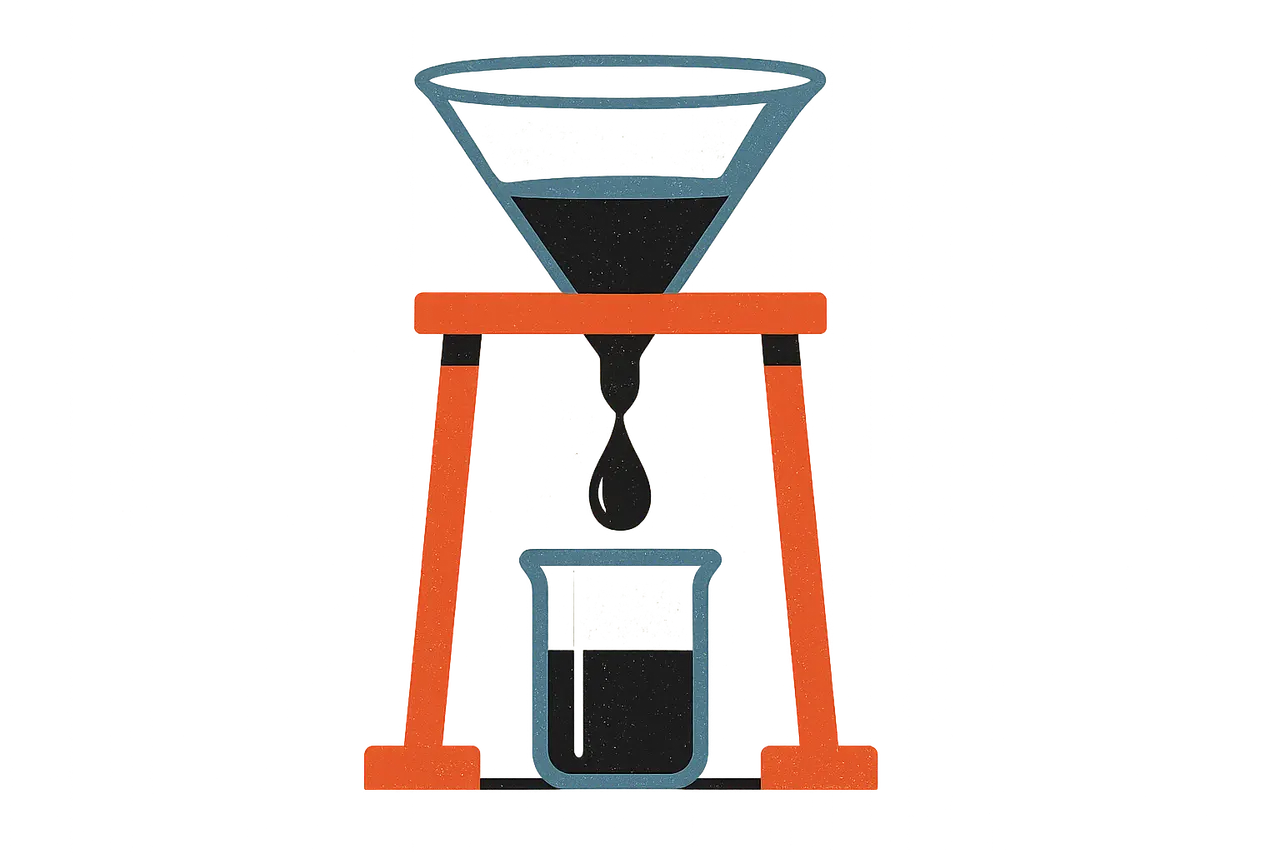
The pitch-drop experiment at the University of Queensland has been running since 1927, and only nine drops have fallen from its funnel, the latest in April 2014. Physics professor Thomas Parnell poured heated pitch into a sealed glass funnel, let it settle for three years and cut the stem in 1930, to show that a substance that shatters under a hammer is really a fluid, about 100 billion times more viscous than water.
The first drop took eight years. Seven had fallen by 1988, about one every eight years; the eighth and ninth each took roughly 13 years. The funnel sits in an ordinary display cabinet, so the flow speeds up and slows down with the seasons.
The experiment’s second custodian, John Mainstone, looked after it for 52 years and never saw a drop fall. He missed one by a day in 1977, another by five minutes in 1988 while the funnel was on show at Brisbane’s World Expo, and a third in 2000, when the webcam recording it went dark during a 20-minute power cut. He died in 2013, months before the ninth drop, which three webcams were watching. Even that one didn’t fall cleanly: like the eighth, it touched the pile in the beaker while still attached to the funnel.
Queensland’s experiment isn’t the oldest, and it wasn’t the first to film a drop:
| Pitch experiment | Started | Claim to fame |
|---|---|---|
| Lord Kelvin, Glasgow | 1880s | Demonstrations that pitch flows |
| Edinburgh | 1902 | Held by National Museums Scotland |
| Aberystwyth University | 1914 | Older than Queensland’s |
| University of Queensland | 1927 | Longest continuously running laboratory experiment |
| Trinity College Dublin | October 1944 | First drop filmed falling, 11 July 2013 |
What Queensland holds is the Guinness record and a 2005 Ig Nobel Prize. Guinness reckons there is enough pitch left for another hundred years; the tenth drop is expected sometime in the 2020s.
Sources & references
5 referencesWell-established. Corroborated by 4 independent sources.