The Lisbon earthquake struck mid-Mass and shook Europe's faith in a benevolent order
On this day · 1 November 1755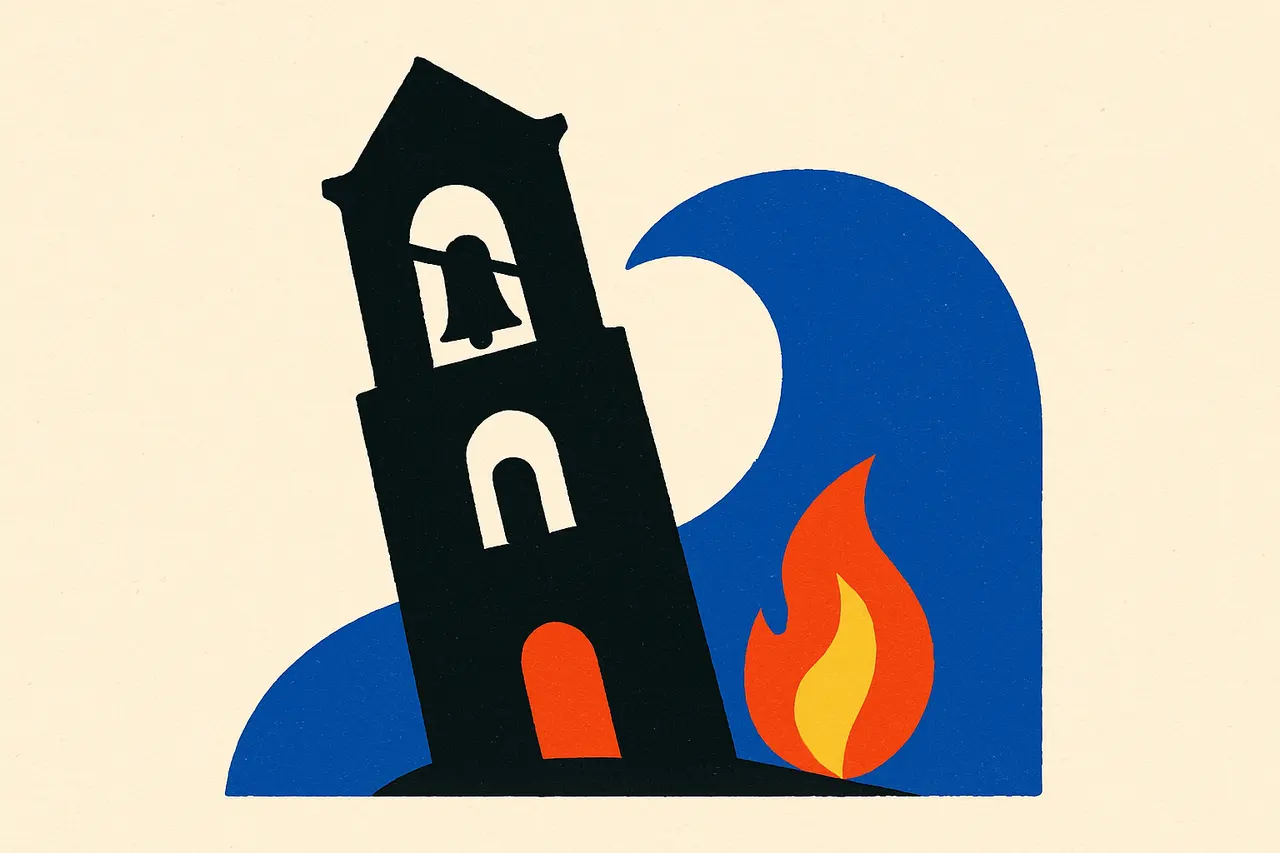
On November 1, 1755, a quake, fire, and tsunami flattened Lisbon while the city was at All Saints' Day Mass.
At about 9:40 a.m. on November 1, 1755, the ground beneath Lisbon convulsed. It was All Saints’ Day, and the churches were full; many of them came down on the worshippers inside. Modern estimates put the quake at roughly magnitude 8.5, with an epicenter offshore in the Atlantic.
The disaster arrived in three acts. The shaking left the city in ruins; fires sprang up within minutes and burned for days; then, about an hour later, a tsunami surged up the Tagus estuary, reaching a runup of some 12 meters (40 feet) and drowning roughly 1,000 more people. Total deaths are usually estimated near 30,000, though some accounts push the figure far higher.
In seconds it left the city in ruins, and in minutes those ruins were on fire.
The catastrophe rattled more than masonry. That such horror could fall on the pious, on a holy day, became a problem European thinkers chewed on for decades, helping seed the Enlightenment’s debate over evil and order.
Sources & references
2 referencesWell-established. Corroborated by 2 independent sources.