Apollo 1 fire: the crew died of asphyxia, not burns
On this day · 27 January 1967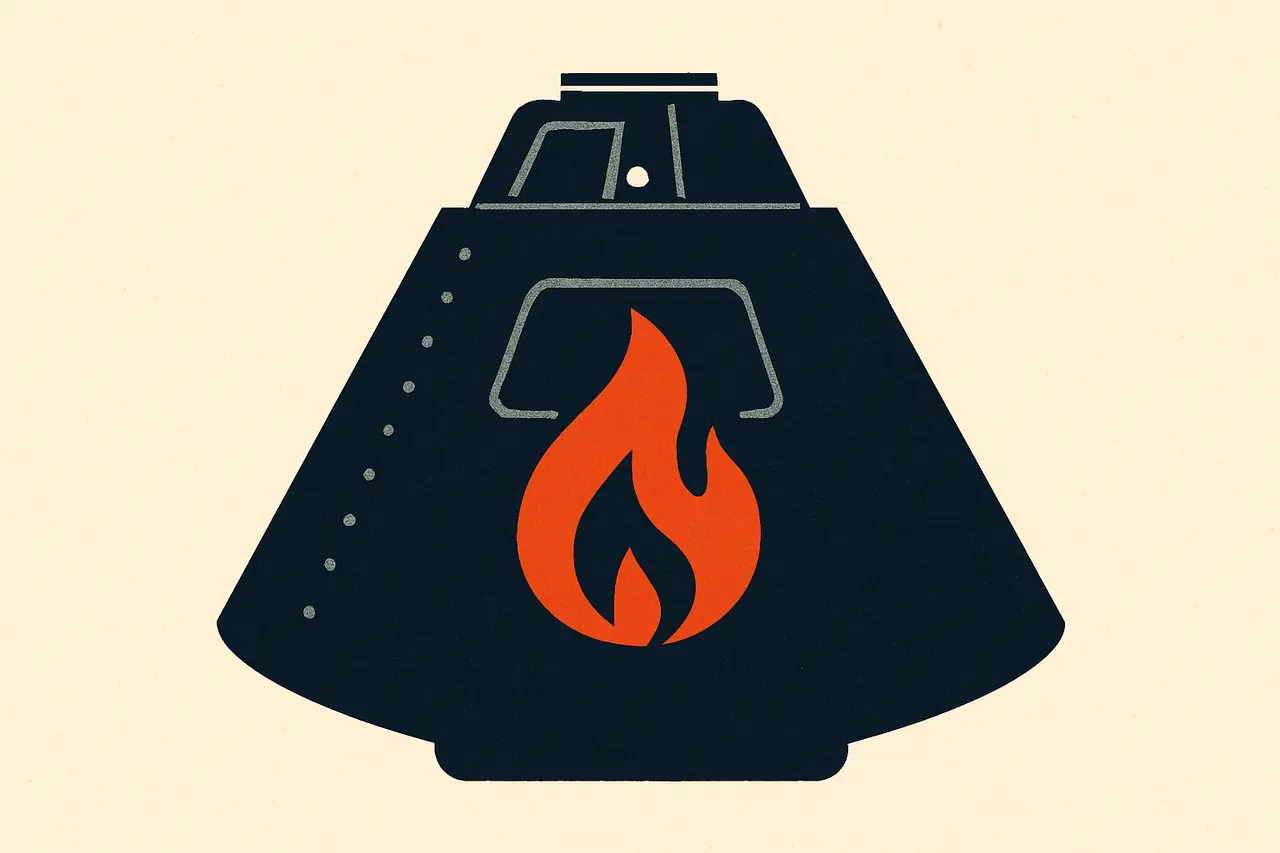
A 'non-hazardous' launch-pad rehearsal in a pure-oxygen cabin killed three astronauts in 1967 — and the hatch took 90 seconds to open.
The Apollo 1 astronauts Gus Grissom, Ed White and Roger Chaffee were killed on January 27, 1967, when a flash fire swept their command module during a launch-pad rehearsal at Cape Kennedy, and Air Force pathologists concluded they died of asphyxia from carbon monoxide and other toxic gases. Their burns, NASA says, were likely survivable.
The crew was running a countdown simulation at Launch Complex 34 ahead of a launch planned for February 21. As on launch day, the cabin was sealed and pressurised with pure oxygen at 16.7 psi, slightly above sea-level pressure. Because the rocket was unfuelled, the test was classed as non-hazardous, so no provisions had been made for rescuing the crew.
From the pad to the report
- January 27, 1967, 5:40 p.m.: a communications failure forced a hold in the count.
- 6:31 p.m.: ground instruments showed an unexplained rise in oxygen flow. Seconds later a crewman, probably Chaffee, said “Fire, I smell fire”; two seconds after that White called “Fire in the cockpit.”
- Within seconds: heat and pressure cracked the cabin’s pressure vessel. The innermost hatch took 90 seconds to open even in ideal conditions, and pad crews, driven back again and again by intense heat and dense smoke, reached the crew too late.
- April 9: the review board released its 3,000-page report. It never pinpointed the spark, but found evidence of arcing in wires beneath Grissom’s couch and far more flammable material in the cabin than was allowed.
NASA’s fixes included a unified hatch that could be opened in three seconds, strict limits on combustible materials, protected wiring and fire-resistant spacesuits, and all later crews flew the improved Block II spacecraft.
Even the name came afterwards: the mission had been listed as Apollo-Saturn 204, and only after the fire did NASA officially designate it Apollo 1.
Sources & references
3 referencesWell-established. Corroborated by 3 independent sources.