Tardigrades can survive the open vacuum of outer space
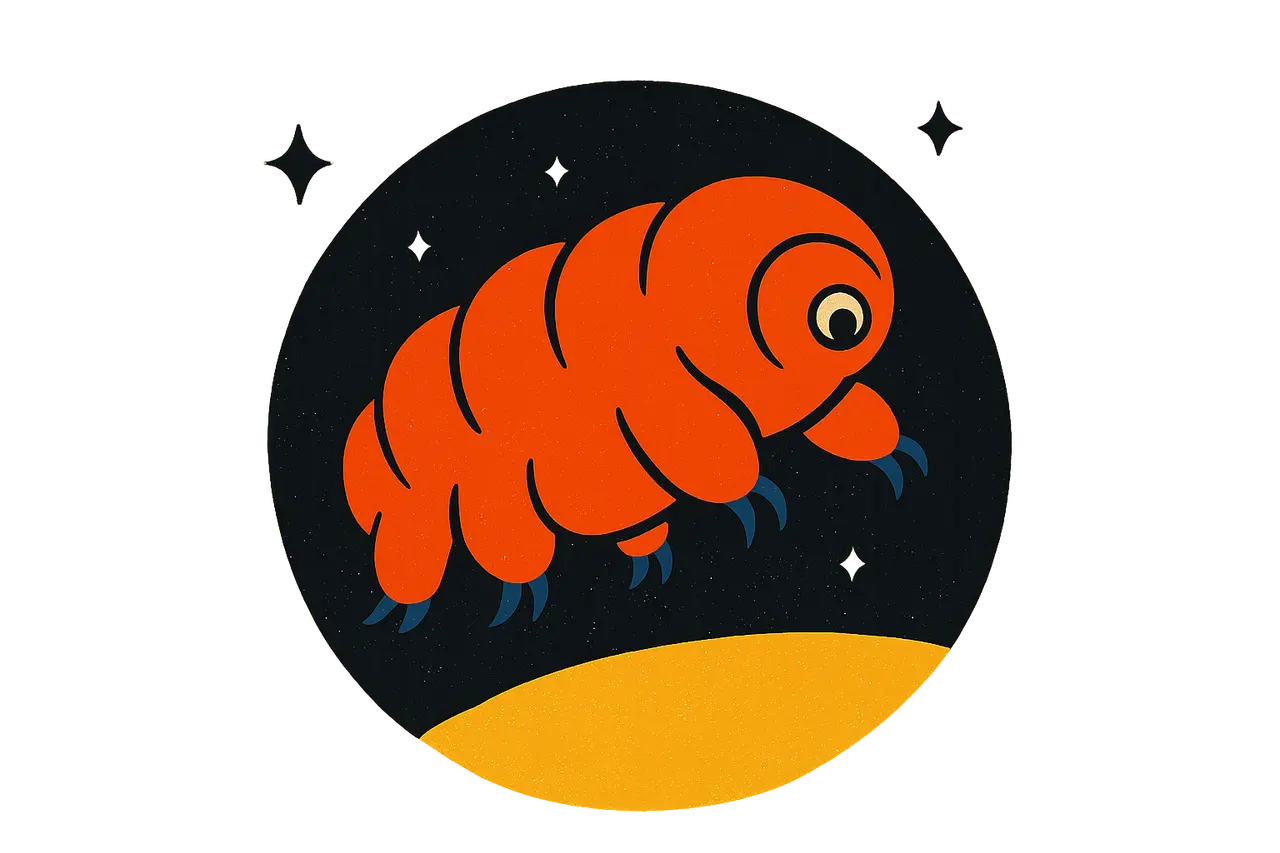
In 2007 scientists shoved live water bears out an airlock into raw space — and some strolled back, then laid eggs that hatched.
Tardigrades — squat, eight-legged “water bears” rarely more than a millimeter long — are the toughest animals we know of. When their world dries out, they reel in their legs, expel almost all their water, and curl into a dehydrated husk called a tun. In that state, metabolism nearly stops, and the things that normally kill animals simply have no purchase.
In this suspended condition they shrug off the near-unsurvivable: boiling heat, cooling to a hair above absolute zero, pressures far beyond the deep sea, and radiation doses that would obliterate a human many times over. Replacing their body water with a protective sugar, trehalose, is part of the trick.
The headline test came in September 2007, when the European Space Agency’s TARDIS experiment rode the FOTON-M3 mission into low Earth orbit. Researchers exposed live tardigrades directly to the vacuum of space — no capsule, no air — for about ten days.
They became the first animals known to survive raw space vacuum, and many came home and reproduced.
The vacuum and cosmic radiation barely fazed them; only the full blast of unfiltered solar ultraviolet did serious harm. Survivors revived on Earth and laid viable eggs that hatched normally. No spacesuit, no shielding — just an animal that treats the void as one more bad day to sleep through.
Sources & references
2 referencesWell-established. Corroborated by 2 independent sources.