Surveyor 1 made the first US soft Moon landing in 1966
On this day · 2 June 1966
Four months after the Soviet Luna 9, NASA's first Surveyor flew itself down to the Ocean of Storms on its very first try.
NASA’s Surveyor 1 made the first American soft landing on the Moon on June 2, 1966, settling in the Ocean of Storms about 63.6 hours after launch and just 9 miles (14 km) from its target, on the programme’s very first attempt.
First, or first “true”?
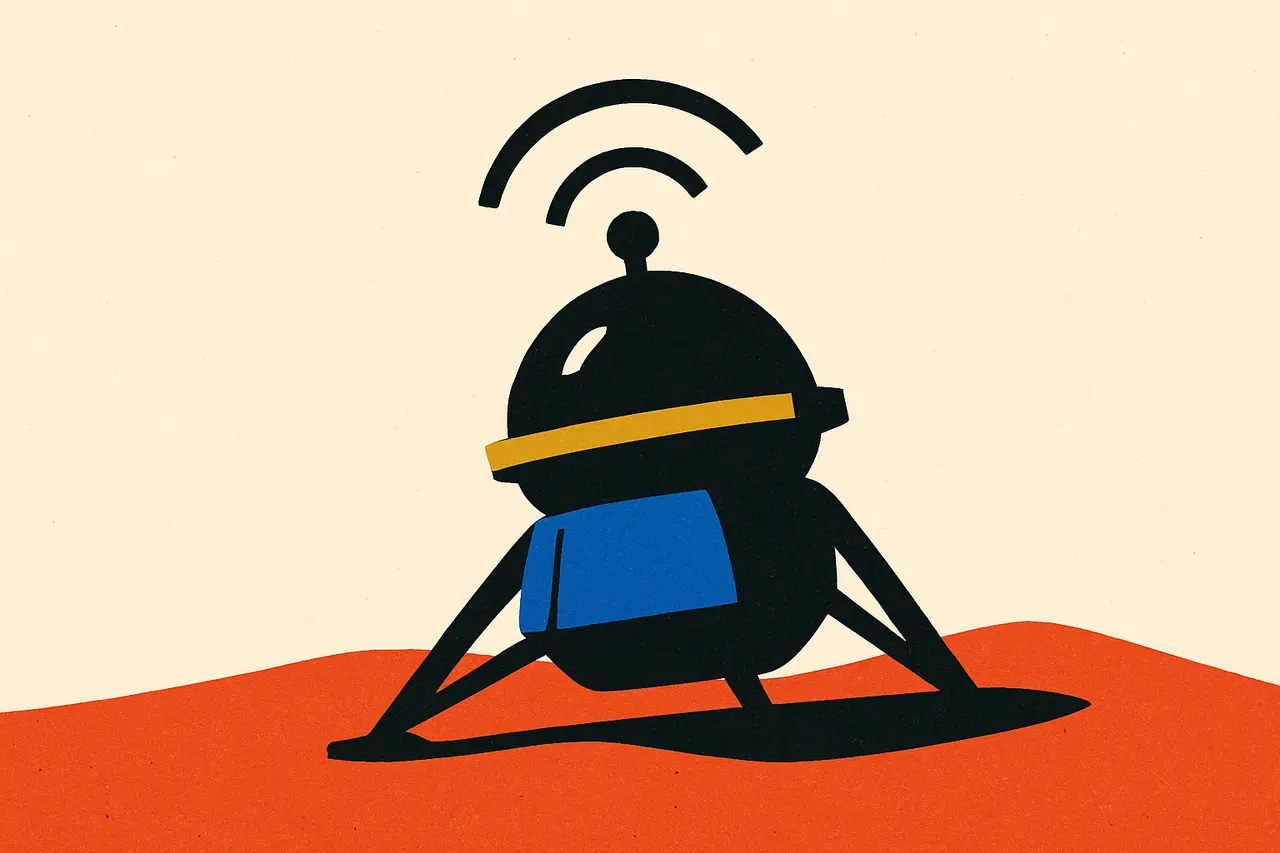
Surveyor 1 was not the first spacecraft to land gently. NASA’s own table of lunar missions credits the Soviet Luna 9 with the first lunar soft landing and the first picture from the surface, on February 3, 1966, four months earlier. Yet NASA’s Surveyor 1 page calls it the “first true soft-landing.” The distinction is about how it came down: unlike the Soviet Luna landers, NASA says, Surveyor was a true soft-lander, a 10-foot, three-legged craft that steered its own descent with a Doppler velocity-sensing system and touched down on shock-absorbing footpads.
A lander that was mostly rocket
Surveyor 1 left Earth weighing about 2,194 lb (995 kg), and its solid-fuel retro-rocket made up more than 60% of that. After burning its fuel and jettisoning the spent motor, it weighed only 648 lb when it touched the surface, bouncing once before settling.
Its first picture showed one of its own footpads in the dark soil. By lunar nightfall on June 14 it had sent 10,622 images, including the first colour photo from the Moon. Engineers doubted it would survive the two-week lunar night, but it answered commands on July 6 and returned 618 more, for 11,240 in all. NASA kept intermittent contact until January 7, 1967.
Strain gauges on its legs and measurements of how much weight the surface could bear told Apollo planners the ground would hold a lander. Four of the six later Surveyors also landed successfully.
Sources & references
4 referencesWell-established. Corroborated by 3 independent sources.