Sojourner, the first Mars rover, drove only 330 feet
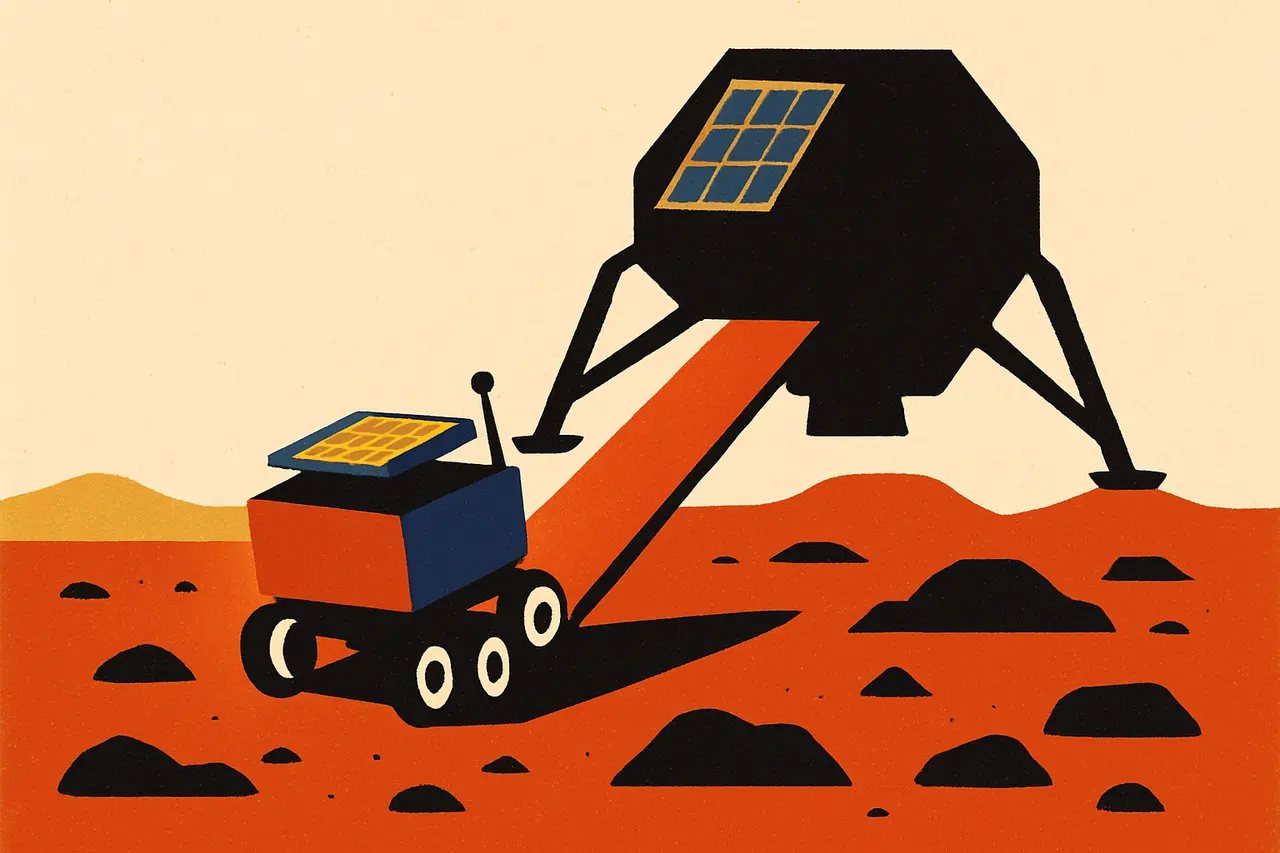
NASA's 23-pound Sojourner was built to last a week on Mars in 1997; it worked for months but drove just 330 feet in all.
Sojourner, the first rover to drive on Mars, landed on July 4, 1997, aboard NASA’s Mars Pathfinder, and over the following months it covered a total of just 330 feet, never straying more than 39 feet from its lander.
That was the plan. The 23-pound, six-wheeled rover was a technology demonstration, designed to last one week; the lander was built for one month. Pathfinder hit the Martian atmosphere at 14,000 mph, wrapped itself in airbags and bounced at least 15 times across Ares Vallis, an ancient flood plain, before coming to rest. It was NASA’s first landing to use airbags.
Sojourner rolled down a ramp and analyzed the chemistry of rocks and soil at 16 sites, finding that they mostly resembled volcanic rocks on Earth, and sent back about 550 images. Both machines far outlived their design lives; the final transmission came on September 27, 1997.
The name came from a contest run by JPL and The Planetary Society. The winning essay, by a 12-year-old from Bridgeport, Connecticut, proposed Sojourner Truth, the Civil War-era civil-rights crusader.
Sojourner’s successors show how far rover driving has come since those 330 feet. On October 11, 2026, Perseverance passed 28.10 miles of total driving, beating the off-world record of 28.06 miles set by Opportunity, which explored Mars from 2004 to 2018. Much of the difference is autonomy: where Sojourner judged the ground ahead from 20 measurement points, Perseverance processes 600,000 with every look, and it has driven more than 90% of its distance using its own navigation system.
Sources & references
5 referencesWell-established. Corroborated by 3 independent sources.