Shinto's 'eight million gods' is a number that really means 'countless'
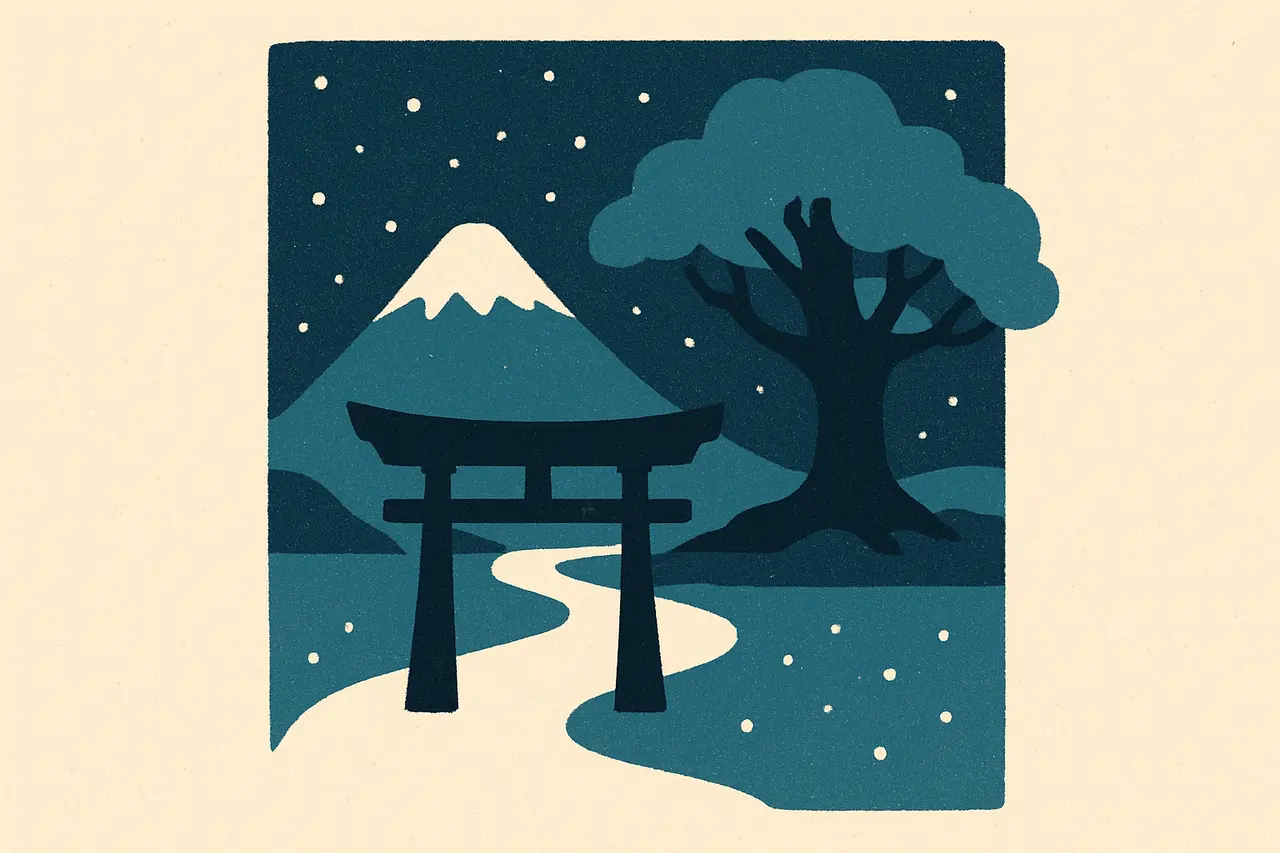
Japan's Shinto venerates kami in mountains, rivers, and trees, and the famous figure of eight million is an idiom for an uncountable infinity, not a head count.
Japan’s indigenous religion, Shinto, has no founder, no single sacred book, and no neat roster of gods. What it has instead are kami: sacred powers and spirits believed to dwell in mountains, waterfalls, rivers, ancient trees, rocks, ancestors, and even abstract forces like growth or storms.
So how many kami are there? The traditional answer is a wonderfully specific-sounding number: eight million, in Japanese yaoyorozu no kami. It appears in old myths and is still used today.
Here is the twist. The figure was never meant to be counted. “Eight million” is an idiom for innumerable, the way English might say “a thousand and one” reasons or “a million” things to do. As the New World Encyclopedia puts it, the name “is not an exact number, but an expression indicating that there is a great variety” of divine forms. Britannica likewise notes that Shinto myths invoke the “800 myriads of kami” precisely “to express the infinite number of potential kami.”
Eight is also a lucky, expansive number in much of East Asia, which is partly why the phrase swelled to that size.
The payoff is more than a numbers trick. Because kami can attach to almost anything awe-inspiring in the world, the count is open-ended by design. A new shrine, a remarkable old cedar, or a revered person can add to the total. “Eight million” is less a census than a worldview: a way of saying the sacred is everywhere, in more places than anyone could ever tally.
Sources & references
3 referencesWell-established. Corroborated by 3 independent sources.